7 ANOS APÓS O DIVÓRCIO, A EX-ESPOSA RIU DO FAZENDEIRO NO LEILÃO…ENTÃO ELE DEU O MAIOR LANCE DA NOITE
7 ANOS APÓS O DIVÓRCIO, A EX-ESPOSA RIU DO FAZENDEIRO NO LEILÃO…ENTÃO ELE DEU O MAIOR LANCE DA NOITE 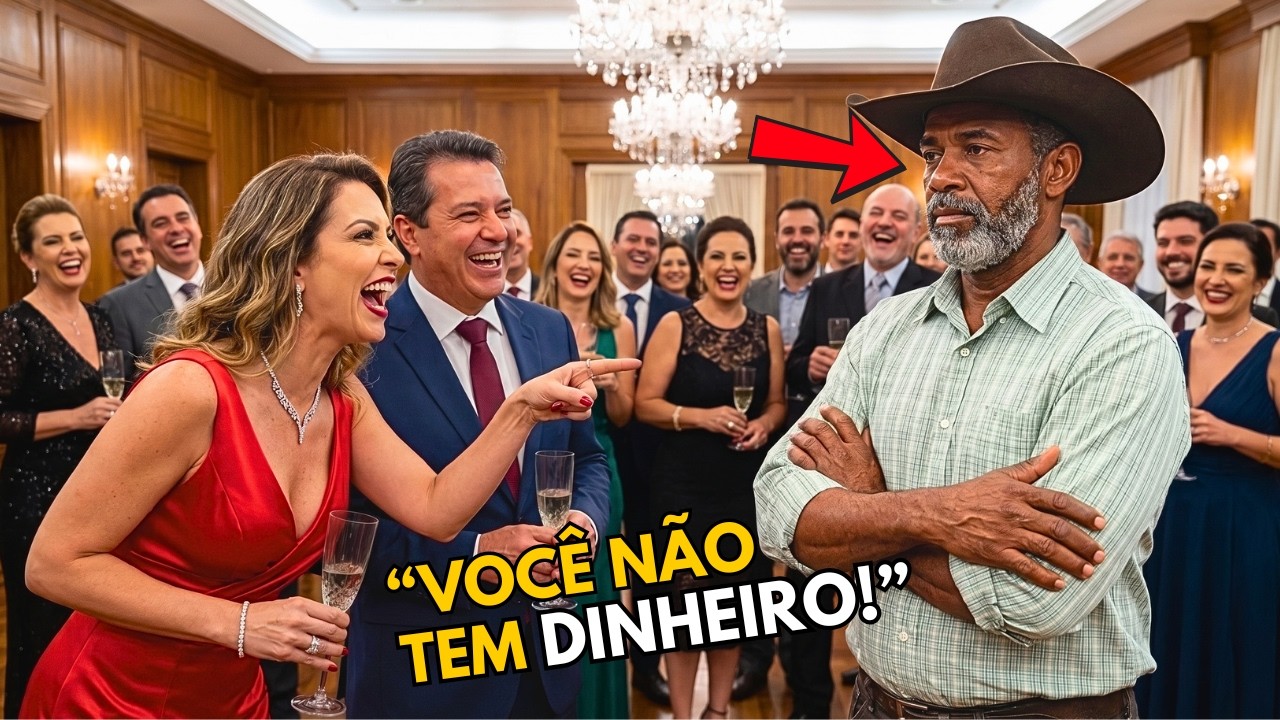
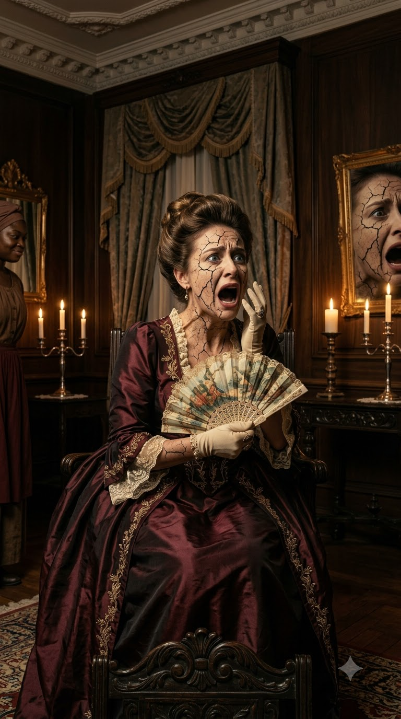
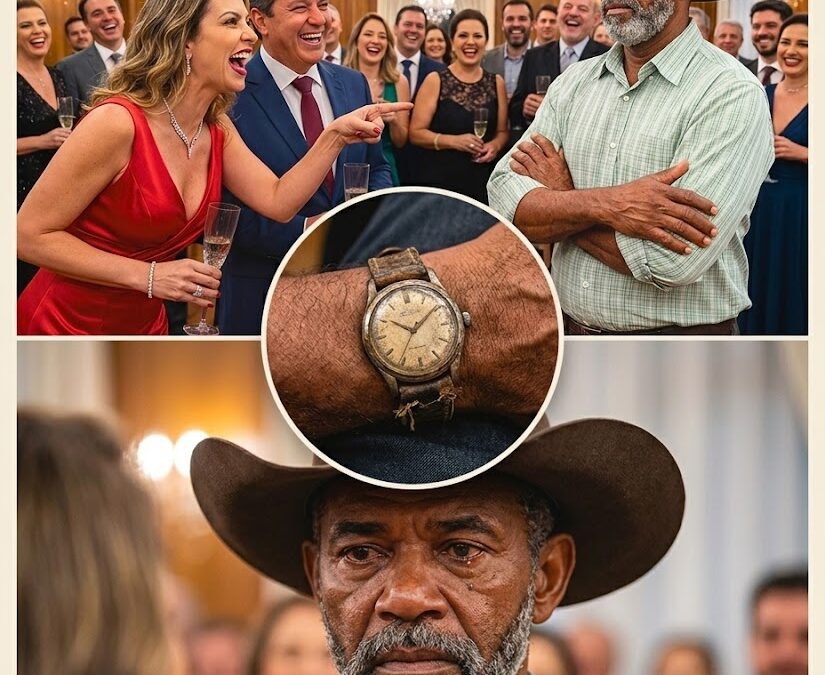
After seven years of being divorced, Renata reunited with her ex-husband at an elite auction. She was wearing a long dress, with her wealthy husband by her side and a glass of sparkling wine in her hand. Mateus showed up wearing a plaid shirt and simple boots. She pointed at him in front of the whole group and laughed.
He finally sold that dilapidated ranch and came to work as a security guard here. Laughter followed. Mateus didn’t answer, he picked up the bid number, went to a chair near the wall and remained silent while the lots went by. Renata felt that silence confirmed everything she had always believed about him.
She had no idea that that very silence that night would be the worst answer she could receive. If you enjoy seeing arrogance get what it deserves, leave a like now, because anyone who watches until the end will understand exactly why this man didn’t need to respond at all. The rare Santa Vitória was not the kind of place just anyone would go.
To reach the main hall, you passed through a wrought-iron gate , an avenue lined with tall trees on both sides, and a valet who greeted the carriages wearing white gloves. Inside, crystal chandeliers, [clearing throat] tables with embroidered tablecloths, women in long dresses and men in dark suits chatting with a glass in their hand.
It was the biggest cattle auction in the region, and everyone there knew exactly where they were in that environment. It was in this setting that Mateus Cordeiro crossed the gate wearing a plaid shirt, khaki pants, and simple leather boots, without a tie, without a suit, without anything to indicate to the salon that he belonged there.
Renata Falcão was in the middle of a conversation when he walked in. She stopped mid-sentence, looked at him with that expression of someone who sees something out of place and decides to make everyone else look too. She raised her hand, with two slender fingers, holding a glass of sparkling wine, and pointed in his direction.
“Look who showed up,” she said loudly, without lowering her voice, not caring who was listening around her. “Mateus finally sold that dilapidated ranch and came to work as a security guard here.” The group laughed. Not everyone is in the mood, but in that kind of environment people laugh when the tallest person in the room decides something is funny.
Her husband, Hélio Falcão, smiled with his mouth closed, in the manner of someone who finds tolerable what he deems unnecessary. Mateus looked at her, didn’t answer, didn’t change his expression, turned his back and went to the accreditation desk with the calm of someone at home. He picked up the envelope with the bid number, put his name tag in his shirt pocket, and went to find a chair near the wall.
Renata followed each step with a smile playing at the corner of her mouth, returning to the conversation as if nothing more interesting could happen, but Hélio didn’t return so quickly. He had noticed the badge, the gold color with a red border that the event reserved for a specific category of buyer, the one to whom the organizer sent a personal invitation, not a promotional announcement.
Hélio had an identical one in his own pocket, and that detail kept swirling around in his mind, preventing him from fitting it together. The hall filled up, and the lighting grew warmer. The noise of the conversations grew louder . The waiters began circulating with trays. Matthew sat near the wall, observing everything with quiet attention, the kind of attention of someone who came [clearing his throat] with a clear objective and will not be distracted before accomplishing it.
It was at that moment that Gentil Morais crossed the hall. Pentil was the event organizer, a 60-year-old man with white hair and a gray suit—the kind of person who knows everyone by name and whom everyone knows back. He circulated through the hall, greeting customers with the efficiency of someone who had done it hundreds of times before.
He approached Mateus, stopped, and the handshake he gave was different, lingering, with his left hand on top, the kind that isn’t protocol. “It’s so good that you accepted our invitation this year,” she said gently, self-sufficiently so that the next table could hear without needing to strain it. The group was waiting. Two people at the next table turned their heads.
A woman from Renata’s group discreetly tugged at her husband’s arm. The room itself seemed to murmur for two seconds. Renata heard. The smile faded from her face with the slowness of someone still processing. She looked at Mateus, looked at Gentil, looked back at Mateus, but the conversation between the two had already ended.
Gentil went to greet the next table, and Mateus remained seated in the same place with the same expression as before. Hélio inclined his head toward her. “Do you know this man?” he asked in a low voice. “I’ve met him,” she replied. “And his tone was that of someone who doesn’t want to continue the conversation.” The auction started 20 minutes later.
The announcer took the microphone, the electronic panel lit up, and the first animal entered the display area. Arms began to rise, prices went up, and the energy in the room shifted to that specific tension of someone about to spend real money. Matthew did not raise his arm. Renata realized. The smile returned.
I do n’t think he even knows how this works . He said to the woman next to him, without lowering his voice. The woman offered a polite smile that neither agreed nor disagreed. Hélio said nothing. My eyes were fixed on the red-bordered name tag on the other side of the room. The second batch has arrived.
A young bull, good conformation, reasonable starting price. The salon responded quickly. Six arms raised simultaneously, the value rising at an accelerated pace. Matthew stood still. He studied the animal with the attention of someone who understands what they are seeing, but he didn’t move a muscle. A customer who was sitting two tables ahead of Mateus discreetly turned and looked in his direction.
The kind of look someone gives when they recognize someone, but aren’t sure whether to approach them. He stared for two seconds and went back to the auction without saying anything. Renata saw that look, and it stayed in her thoughts, she did n’t know what to do with it. The third lot was sold at auction. The fourth animal came in with a higher starting price, the kind of animal that scares away smaller buyers.
Right away there were three arms left, then two, then one, and the hammer struck quickly. Matthew hadn’t moved at all. He came just to look. Renata said to Hélio. This time in a lower voice, as if he were beginning to convince himself rather than comment. Hélio did not respond. I was staring at the dashboard with a closed expression.
In the fifth lot, the buyer who had turned his body earlier got up from his chair, walked to the wall where Matthew was sitting, and exchanged two sentences with him in a low voice. Matthew listened, gave a brief reply, and the man returned to the table with a nod that seemed to confirm something. Renata saw all of this and didn’t understand.
“Who is that man?” she asked the woman next to her , referring to the buyer who had approached Matthew. Lauro Braga, the woman said, is an importer. Buy from the best auctions in the country. Renata looked back at Mateus. He had returned to his previous position, arms crossed, looking at the stage, as if the conversation with Lauro Braga had never happened.
The sixth batch, the seventh. Matthew remained motionless, but the room was gradually beginning to notice. Not explicitly stated. It was a subtle attention, the kind that appears in the way people stop looking only at the stage and start dividing their gaze between the animal and the man in the plaid shirt, who still hadn’t raised his arm.
Hélio realized this. Renata, not yet. And then the announcer picked up the microphone with a different tone, more paused, more careful, and announced lot number eight, the prince of the mountains. The entire room changed temperature. The prince of the mountains was a Nelore bull with perfect conformation. When the animal entered the exhibition space, the room fell silent, the way it does when everyone wants to focus on the same spot at the same time.
The announcer described the indexes, the results, the numbers that placed that bull among the best specimens auctioned in the country that year. Each sentence he uttered increased the animal’s value before anyone even raised their hand. Falcão straightened his posture in the chair. He had come specifically for that lot.
I had researched, calculated, arrived with a defined budget in mind, and the conviction of someone who rarely loses what they decide to buy. For Hélio, that bull was more than just an animal. It was the next step in a squad he had been building for four years. And the prince of the mountains was the missing piece. Renata knew that.
I had accompanied my husband to these events long enough to understand when he was in hunting mode. And she liked being by his side during those moments. I liked the way he took up space in a room, how people respected his approach, how the name Falcão carried weight in that environment. On the other side of the hall, Matthew remained motionless.
The announcer opened the play. Five arms went up at the same time. The price rose rapidly in the initial movements, 250,000, 270, 300, eliminating smaller buyers. One by one. Within 2 minutes, only a group of four remained. In 5 minutes, three. Matthew remained motionless. Renata noticed this with satisfaction, crossed her legs, and leaned back in her chair.
That man had come all the way there, had been greeted by the organizer, had gone to the trouble of imagining things, and now he was sitting against the wall, not even raising his hand to see who the best animal of the night was. The conclusion she had formed years ago, 320,330, was confirmed. The third buyer backed out.
Two remained: Hélio and a producer from Mato Grosso, whom he knew by name and respected for his consistency. The two climbed up together with the seriousness of those who are not playing around. Each bid was answered without hesitation, the value rising in steady steps, 350,000, 360. The conversation in the room had ceased.
All attention was focused on the dashboard and the two alternating arms. Waiters stopped circulating until the conversations at the back tables subsided without anyone asking. 370,000, 380, 390. Renata held the glass with both hands. With each new issue, she felt the positive attention of someone rooting for something they already consider their own.
Beside her, Hélio stood with a closed, concentrated expression, the hunting manner she knew so well. He was going to win, he always won when he was like that . The producer from Mato Grosso reached 400,000. The room held its breath. Helio hesitated. It was only a second, but in a room with that silence, a second is long enough for everyone to notice.
Then he raised his arm, 410,000. The producer from Mato Grosso looked at the bull on stage, looked at the panel, closed his eyes for half a second, and shook his head slowly. He lowered his arm. The announcer confirmed the helium explosion and asked if there was another one. Total silence. Renata smiled broadly. She was already turning to her husband.
I was about to say something celebratory without sounding vulgar when a calm voice from the other side of the wall called out a number. R$ 420,000. The announcer stopped. He repeated the number slowly, as if he needed to make sure he had heard correctly. The room took two seconds to react, and when it did, it was with that low, scattered murmur of someone who had just witnessed something unexpected.
Hélio turned his body in the chair. The producer from Mato Grosso raised an eyebrow. Renata turned toward the voice and held her breath when she recognized the plaid shirt. Matthew had not yet gotten up. She had said the number with her hands crossed on her knee, as if she were asking for another glass of water.
And now she looked at the stage with the calm attention of someone evaluating what they have just decided to buy. Inside, she tried to fit the pieces together. The man who had left 7 years ago in a wooden house in the middle of 60 hectares that the bank had refused to finance. The man the neighbors bet wouldn’t amount to anything.
That same man had just placed a bid of R$ 420,000 at an elite auction, as if it were the most natural thing in the world. It didn’t fit. The announcer asked for another play. Hélio stood there with the glass in his hand and an expression that wasn’t angry. It was the feeling of someone recalculating an account they thought they had already settled.
The silence lasted just long enough for everyone in the room to understand that he wasn’t going upstairs. The gavel fell, and what happened in the next 20 minutes was the kind of thing a hall of fame narrates on its own. Gentil Morais crossed the space toward Mateus even before the echo of the hammer faded.
The handshake was long, public, and acknowledged; not the polite greeting of an organizer to a buyer, but that of someone who had been waiting for this moment for a long time. He spoke in a voice that carried through the hall. Two customers at the next table stood up to approach. A third one came from the bottom.
Renata saw all of this from where she was sitting. She saw the men she knew by name and title moving toward that man in the plaid shirt, as if he were the focal point of the night. He saw conversations forming around him with the naturalness of people who already knew each other, who already had something to talk about, who had been waiting for the opportunity to speak. And then she saw Osvaldo Teixeira.
Osvaldo was a leading producer in the northern part of the state. I had dined at Hélio’s house two months earlier and left without signing anything, politely explaining that I needed to think it over. Hélio had commented on this at home, sounding like someone who doesn’t understand why a good conversation didn’t turn into an agreement.
Osvaldo was standing next to Mateus. The conversation between the two was low and serious. Not the conversation of acquaintances who reunite, but that of two men who are transforming an idea into a concrete proposal. Osvaldo chuckled at something Mateus said with the nonchalance of someone who had finally found the person he was looking for.
Hélio saw that too. He sat there silently for a time that seemed to stretch on far too long. Then he placed the glass on the table with excessive care, the gesture of someone who needs to do one thing with their hands in order to avoid doing another. And he stared into space ahead, without focusing on anything specific.
Renata tried to say something, tried to find a comment, an observation, anything that would restore the normalcy between the two of them to what it had been before. But every sentence he thought would sound worse than silence. On the other side of the room, Mateus answered questions, received business cards, and confirmed dates with the same calm with which he had entered.
And no one there, neither those who were performing nor those who were observing from afar, could see in that man in the plaid shirt any trace of the bankrupt farmer that Renata had described aloud two hours earlier. Then, Helio turned to her slowly. with a low voice and without anger. Worse than anger, with the coldness of someone asking a question knowing they won’t like the answer.
You really didn’t know who your ex-husband was today? Renata did not respond. The question hung in the air, her eyes fixed on the empty glass she held with her two thumbs, unable to find anything to say that wouldn’t make her seem exactly as she had been. The woman who left with conviction and returned without understanding anything.
Hélio didn’t insist, turned to face forward and remained quiet with the expression of someone who had just realized that the answer was already obvious. On the other side of the room, Matthew was still answering questions. Renata stared at him, and it was there, in that silence, that she began to do the math—not the math she had done seven years ago when she left, but the math she had never bothered to do since.
When she left, Matthew was left with 62 hectares, a wooden house, a small debt, and land that three agronomists had described with similar words: poor, shallow, unsuitable for scaling. She had left a sentence before closing the door: “Kindness doesn’t pay the bills.” And he had built a certainty upon that, a certainty he had never revised.
What she didn’t know was what Matthew had done with that land in the following years. Not because it was a secret, it was the kind of thing anyone with an interest in the sector would have found with a quick search. She didn’t know why conclusions formed rarely require revision. The bank had denied the refinancing three months after she left.
Mateus had left the agency, gotten into his car, and remained parked for a while without starting the engine. Then he called and went back to the farm. It was that same week that a man named Benedito appeared at the gate asking for work, and Mateus, who had no money even for himself, let him in. Renata didn’t know that part; she had never asked, she had never needed to, because she had already formed her conclusion.
But there was one thing she needed to understand now, and she could only understand it if she knew what had happened after the bank, after Benedito, in the years when she was elsewhere, building another life. And that was exactly what the man who had just approached Matthew knew better than anyone else in that room.
Osvaldo Teixeira was not the type of man to waste his words. He was 63 years old, had four decades in the livestock sector, and the reputation of someone who only starts a business when he is sure of what he is doing. Those who knew him well knew that when Osvaldo remained quiet in a meeting, it wasn’t disinterest, it was evaluation.
And when he moved in someone’s direction, he had already made up his mind . That’s why, when the gavel fell and Osvaldo stood up from the table before anyone else, the two people who truly knew him in the room understood that it wasn’t protocol, it was a choice. He approached Matthew with his hand outstretched and a short phrase, the kind that needs no further explanation.
Then she stood beside him while the others approached. He responded to the greetings politely, but did not move from his spot. He waited for the surrounding activity to subside. When the space opened up, he leaned his body slightly toward Matthew and spoke softly. The proposal was straightforward. Osvaldo had a farm in the north of the state with genetic potential that he hadn’t been able to develop due to a lack of the right partner.
I had tried twice with different producers, and both times the partnership had fallen through. One due to a misunderstanding of method, the other due to a management problem. What he was looking for wasn’t money or structure, it was criteria. It was someone who knew how to choose animals, understood the soil, and had the patience to work at the right time.
Matthew listened without interrupting. Osvaldo finished, remained silent for two seconds, and said, “I need an answer by the end of the month, but I want you to visit the farm before deciding anything.” Matthew said he would think about it. Osvaldo nodded, as if this was the answer he had been waiting for.
Not confirmation, but the seriousness of someone who doesn’t decide on the spot. On the other side of the room, Hélio was still waiting for Renata’s answer. She had been quiet for too long for the silence to still seem like a pause. That was already the answer. And Hélio, who understood negotiation and knew how to read what people didn’t say, read that silence with precision.
“Did you think he had gone bankrupt?” he said. “It wasn’t a question.” Renata placed the glass on the table, straightened her body in the chair with the movement of someone who is internally reorganizing themselves before speaking. When I left, the land was worthless. The bank had denied it. There was nothing to indicate that things were going to change, she said.
“Seven years is a long time,” replied Hélio. She had no answer for that. What she didn’t know, and would only understand much later when she finally went looking for it, was what had happened during those 7 years. It wasn’t a story of luck, nor of inheritance. It was a story from a black-covered notebook that Mateus’s father had filled over 20 years, noting the soil’s reactions, the mistakes, what he had learned from each cycle.
Mateus had read that notebook so many times that he knew the middle pages by heart. And there was a retired agronomist named Raimundo, whom I met by chance at a free technical conference, who looked at that notebook and said something that three paid agronomists had never said: that the Earth was not dead.
I was waiting for someone to ask the right question. Mateus had returned that afternoon with four pages of notes, and for three years he and Benedito had worked the land inch by inch, without major investment, without heavy machinery, with patience and method. There were months when Earth didn’t respond, and neither of them spoke about it. They simply continued on.
In the fourth year, the pasture in the northern sector responded: Benedito had stood by the edge of the fence for a while without saying anything. Then he turned to Matthew. This land was simply sleepy. Renata knew nothing about this. I had left with a formed conclusion and had never gone back to verify it.
It was that simple. Hélio stared at the table with the expression of someone processing two things at once. What had she discovered about Matthew, and what did that mean for what she had just lost? Because Osvaldo had dined at their house two months prior and left without signing anything.
And now he was on the other side of the room, leaning toward the man in the plaid shirt, with the posture of someone who had finally found what he was looking for. Hélio understood at that moment that he had lost more than just the bull. Renata saw her husband’s face and tried to find something to say that would restore a more stable atmosphere to their relationship.
But every word she thought kept coming back to the image of Matthew, in the center of that hall, surrounded by the men she knew, being treated with a respect she had never imagined he would receive. There was one specific thing that kept coming back to me: the phrase she had said aloud when he entered, the group laughing, the finger pointing, and Mateus, who had looked at her, hadn’t responded and had gone to get the bidding number with the calmness of someone who didn’t need to defend himself, because the night would do that for him. She hadn’t
understood at the time that that calmness wasn’t weakness, it was certainty. Mateus knew what he had in his pocket, he knew what he was about to do, and he had let her laugh. This realization came with a weight that Renata hadn’t expected to feel. It wasn’t exactly shame, it was the discomfort of someone who found themselves doing something that didn’t match the image they had of themselves.
She didn’t see herself as a cruel person. But what he had done when he entered the front of the group, pointing his finger and raising his voice, that had been cruel, and there was a whole audience that had seen it. The room gradually emptied, tables were abandoned, and the waiters began to collect the glasses.
Mateus was still standing near the accreditation area, finishing one last conversation with two men whom Renata didn’t recognize, but who, judging by the attention they paid to his every word, clearly recognized him. Hélio stood up, picked up his jacket, put it on carefully, and looked at her. “Let’s go,” she said, in a tone that suggested she didn’t want to continue the conversation there.
She picked up her bag and stood up, and, as they headed towards the exit, she passed through the corridor that led to the side gate, the same one through which Mateus had entered hours before. Mateus stood there with his back to him, wrapping up the last conversation of the evening. Renata slowed her pace without realizing it.
He stared at that plaid shirt for two seconds, still processing everything the night had revealed inside. And then Matthew turned around. Their eyes met. Just one second. He nodded his head with the curt greeting of someone who recognizes someone from afar and returned to the conversation.
She kept walking, went out the gate, got into the car, and remained silent the whole way, her husband’s question still unanswered. Not because I didn’t know what to say, but because the honest answer was too simple and too heavy. She had built a certainty upon a piece of clothing and carried that certainty for 7 years without any reason to question it.
Until that night, what she still didn’t know was the true size of what Matthew had built. And that was what Benedito was going to find out the next morning, when the sun was still low and the car arrived before breakfast. Benedito woke up to the sound of the automatic doorbell, that metallic click that he had learned to recognize even while sleeping.
She looked at the wall clock in the room. 5:40 in the morning. Through the window, the sky was still that color that falls somewhere between purple and gray. The kind of time when only the cattle and the men who work with the cattle are up. He got up, put on his boots without sitting down, and opened the door to the room that led directly to the hallway of headquarters.
Mateus’s car was parked in the yard with the driver’s side door still open. Mateus was outside, leaning on the hood of the car, his cell phone in hand, looking out at the pasture to the north, with the quiet expression of someone seeing more than just scenery. Benedito approached, without saying anything. She stood beside him, the two of them looking at the same pasture.
“I bought the prince of the mountains,” said Mateus, without taking his eyes off the pasture. Benedito was quiet for a moment, then went to the sink outside, turned on the tap and began washing his hands, which were not dirty. It was his way of hiding his emotions from his face. Matthew understood. I had never needed a translation for Benedict.
The two remained silent for a while longer, listening to the sounds of the farm waking up, the distant mooing from the pasture behind, the wind passing through the bamboo grove that Benedito had planted in the first year. The first birds of dawn. It was the kind of silence that doesn’t weigh you down, the kind that suits you well between two people who have built something together and don’t need to talk about it to know the magnitude of what they’ve accomplished.
Osvaldo Teixeira wants a partnership, Mateus said after a while. Benedito turned off the tap, dried his hands on his pants, and turned to him with the expression of someone who was really paying attention . Mateus explained the proposal in just a few words. The farm in the north, the potential that Osvaldo hadn’t been able to develop, what he was looking for in a partner.
Benedito listened to the end, without interrupting, just as he always listened to important things. And will you be visiting? He asked. “I’m going,” said Matthew. Benedito nodded slowly, looked at the pasture for another second and said: “This land here has endured seven years of silence,” and replied: “The land in the north will respond as well, if you use the right method.
” Matthew didn’t answer, but the way he looked at the horizon said enough. The visit to Osvaldo’s farm took place three weeks later. Mateus went alone one Tuesday morning, without telling anyone except Benedito. The farm was 4 hours away from his, with a paved road for half of it and a dirt road for the rest. When he arrived, Osvaldo was waiting for him at the gate with his trusted henchman and a cup of coffee in his hand.
They spent the entire morning going through the different sectors. Osvaldo spoke little, letting the land do the talking, and the land had much to say. The potential was real. Soil with good structure, pasture with irregular but recoverable cover, animals with a good genetic base that were being underutilized due to a lack of management criteria.
It was exactly the type of problem that Matthew had solved on his own farm over the past 7 years. At lunchtime, they sat on the porch of the headquarters. The cook brought rice, beans, pot roast, farofa (toasted cassava flour), the kind of lunch that doesn’t need any decoration. Osvaldo waited for the dish to be served and went straight to it.
“I needed to see you buy that bull before making the offer,” he said. Not because the money mattered, but because whoever buys an animal of that caliber with that calmness knows what they’re doing. And I needed to be sure of that before opening the door. Matthew placed the fork on the table and looked at it.
Did you come to evaluate me at the auction? “I went,” Osvaldo confirmed, without hesitation. I saw the Lord arrive. I saw how he sat down. I saw the moment he made his decision. A man who waits for the right moment to move at an auction does the same thing on a farm. That was what I needed to know. Matthew remained silent for a few seconds, then picked up his fork again.
So you already knew I was going to place the bid. “I didn’t know,” said Osvaldo. But I knew that if you gave it to me , I was going to make the offer. The two of them had lunch without rushing. They discussed the method, the timeline, how the partnership would work in practice, the division of responsibilities, the selection criteria, and the pace of investment.
Osvaldo had precise questions and listened to the answers with genuine attention. Mateus responded with the clarity of someone who had spent years thinking about it without having anyone to share it with. When the coffee was served, the proposal was already planned. It just needed to be put on paper.
Mateus returned to the farm at dusk. Benedito was in the yard repairing the sector’s trough when the car entered. He stopped what he was doing and waited. “It went well,” said Matthew, getting out of the car. Benedito picked up the wrench and went back to the lame spot, but before bending down he said without turning his face: “I knew it was going to happen.
” That same week, unbeknownst to Mateus, something had changed at Hélio and Renata’s house. Hélio arrived home on the night of the auction with the heavy silence of someone calculating losses, not only financial, but strategic. He had lost the bull, he had lost Osvaldo’s attention, and he had lost both to the same man, in the same place, on the same night.
In the following days, he began to research, not out of curiosity, but out of a need to understand what had gone unnoticed. And what he found was simple. The name of the Cordeiro farm had appeared at two regional technical events in the last two years, with soil and herd results that anyone in the industry would have recognized as solid.
The information was there, publicly accessible. He had been in the same department as Matthew for years and had never paid attention because the name “lamb” didn’t carry much weight in that environment yet. Hélio closed the computer and stared at the wall. Renata entered the room, saw her husband’s face, and didn’t ask anything.
She already knew what he had found. I had found the same thing two days earlier, alone, late at night, with my cell phone under the blanket. And what neither of them knew yet was what would be signed six weeks later, and the magnitude that name would have after that. The partnership with Osvaldo Teixeira was signed on a Wednesday afternoon at a notary’s office in the city, without ceremony, without photos, without any kind of announcement.
Mateus signed, Osvaldo signed, the notary public authenticated the signatures and folded the papers inside a blue folder. The two left together, stopped on the sidewalk for a minute to agree on the date of the first technical visit, and said goodbye with a simple handshake. It was the kind of deal that didn’t need any noise to be great.
What was written on those papers was the following: Mateus would be responsible for the method, the genetic selection, and the management of the herd. Osvaldo would provide the land and the structure. The results would be divided equally after the third year. Sufficient time for the soil to respond and for the first cycle of animals to show results.
It was a long timeframe for most people. It was comfortable for Matthew. He had waited 7 years to get there. Three years of working with the right structure and partner was almost a race. Benedito learned about the contract that same night, when Mateus arrived home and left the blue folder on the kitchen table without saying anything.
Benedito looked at the folder, looked at Mateus, and understood. When do we start? He asked. Next week, said Matthew, you’ll come along on the first visit. Benedito nodded, picked up the briefcase, placed it on top of the cabinet where the farm’s important documents were kept, next to his father’s notebook, and went back to what he was doing.
In the following weeks, the Cordeiro farm entered a rhythm that Mateus had never experienced before. Not the slow, solitary pace of the early years, but that of someone growing with a solid foundation. The prince of the mountains had arrived one afternoon under a low sun, disembarking from the truck with the calm of an animal that is not easily frightened.
And Benedito had been staring at him for quite some time, standing at the edge of the corral. “That animal knows it’s arrived at a good place,” said Benedito, without taking his eyes off the bull. Matthew did not answer. He was watching too. The animal was exactly what the statistics promised. With a balanced build and calm temperament, this is the type of bull that transmits quality effortlessly.
Placed alongside the herd at the Cordeiro farm, it changed the level of the coverings in the very first season. The calves born in the following months were visibly different from the previous ones, heavier, more uniform, with the standard that Matthew had sought from the beginning. The first buyers appeared before Mateus had even made any announcement.
They came by referral, because of the name that had circulated at the auction, because of the word Osvaldo had spread effortlessly, simply by mentioning the farm’s name to the right people. It was the kind of advertising you wouldn’t buy. Matthew greeted those interested with the same calmness with which he had sat in that hall. He was showing off the squad.
He explained the method, answered questions, didn’t force sales, and didn’t negotiate in a hurry. The animals that were ready were sold, those that weren’t were kept. One weekend during that period, while closing the corral gate after a visit, Benedito came up behind him with two cups of coffee and handed him one without saying a word.
The two stood there, looking at the squad. “Have you ever considered that Renata would end up finding out about all of this?”, Benedito asked after a while. Mateus took a sip of coffee. “Already?”, he said. “AND?” “And nothing,” Matthew replied. I wouldn’t change anything I did, nor anything I didn’t do. Benedito remained silent, then said: “That’s the right answer.
” They didn’t bring up the subject again. Renata learned about the partnership by chance at a producers’ event that Hélio had attended out of obligation, and she had accompanied him without any particular desire. They heard the name Cordeiro in a conversation at the next table. Hélio stood motionless for a second.
Renata looked up from the menu. The man speaking was a producer from the interior who didn’t know them. He was telling his colleague about a new partnership that had stirred up the sector, the Cordeiro farm and Osvaldo Teixeira, a combination that the more experienced people had received with immediate approval because the two had a reputation built the right way, slowly, with results, without fanfare.
“The lamb is the one that won the prince of the mountains in the air at Santa Vitória,” said the man. I was there. The entire room stopped when he made the offer. The colleague wanted to know more. The man continued telling the story. Mateus’s calm demeanor, the organizer’s recognition , the producers who approached afterward.
He recounted it with the enthusiasm of those present and felt the atmosphere of the night. Hélio said nothing. Renata said nothing. They asked for the bill before dessert. In the car, Hélio kept both hands on the steering wheel for a while without starting the engine. Renata looked out the window. The street was quiet, the parking lot almost empty, the restaurant lights reflecting on the asphalt wet with drizzle.
“Do you think about him?” Hélio asked without turning his face. Renata hesitated before answering. ” I think about the night of the auction,” she said. “I keep thinking about how he sat there without answering anything while I—” she didn’t finish the sentence, “didn’t need to.” Hélio started the car. They left the parking lot in silence.
Renata kept looking out the window during the drive, the streets passing by, the lights blurred by the drizzle on the glass. There was something she had understood that night at the auction that continued to weigh on her differently each time she returned. Mateus hadn’t answered because he didn’t need to.
The whole night was the answer, and he had known that from the moment he crossed the gate. What she still hadn’t been able to answer for herself was a different question, not about what Mateus had become, but about what she had done with him. Seven years of a certainty he had never verified. And that question had no easy answer.
Probably never would. But there was something that would happen at the Cordeiro farm a few months later. Something small, silent, that no outsider would see, that would close this story in the only way it could be closed. The gate of the Cordeiro farm had no metal plate, no special lighting, nothing to attract the attention of those passing by on the road.
It was dark, treated wood with the name Cordeiro carved by hand. The same name that had been there since the time of the Father, even before Mateus took over the land. Those who passed by without knowing what that place was didn’t stop. Those who knew did stop. In the months following the auction, more people stopped.
It wasn’t an organized flow of visits. It wasn’t a busy schedule of meetings. It was a natural movement of a name that had begun to circulate among the right people. A buyer recommending it to another, a partner mentioning it at an event, Osvaldo naturally citing it in industry conversations. The name Cordeiro gradually appeared in places where it hadn’t appeared before.
And it always appeared in the same way, linked to the word “criterion.” Mateus hadn’t changed his work rhythm. He woke up at the same time, took the same route through the sectors, had coffee in the same place with Benedito beside him or a few meters away, which was how the two had always worked. What had changed was what the work was producing and the speed with which it was being recognized.
The partnership with Osvaldo yielded results ahead of schedule. The soil of the northern farm had responded in the second year, anticipating by 12 months what the two had projected for the third. The first animals from the joint herd were auctioned at a regional event, with results that Osvaldo hadn’t achieved in either of his two previous attempts.
He called Mateus that night, a rare occurrence because Osvaldo was a man of short messages, and simply said: “You were right about the method.” Mateus replied that the method was the Father’s. Osvaldo said it didn’t matter, it was working. It was on a Saturday morning, months after the auction, that the small thing happened.
Benedito was in the yard repairing the watering trough hose in the sector. 3 when he heard a car stop on the road before the gate. He kept his tool in his hand, looked at the road over the fence, a silver car, a passenger model, which he didn’t recognize. The gate was open. It was open on weekdays and Saturday mornings, when there was work activity.
The car entered slowly, stopped in the yard. The woman who got out wasn’t the type of person Benedito expected to see there on a Saturday morning. Simple dress, bag on her arm, sunglasses which she took off before taking two steps. She looked around with the expression of someone trying to recognize a place she hadn’t visited in a long time.
Benedito remained quiet. She saw him before she saw anyone else. She walked towards him with the step of someone unsure if they were doing the right thing, but went anyway. ” Is Mateus here?” she asked. “He is,” said Benedito. “I’ll call him.” She didn’t call him right away. He looked at her for a second, not with hostility, but with the look of someone carefully assessing a situation .
Then he put the hose down and went to the The barn where Mateus was examining the milking equipment that had arrived the previous week. “I have a visitor in the yard,” said Benedito. Mateus looked up . “Who is it?” Benedito said the name with the neutrality of someone passing on information, without adding anything. Mateus was quiet for two seconds, placed the tool he was holding on the workbench beside him, wiped his hands on the cloth hanging on the nail on the wall, and went to the barn door. Renata was standing in the middle of the
yard in the sun, facing the gate, as if checking where she had come from. When she heard Mateus’s footsteps , she turned. The two stood facing each other for a moment that had no hurry to end. “I shouldn’t have done what I did that night,” she said. Her voice was firm, but it was the firmness of someone who had rehearsed and still didn’t know if she would be able to finish in front of the group.
What did I say? The way I said it. Mateus didn’t answer immediately. He looked at her with the same calm as always. Not the calm of someone holding onto anger, but the calm of someone who She had already processed that a long time ago and arrived at a more peaceful place than she had expected to find. “I know,” he said.
Renata waited longer. She waited for something more, an opening, a longer answer, but Mateus added nothing, and after a few seconds, she understood that he wasn’t going to add anything, not because he was holding a grudge, but because it was already over for him. It had ended even before she appeared.
She was quiet for a moment, then said in the tone of someone talking about something she had carried for a long time. “I spent months remembering the moment you made that offer. I kept trying to understand how I didn’t see it. Not the money. That’s not what matters, the silence. You stayed quiet while I pointed my finger in front of everyone, and you stayed quiet because you knew you didn’t need to answer anything.
I only understood that much later.” Mateus looked at her for a second, then looked at the yard. “Do you understand now?” he said. “Is that enough?” She felt it slowly. She looked at the gate in the background with the name carved into the wood. She looked at everything that had existed while she was elsewhere. ” It’s beautiful,” she said, in a tone that was not just praise, it was recognition.
“The earth helped,” Matthew replied. Renata put her sunglasses back on, picked up the bag she had placed on the hood of the car, walked to the driver’s side door , opened it, and, before getting in, turned around one last time. “Good luck, Matthew.” He nodded. She got into the car, started the engine, and drove out through the same gate she had come in through .
Slowly, without rushing, back on the road. Mateus stood still in the yard until the car disappeared around the bend. Benedito appeared beside him without anyone calling him, the way he always did when something important was happening on the farm, as if he could sense from the sound of the wind or the silence of the birds that the moment called for his presence.
The two of them stared at the road for a while. What was she looking for? Benedito asked quietly. “Relief,” said Matthew. Perhaps. Benedito remained silent. Then he went to retrieve the two cups of coffee he had left forgotten by the water fountain. He went back and handed one to Matthew without saying anything more.
They stood there with the morning sun beating down on the yard, the prince of the mountains visible in the distance of the pasture, peacefully in the place he had arrived and recognized as his own. The gate remained open. The name ” Cordeiro” (Lamb) on the wood remained the same, without a plaque, without ornamentation, without anything that needed to draw attention.
The land that the bank had rejected, that Renata had left behind along with the man who worked it, continued to produce silently, as it always had, as Mateus had always known it would, in the years when no one had yet paid attention. And this is the story of a man who didn’t answer when he could, because he knew the Earth would answer for him.
Sometimes, the best answer isn’t an argument, but time showing you who you really are. Matthew didn’t need to humiliate anyone to prove his worth. He let his work speak for itself. And do you believe that silence and perseverance are stronger than any revenge? Write your opinion in the comments.
If this story touched you, leave a like and subscribe to the channel to see more stories like this. M.