AO QUEBRAR UMA REGRA ANTIGA, O COVEIRO IMPEDIU QUE A ALMA DO FALECIDO ENCONTRASSE A PAZ.
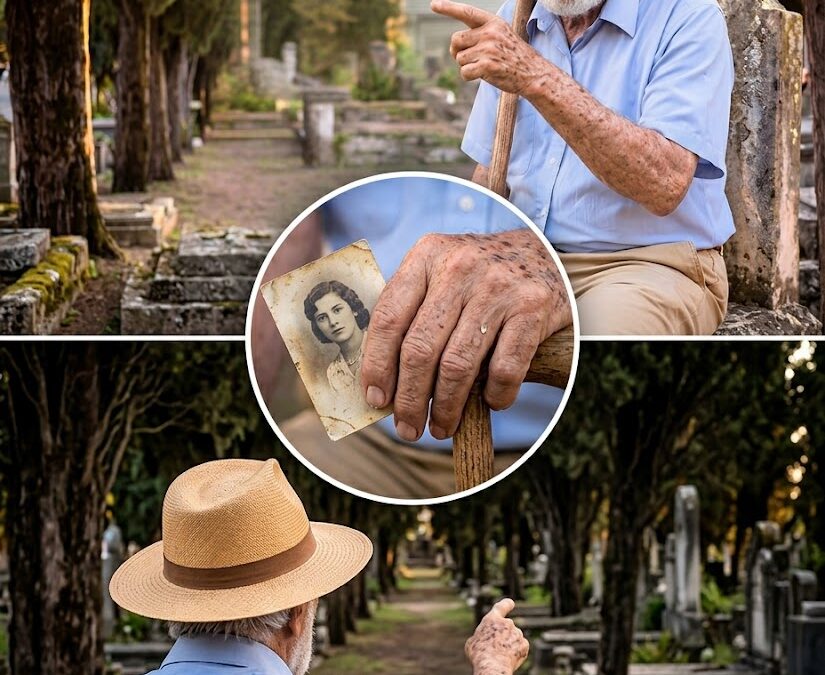
AO QUEBRAR UMA REGRA ANTIGA, O COVEIRO IMPEDIU QUE A ALMA DO FALECIDO ENCONTRASSE A PAZ. 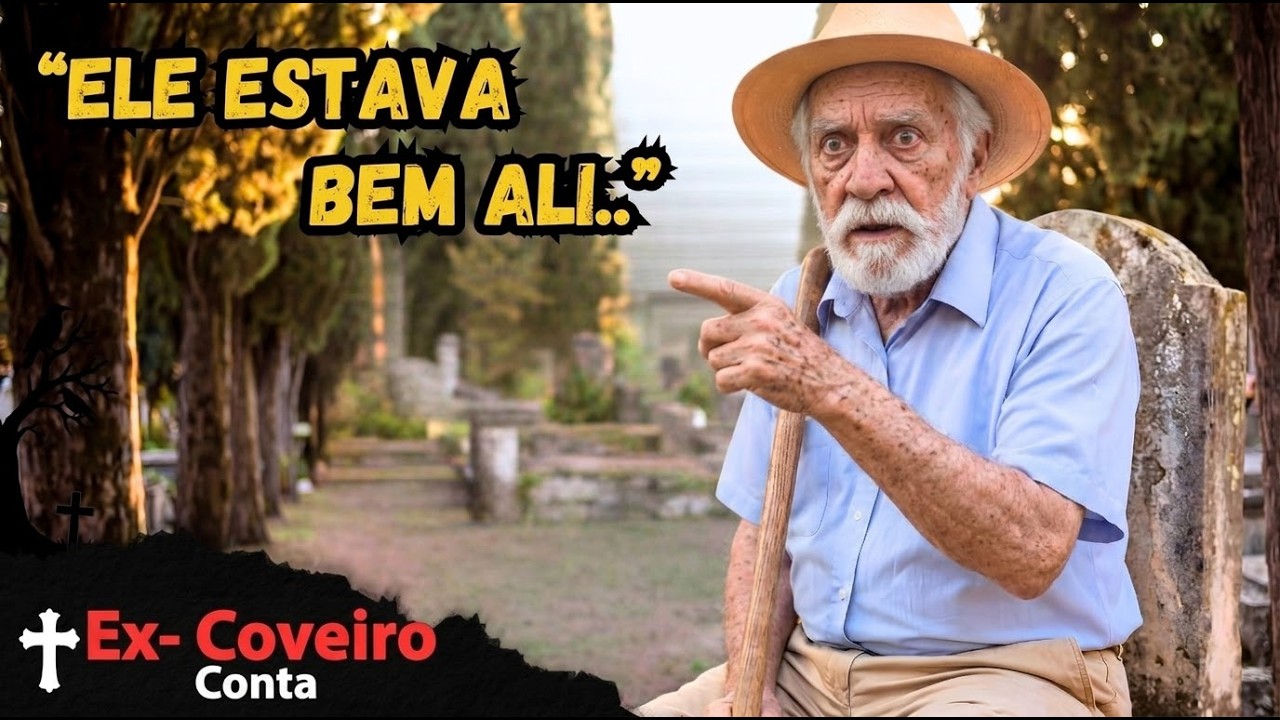
My father, who cared for this sacred ground for 40 years before me, always said that the sun is the only compass the dead have when they leave their bodies. The rule was clear and old: Never cover a coffin with earth after daylight has gone. Or the soul remains trapped in the darkness of the hole, not knowing where it was going.
I grew up hearing this not as a legend, but as a law. But pity sometimes blinds us to danger. A month ago, a procession was delayed far too long. The widow was so distraught, screaming in pain, bent over the wood, that I didn’t have the courage to ask them to stop everything and come back the next day. Out of pure compassion, I broke the sacred rule.
I sealed the man’s dwelling under the artificial light of lanterns, with night already covering the cemetery. It was a mistake born of kindness, but the spiritual world does not forgive carelessness. That week became an ordeal for me. Because for seven consecutive days, whenever I passed by block seven, I saw the boy in the gray suit standing next to his own grave, looking down, waiting for the light that I denied him.
Many people out there say that this is just a gravedigger’s tale to scare visitors, but I know what my eyes saw and the weight my soul carried until I settled this debt. If you also feel that there are boundaries between life and death that we shouldn’t cross, I ask that you subscribe to the channel. Here we treat strangers with the respect they deserve.
And tell me in the comments, do you think the intention to help justifies breaking an old rule, or should certain laws never be ignored? My name is Antonio. I am 72 years old, and I have lived 30 of those years here, among cypress-lined avenues and the silence of stone. Many people look at my profession with fear or disgust, thinking that being a gravedigger is just about digging holes and dealing with the end of things. But I don’t see it that way.
I learned it from my old father. May God keep him in a good place, for we are his guardians. The cemetery is not a repository for bodies, it is a resting place, a hotel where guests demand silence and respect. I know every sound in this place. I can distinguish the sound of a cat jumping over a wall from the sound of footsteps that don’t touch the ground.
I know when the wind blows cold because of the coming rain, and when it sends a chill down your spine because someone passed too close to you. I’ve always had this sensitivity, this ability to sense the atmosphere changing, but I’ve always dealt with it discreetly, making the sign of the cross and asking permission to enter and leave. For me, death is not the opposite of life.
It’s just a door that closes slowly. But that day the door didn’t close properly. It was a sweltering Tuesday, one of those days when the air seems still, without a leaf stirring on the trees. The sky was gray, but it wasn’t a stormy gray; it was a dry, dusty gray that made the sunlight weak and yellowish. We had a burial scheduled for 4 PM.
He was a young man, the victim of a motorcycle accident on the highway, a tragedy that shook his entire family. I prepared the grave in block 7, a more secluded area near the old wall that borders the thicket. I left everything ready, the loose soil separated, the ropes lined up, waiting for the procession.
But time went by. At 4 PM it turned into 5 PM. The sun began to set on the horizon, tinging the sky a sad orange, and there was still no sign of the hearse . My radio rang, warning that there had been a problem releasing the body from the Forensic Medical Institute and that they were running late. I looked at the clock and felt the first tightness in my chest.
My father’s rule echoed in my head. There’s a time for a funeral. The earth must cover the coffin while it is still daylight so that the light may guard the place. When the sun sets, the power shifts. The night belongs to other things, to denser energies. And to leave a grave open or to close it under the cloak of night is to ask for spiritual confusion.
I thought about calling the administration and saying I wouldn’t do the job. I thought about saying that the gate would close and that the body would have to remain in the chapel until dawn. It was the right thing to do, it was [clearing throat] the safe thing to do. But then I heard the sound of the hearse engine arriving at the main gate, and right behind it, the crying.
It wasn’t an ordinary cry; it was a visceral, piercing scream from a mother who can’t accept it, a wife who can’t believe it. The procession came walking, hurrying along the main avenue. It was almost 6 PM. The natural light was fading quickly, swallowed up by the shadows of the large trees.
When they arrived at the edge of the grave, twilight had already turned to pitch black. They turned on the headlights of the hearse to illuminate the hole. That artificial white light cut through the darkness, creating long, distorted shadows that danced on the nearby tombstones. The widow, a very young woman, threw herself onto the closed coffin.
She yelled that she didn’t want to leave him alone in the dark, that he was afraid of the dark. The boy’s mother fainted and had to be supported by other relatives. I was there with the shovel in my hand, feeling the weight of the decision. The funeral home driver looked at me hurriedly, wanting to leave.
The family looked at me pleadingly. [laughs] If I said no, if I said they would have to wait until tomorrow, I would prolong that unbearable pain for another 12 hours. I looked at the sky; there was no more sun, not a sliver of light, just the dark, starless night. I took a deep breath and mentally asked my father for forgiveness.
and to the guardians of the place, and I gave the signal. We lowered the coffin. The sound of the strings stretching seemed louder than usual. The thud of the wood hitting the bottom of the grave sounded dry, like a door slamming into an empty room. I started throwing the dirt. Each step felt like it weighed a ton.
The earth fell onto the lid, making a sound that gave me the creeps. I was trying to work quickly, sweating profusely, despite the icy wind that had begun to blow. I felt like I was doing something wrong. You know when you enter a house uninvited? That was the feeling . The air around the grave became thick and icy.
The light from the headlights seemed unable to penetrate the darkness inside the hole, as if the earth were swallowing the light. I finished the job, placed the wreath on top, and the family left, supporting each other. The hearse sped off, tires screeching. The gate was closed. I was left alone, and that’s when the silence changed. Normally, after a burial, the energy of the place settles down and becomes calm again.
But there on court seven, the energy kept vibrating. I gathered my tools and, as I walked towards the administration office to store my supplies, I had a distinct feeling that I wasn’t alone. It wasn’t the feeling of being watched by malicious eyes. It was a feeling of profound sadness, a melancholy that seemed to rise from the ground and climb up my legs.
I looked back . The newly closed grave was just a mound of dark earth, under the dim light of a distant lamppost. I didn’t see anything, but I felt it. A shiver down the back of my neck told me that something was out of place. I went home, but I didn’t sleep well. I dreamt of dark labyrinths, of someone knocking on a door that wouldn’t open.
I woke up tired, my body aching, as if I had been carrying stones all night. I went back to work the next day, trying to convince myself that it was just my imagination, that I was getting old and impressionable. The day was just like the previous one: gray sky, still air, that diffuse light that casts no shadows.
I went to do my morning patrol. When I turned the corner onto the path that led to block seven, I stopped. My heart skipped a beat and then raced. There was someone there about 30 meters away, standing right next to the mound of fresh earth where I had worked the night before; it was a man. He had his back to me, staring intently at the withered flowers on the grave.
He was wearing a dark gray suit, well- tailored, just like the one the young man was wearing in the coffin. I recognized that outfit. I had seen when the widow opened the lid for the last time to kiss his face. I wanted to scream, I wanted to ask what he was doing there, if he was some relative who had arrived early, but no words came out. And deep down, I knew it wasn’t apparent.
His posture was too rigid. He wasn’t moving, he wasn’t breathing. The wind swayed the ribbons of the flower crowns, but it didn’t move his hair, nor the hem of his suit jacket. He looked like a statue made of sadness and mist. I blinked , rubbed my face, thinking it was an optical illusion.
When I opened my eyes again, he was still there. I took a step forward, stepping on a dry branch that cracked loudly. At that same instant, the figure vanished. It wasn’t as if he had run or hidden. He simply ceased to be there, like a projected image that is unplugged. I stood there in the middle of the avenue, feeling the cold sweat trickle down my back.
I walked slowly to the grave. There were no footprints in the loose soil around. There was no sign of anyone, only the smell. A faint smell of candles and damp earth, even though it hasn’t rained. I spent the rest of the day avoiding that area. I invented services in the new section, pruned trees at the entrance, cleaned the ossuary, anything to stay away from block 7.
But night came again and I went home certain that I had left a door open. The second day was worse. The atmosphere in the cemetery became oppressive. The birds didn’t sing in that area. The silence was so absolute it was almost ringing in my ears. And I saw him again. This time he did n’t have his back turned.
I was driving a tractor to transport sand to a construction site in the back. And at a glance, I saw the boy in the gray suit. He was standing to the side now. His face was pale, with that waxy color that only the dead have. He would look at the grave and then look at the sky, as if searching for the sun.
His expression wasn’t one of anger, but of painful confusion, like someone who got lost on their way home and didn’t recognize the street. I braked the tractor. The engine noise was loud, but it seemed distant. He slowly turned his face towards me. His eyes were dark, deep, and dull. He saw me. I felt that he saw me.
And in that gaze there was a silent plea, a cry for help that crossed the distance between life and death and struck my chest like a knife. I sped up the tractor and drove off trembling. I knew what was happening. I had buried the body, but the soul had not found a way out. I had closed the grave in the darkness, and he remained out here, trapped in the eternal twilight, unable to see the light to make his way through.
The blame fell on me like a tombstone. I was the guardian. It was my responsibility to ensure they got rest, and I had failed. In the following days, the situation became untenable. I no longer needed to go there to see him. I could hear it out of the corner of my eye while I was sweeping the sidewalks. I saw the gray figure standing near the gate, staring at the busy street outside, unable to leave.
I could see his reflection in the chapel windows. He was wandering, lost, trapped in an endless cycle of searching . And the worst part was the physical sensation. I started to feel a constant chill, even in the midday heat. My arms felt heavy, my head ached. It was his energy, draining the life around him, desperately trying to find an anchor.
On the fifth day, I knew I needed to do something. I couldn’t leave that brother suffering, wandering among the tombstones, trapped because of my mistake. Rationality told me I was crazy, stressed, but my sensitive heart, the one I inherited from my father, knew the truth. I needed to fix what I broke.
I needed to open the path that I myself had closed off with earth and darkness. But how? I couldn’t dig up the body. The law of men would imprison me. I needed a solution that the law of men could not provide. I sought out a lady I’ve known for many years, an experienced medium who works in a simple house in the neighboring district.
Dona Geralda was a friend of my father and she knows that those who work with the earth of the dead end up carrying dust. Spiritual in boots. I arrived there with my uniform still dirty, my heart heavy, and I told them everything. I told them about breaking the rule, about the pity that made me close the grave in the dark, and about the boy in the gray suit who couldn’t leave.
She listened to me in silence, fiddling with the beads of an old rosary. When I finished, she looked at me with teary eyes and said that it wasn’t my fault, but the responsibility was. She confirmed what I felt. He said that the hasty burial, carried out in the pitch black of night and surrounded by the family’s despair, created a fog.
The boy did n’t know he had died, or rather, he knew something had happened, but he couldn’t find the exit, because the last image he had was darkness and crying. He needed light, he needed a farewell made with clarity under the sun so that the silver thread could finally be severed. I left there with a mission.
I needed to call my family back. But how do you call a recent widow and tell her that her husband is haunting the cemetery? I couldn’t tell the plain, unvarnished truth. They would think I was crazy, or worse, a charlatan looking for money. I picked up the burial certificate from the administration office. My hands were trembling as I dug up the number. The boy’s mother answered the phone.
Her voice [music] was a thread of sadness. I identified myself, apologized for the inconvenience, and offered the most respectful excuse I could find. He said that due to the rush and the rain that night, the tomb’s closure had been uneven, and that he would like the family to be present for a final tribute, a final prayer to seal his rest.
He said that he felt in his old gravedigger’s heart that he needed to say goodbye calmly. There was silence on the other end of the line. I thought she was going to hang up or get mad at me. But then she sighed and said that the widow, her daughter-in-law, was having horrible nightmares every night, waking up screaming his name.
He said they would come. We rescheduled for the next day. at 4 PM. I needed to make sure the sun was in the sky. The next day dawned like all the others, gray and still. I spent the morning cleaning the area around the grave. I removed the wilted flowers, swept away the dry leaves, and carefully washed the stone .
I wanted the place to be spotless. Fit for a king. I spoke quietly to the air while I worked. I asked the guest for permission to leave. I told him that help was coming, and that he should be patient. The feeling of heaviness lessened slightly, as if he were nearby, listening and waiting. At precisely 4:00 PM, the family’s car arrived.
The mother, the widow, and a brother came. They were dressed in black, their faces swollen from crying, but there was a serenity about them that hadn’t existed on the night of the funeral. Despair had given way to longing. The sun, which had spent the week hidden behind that dry haze, decided to make an appearance.
The clouds parted slightly, and slivers of golden light, that beautiful late afternoon light, began to fall upon the cemetery. I greeted them at the entrance to block 7. I removed my hat as a sign of respect and guided them to the grave. They stopped around the land. [Sighing] The widow touched the wooden cross with his name on it and began to cry, but this time it was a calm cry.
[snoring] I took a few steps back, standing near a cypress tree to give them privacy, but I remained vigilant. I needed to see it. The mother started a prayer. A simple Our Father, prayed with faith. Their voices mingled with the wind that began to blow, swaying the trees. This time the wind wasn’t cold, it was warm.
While they were praying, I looked down the alley and I saw him. He emerged from behind an ancient mausoleum and walked towards us. The gray suit no longer seemed so real. It was somewhat transparent, as if it were made of smoke. He stopped beside the widow. She did n’t see him. His brother didn’t see him. But I saw it. He looked at his wife’s face with a tenderness that made me swallow hard.
He no longer had that expression of confusion and pain. His face was clear and serene. When the prayer ended, the widow said aloud that she loved him and that he could rest, that she would be alright. It was the missing key. Hearing that under the sunlight that now bathed the entire grave, the young man in the gray suit smiled.
It wasn’t a smile for her, because she couldn’t see. It was a smile to himself, a smile of relief from someone who has finally lifted a weight off their shoulders. And then he looked at me. Our eyes met for the last time. He knew I could see him. He knew that I was the one who caused that imprisonment, but also the one who freed me.
He slowly raised his hand and waved. A simple gesture, a silent goodbye from someone who appreciates the service provided. The sunlight seemed to grow stronger around him, dissolving the shape of his face and hands. He turned into light, golden dust floating in the air, and rose. [snoring] In seconds there was no one left, just the family, the grave, and peace.
The weight on my chest vanished instantly. The air in the cemetery grew light. A little bird, a great kiskadee, landed on the cross of the tomb next to it and sang loudly, breaking the silence of a week. The family expressed their gratitude. They said they felt lighter, as if a knot had been removed from their throat. I shook hands with each of them and said that now, yes, the job was complete.
They left and I stayed there a little longer, watching the sun finally set on the horizon, taking the day with it and taking my guest to the place that is rightfully his . I learned my lesson the hard way. We cannot aspire to be greater than the laws that govern life and death. My father was right.
The sun is the guide and the night is the veil. Wanting to change that, even out of kindness, is arrogance. Today, it doesn’t matter how much the family cries, it doesn’t matter how much money they offer me or how much they beg. [music] If the sun touches the horizon, the shovel stops. The burial will take place tomorrow.
Because the peace of the soul is more important than the haste of the living. If there’s one thing I take away from this experience, it’s that death requires ritual, it requires time, and above all, it requires light. Don’t play games with timing, respect the signs, respect the schedules, and never think you know more than those who have already passed away.
And if one day sadness hits hard or fear of the unknown haunts your home, remember that the greatest protection there is is faith. Seek God, talk to Him, ask that His light illuminate the paths of those who have gone and those who remain. Where the light of God enters, no shadow remains and no spirit is lost. Keep your soul at peace and respect the mystery.
This story serves as a warning to all of us who deal with the frontiers of the unknown. If you understand the importance of respecting those who have passed away and want to continue hearing stories from those who experience daily life on the other side, subscribe to the channel now. Don’t leave me telling these memories to the wind.
Leave a like, like a lit candle, in respect, and comment below: “I respect time.” I want to know who is with me on this vigil. Until the next report.