COVEIRO: “ENTERREI A PROFESSORA JOVEM… MAS NA NEBLINA ELA ME ATRAVESSOU E O FRIO NUNCA PASSOU”
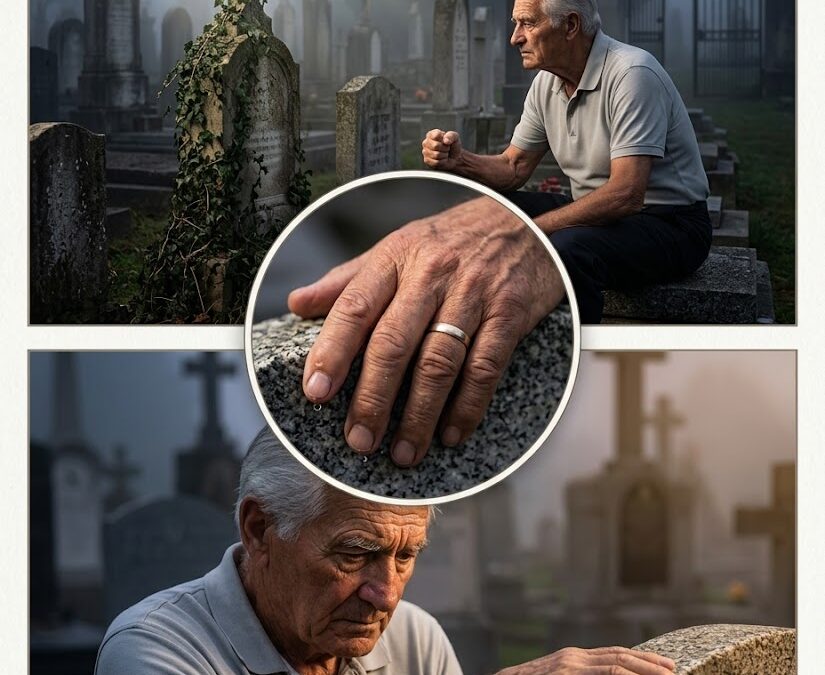
COVEIRO: “ENTERREI A PROFESSORA JOVEM… MAS NA NEBLINA ELA ME ATRAVESSOU E O FRIO NUNCA PASSOU” 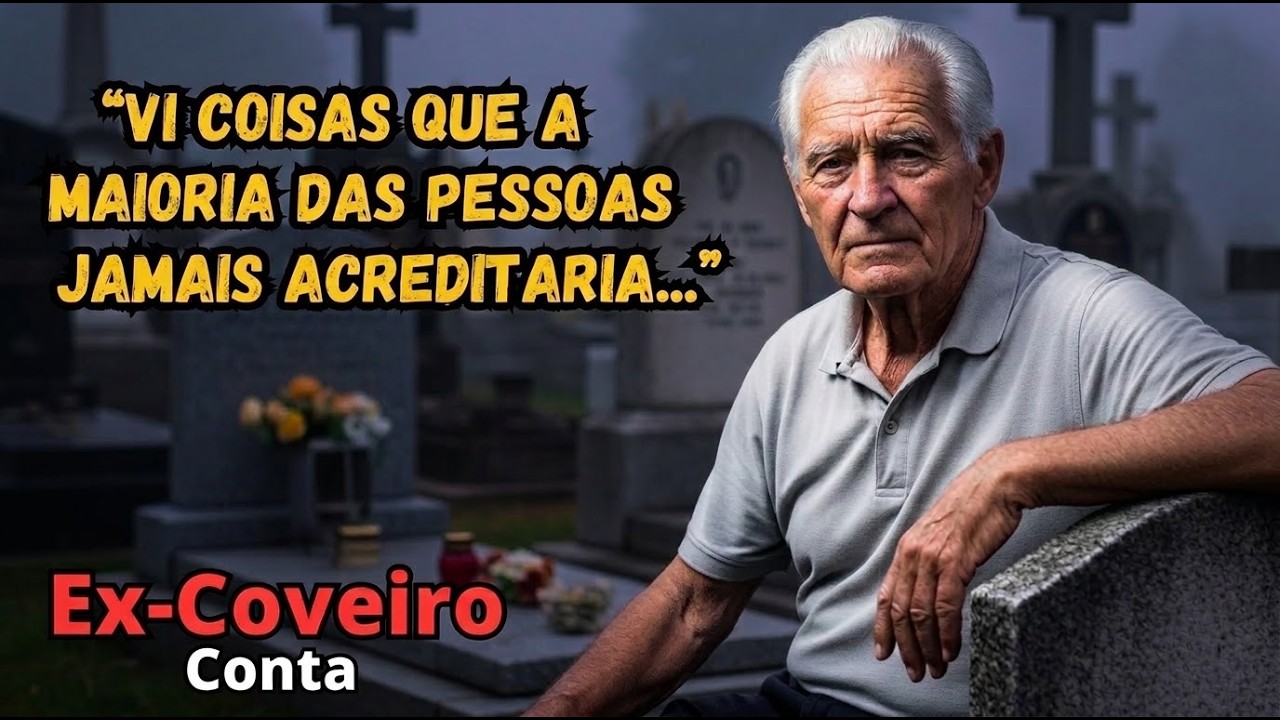
I have worked for 40 years as a gravedigger at the São Lucas municipal cemetery in Florianópolis, Santa Catarina. Throughout all this time, I’ve seen things that most people would never believe. I never feared death itself, but everything changed on a cold, damp September night in 2005. That Wednesday, we buried a young woman, 24 years old.
A tragedy that shook the entire community. After the burial, I stood alone among the ancient tombstones, while a dense fog covered the entire cemetery. That’s when she appeared, a quiet, feminine figure that didn’t respond to my words, staring at me with empty eyes, almost translucent in the darkness.
And then something happened that changed my life forever. She passed through my body as if I were air, as if I didn’t exist. I felt the ice running through every bone, every muscle, every cell. It was the first time I realized that true terror doesn’t come from the dead we bury, but from what remains trapped among them, wandering restlessly.
My name is Marcos Silva, I am 65 years old, and this is the night that defines everything I have lived through in this dark place. My history with the cemetery began long before that September night. It was in May of 1985. When I first entered the São Lucas municipal cemetery, I was 25 years old at the time.
He was young, strong, and needed a job that would pay the bills. My wife was pregnant with our first child. I couldn’t afford to be picky about work. When I saw the advertisement for the gravedigger position, I hesitated for only a few seconds. My mother got worried when I told her. My father, a practical and straightforward man, simply said that honest work deserves respect, no matter what it is.
And that’s what I took with me on that first day. The São Lucas municipal cemetery is one of the oldest in Florianópolis. It is located in an elevated area of the city. From certain points, it’s possible to see the sea in the distance. The place has a unique atmosphere. High stone walls surround the property. Ancient trees cast long shadows along the cobblestone paths.
There are old sections with elaborate tombs, marble angels, ornate crosses, and mausoleums of traditional families. Other areas are simpler: shallow graves, wooden or iron crosses. In the back is the ossuary, an old building where the oldest human remains are kept. Few employees go there. The place has a heavy energy, a silence that seems deeper than normal silence.
The person who greeted me on the first day was Alfredo. He had worked as a night watchman at the cemetery for over 20 years. A thin, tall man, with gray hair even back then. He had a calm way of speaking, eyes that seemed to see beyond what the surface showed. He took me to see the place. He showed me where the tools, the changing room, and the water fountains were located.
He explained the routine. Digging graves, assisting with burials, keeping the walkways clean, and tending to the vegetation. Manual labor, repetitive, but necessary. In the first few months, that was all it was for me, a job. He would wake up before dawn and arrive at the cemetery when the sun was still low on the horizon.
I would grab my shovel, my hoe, my pickaxe when necessary. Dig the holes to the regulated depths and dimensions. The soil in Florianópolis has a specific texture, a mixture of clay and sand, with small stones that make working difficult. Some days, the ground was damp from the previous night’s rain. It made things easier.
Other days it was dry, compacted, and required more effort. He worked with two other guys, Juliano and Rodrigo. They were both around my age, simple, hardworking people. We talked during work, we talked about soccer, about family, about plans for the future. We used to have lunch together under a huge fig tree that was near the main entrance.
We brought packed lunches from home and shared coffee from a thermos. These were moments of normalcy amidst the hard work. The burials took place almost every day. Some were quiet, small families, brief ceremonies, silent farewells. Others were devastating: parents burying children, spouses saying goodbye after decades of life together, children who didn’t understand why they would never see that person again.
I learned to maintain a necessary emotional distance . If I absorbed every pain, every tear, every cry of despair, I would n’t be able to go on. But respect always remained. I never treated my work as something mechanical or unimportant. My maternal grandmother was a deeply spiritual woman. Since I was a child, she told me stories about the invisible world.
Souls trapped between planes, spirits unable to move on, presences inhabiting places of death. She said that some people are born with a greater sensitivity to these things. They can see, feel, and perceive what others ignore. I always listened to these stories with respect, I believed them, but I had never experienced anything personally.
I thought it was just stories, legends passed down from generation to generation. During the first 8 months working at the São Lucas cemetery, nothing happened that would change that perspective. The cemetery was just a cemetery, a place where people were buried, where families came to visit their loved ones, where life and death met in a concrete and definitive way.
I would do my job, come home tired, hug my wife and newborn son, and fall into a deep sleep. On weekends I would rest, go to the beach, visit my family, live a normal life. But everything began to change subtly in the ninth month. It was February 1986. I was working alone in an old area of the cemetery.
The other boys had gone to get new tools from the shed. I was weeding around some old graves when I felt something strange, a presence, as if someone was standing right behind me, watching my every move. I stopped working, wiped the sweat from my brow with my arm, and turned around slowly. There was no one there, only the ancient tombstones, the trees swaying in the breeze, the heavy silence of midday.
I went back to work trying to ignore the feeling, but it wouldn’t go away. That weight on my shoulders, that absolute certainty that invisible eyes were watching me. I finished quickly, gathered my tools, and left that area. When I met Juliano, I asked if he had been there recently. He said no. I had gone straight to the warehouse with Rodrigo.
I didn’t comment on the feeling. I thought it was just my imagination, tiredness, maybe the intense heat. But from that day on, the sensations began to repeat themselves. Not every day, not everywhere in the cemetery, but there were specific spots where I always felt something. The old area was one of them.
The path that led to the other. There was a particular tomb, a traditional family grave dating back to 1892. Whenever I passed by, I felt a chill down my spine, an inexplicable urge to get away quickly. I started noticing other things too, sounds, footsteps on the gravel when there was no one around, low whispers coming from undefined directions.
I would stop to listen more closely, but the voices would immediately disappear. Out of the corner of my eye, shadows moving among the trees, figures disappearing when I turned my head to look directly at them. One afternoon I was putting tools away in the shed. I was absolutely certain I had left the hoe leaning against the left wall.
When I returned 5 minutes later, the hoe was on the opposite side of the storage shed, leaning against the right wall. I asked the others if anyone had touched anything. They both said no. Juliano even joked about it. Perhaps the hoe moved on its own. I laughed along, but inside, unease grew. That’s when I decided to talk to Alfredo.
It was late afternoon on a Friday. The cemetery was empty, silent. I found Mr. Alfredo near the main gate. He was smoking a hand-rolled cigarette, watching the sky begin to darken. I approached slowly and greeted him. He responded with a nod. I remained silent for a few seconds.
I didn’t know how to start the conversation without sounding crazy. Finally, I asked if he had ever experienced strange things in the cemetery. He looked at me with those deep eyes, took a long drag on his cigarette before answering. He said that those who work long enough in cemeteries end up developing a different kind of sensitivity.
Not everyone, but some people become more open, more receptive to what exists beyond the veil. I asked him if he believed in spirits, in souls that get trapped. He replied that it wasn’t a matter of believing or not. It was about accepting what is real, even when reality defies logic. I talked about the sensations of presence, about the sounds, about the shadowy figures. Mr.
Alfredo listened in silence. When I finished, he simply nodded. He told me I shouldn’t be afraid. Fear attracts negative energy. The important thing was to always maintain respect. Never mock, never challenge, never disrespect. If I maintained respect and continued doing my job with dignity, there would be no problem.
Those present know who belongs in that place. They know who cares for them with reverence. That conversation reassured me somewhat . Knowing that it wasn’t just me, that Alfredo, an experienced and balanced man, also felt these things. I continued working as normal. The feelings remained, but I learned to live with them.
When I sensed a presence, I would simply acknowledge it mentally and continue with my work. When she heard footsteps or whispers, she didn’t try to understand, she just let it pass. When he saw shadows, he didn’t follow them with his gaze; he accepted them and moved on. The years went by , my son grew up, and I had two more children.
My wife got used to my work and stopped worrying. I became an experienced gravedigger. I knew every inch of the São Lucas cemetery. He knew where the earth was easiest to dig, where tree roots were in the way, and where the terrain was uneven. I participated in hundreds, perhaps thousands, of funerals. I’ve seen pain in all its forms.
Mothers fainting over coffins, fathers needing to be held up by four men. Widows who would stand for hours in absolute silence. The supernatural sensations continued throughout the years. Some weeks were more intense. I constantly felt presences , I saw shadows every day.
I would wake up in the middle of the night certain that someone was in the room. Other weeks were calm. The cemetery looked like just an ordinary cemetery. I learned to read the signs. On certain days the air felt heavier. The temperature dropped even on hot days. The birds avoided certain areas. In those days, I knew I had to be extra careful, to show redoubled respect.
Seu Alfredo became a close friend. We talked frequently. He used to tell me stories from his years in the cemetery. He once told me that he saw an entire procession of spirits walking down the main avenue. It was 3:00 AM. He was doing his security rounds. He saw dozens of translucent figures walking silently.
They wore old clothes, from different eras. He stopped and just watched. They walked past without looking at him. They disappeared into the fog. Again he saw a child playing among the graves. As he approached, the child disappeared. Juliano and Rodrigo also began to notice things over time. Juliano admitted that he often felt like someone was calling him by his name.
When I turned around, there was no one there. Rodrigo said that he once saw a woman dressed in white standing near the ossuary. When he blinked, she was no longer there. None of us were afraid. It was just part of the job, part of that place. I learned that the São Lucas cemetery had a heavy history. It was built in 1878.
Over 100 years of deaths, burials, tears absorbed by the Earth. There were disease outbreaks at the end of the 19th century. Hundreds were buried in a short period of time. There were suicides. Murders, tragedies of all kinds. Each piece of that land carried memories, some light, others dense and suffocating.
The toilet in the back was the heaviest place of all. An old stone building with thick walls and rusty iron doors. Inside were the oldest remains, the skeletal remains of people buried decades ago, whose graves were removed to make room for new burials. Few employees liked going there. The energy was oppressive, the silence had a different quality.
I avoided the ossuary whenever possible. I only went when absolutely necessary. I spent 15 years working at the São Lucas cemetery, without any remarkable events other than the constant sensations. 15 years of routine, burials, maintenance, living with the invisible. My life continued in parallel.
Children growing up, stable marriage, good health. I was 40 years old. My body could still handle the hard work. Juliano had left and found a better-paying job in construction . Rodrigo continued. Two new, younger boys entered . Everything changed on Wednesday, September 14, 2005 . I remember exactly what that day was like.
The sky dawned cloudy, the air humid, and the temperature low for September. I arrived at the cemetery at 6:30 in the morning. Mr. Alfredo was at the gate. He greeted me with a wave. He seemed more serious than usual. I asked if everything was alright. He said he had woken up with a bad feeling. I didn’t know how to explain it.
I just felt that something heavy was in the air. The day’s schedule included a burial at 4 PM. A young woman, 24 years old. Helena Rodriguez had died in a car accident two days earlier. The car overturned on the highway, she and two other friends were in it. The others survived with minor injuries. Helena was not so lucky.
The news had shaken the community. She was a primary school teacher , loved by everyone, and had been engaged for three months. We dug the grave in the morning, me, Rodrigo, and the two young boys. The ground was especially difficult that day, full of stones and compacted. It took us almost four hours to finish. We ate lunch in silence.
None of us were in the mood for the conversation. Alfredo’s premonition had spread. We all felt that the day had a different quality. At 3:30 PM, the procession began to arrive. Cars and more cars. People of all ages, many of them children, probably Helena’s students . The coffin was white, covered in colorful flowers.
When the family got out of the car, the weight of the tragedy became evident. Helena’s parents seemed to have aged decades in two days. Deep-set eyes, pale faces, mechanical movements. The groom was devastated. He needed to be supported by friends. The ceremony was one of the most painful I have ever witnessed.
The priest spoke about the injustice of premature death, about interrupted plans, and destroyed dreams. The children cried without fully understanding. They only knew that their beloved teacher would not be returning. The groom tried to speak, but he broke down. She fell to her knees, sobbing. They had to take him away from the grave.
When the time came to lower the coffin, Helena’s mother collapsed. She shouted no, that they couldn’t take her little girl, her only daughter. He tried to throw himself into the grave. Three men had to hold her down. Her screams echoed throughout the entire cemetery. It was the sound of the deepest pain that exists, the pain of a mother losing a child. We lowered the coffin slowly.
Each inch felt like it weighed a ton, not from physical weight, but from emotional weight. When the coffin hit the bottom, the silence that followed was absolute. Even the children had stopped crying. It was as if the whole world had stopped at that moment. The priest threw the earth and spoke the final words.
People began to say goodbye, throwing flowers, touching the earth, whispering final messages. The ceremony lasted until almost 6 PM. The sun was low. Long shadows covered the cemetery. The temperature had dropped even further. My breath formed clouds of vapor. People gradually left .
At 7 pm, only the immediate family remained: parents, fiancé, some uncles and cousins. At 7:30 PM they started to leave. The cemetery closed at 8 PM. I needed to cover the grave and put away the tools before that. By 7:45 PM, everyone had left. Rodrigo and the younger boys had left earlier. They had another job to finish in the opposite area. Mr. Alfredo was at the gate.
I saw his silhouette in the distance. I was alone in the burial area. I grabbed the shovel and started throwing dirt onto the coffin. The sound of the earth hitting the wood had a funereal quality. Each step seemed to sound louder than normal. The fog had begun to descend. It came from the sea, thick and moist.
Within minutes, visibility had decreased drastically. I could barely see beyond 5 meters. I finished covering the grave. I was smoothing the ground when I felt that familiar sensation of presence, but much more intense than ever before . It was as if someone was standing right next to me, so close that I could feel their body heat and breath. I stopped what I was doing.
I stood motionless for a few seconds. My heart started racing. My skin crawled completely. I looked to the side slowly. There was no one there, just the swirling fog, moving with the cold wind. I took a deep breath and tried to calm down. It was simply heightened sensitivity. It had been an emotionally difficult day.
My mind was being manipulated. I gathered the tools and put them in the wheelbarrow. The fog was getting thicker and thicker. I could barely see the path ahead of me. The cemetery lights had switched on automatically, but the light barely penetrated the fog. Everything was gray and white. The world seemed to have lost its colors.
I started pushing the cart toward the storage room. The sound of the wheels on the gravel echoed strangely, muffled by the fog, but amplified by the silence. Each step I took seemed to produce a double echo, as if someone were walking at exactly the same pace as me. Half a step back. I stopped.
The echo continued for two more steps and then ceased. My blood ran cold. I turned slowly. I looked back. The fog moved in slow waves. I couldn’t see anything but gray and white. I stood there, listening to the absolute silence. Neither wind, nor birds, nor distant sounds of the city. It was as if the cemetery had been isolated from the rest of the world.
I turned back and kept walking. The double steps returned. Every time my foot hit the gravel, I heard another foot hitting it right after. Accelerate. Their steps quickened as well. I stopped again. The footsteps continued for three beats before ceasing. Something was following me. I left the cart where it was.
I picked up only the shovel, holding it as if it were a weapon. I started walking quickly towards the gate. I forgot the storage unit, I forgot the other tools. I just wanted to get out of there. The fog seemed to get thicker with each passing meter. I was practically walking blind, guiding myself by my memory of the place. That’s when I heard a low sound, somewhere between a moan and a sigh.
It was coming from all directions at once . It’s impossible to determine the origin. I stopped. My heart was beating so hard it hurt in my chest. The sound came again, closer, more defined. It was a woman’s voice, suffering, sad, lost. My mouth was dry. I tried to speak, but no sound came out. I cleared my throat and managed to whisper.
I asked who was there. Silence. Then, the fog in front of me began to move differently, not with the wind, but as if something was forming inside it. I stood there, paralyzed, watching. The fog gradually gained density at a specific point, slowly rotating and condensing, and then it appeared. A female figure standing approximately 10 m away.
He had his back to me. She was wearing something light-colored, white or gray, impossible to tell in the fog. Long hair fell down her back, swaying slightly, even without wind. She was completely still, arms at her sides , head tilted slightly downward. My throat closed up. Every instinct in my body screamed at me to run, but my feet were glued to the ground. I gripped the shovel tighter.
His hands were trembling so much that the metal was rattling slightly. I tried to speak again. I asked if the person was okay, if they needed help. My voice came out weak and trembling. The figure did not respond, it did not move. He stood there with his back to her, completely still. Seconds passed, or perhaps minutes, it’s impossible to know.
Time seemed to have stopped completely. There was no sound, no movement except for the swirling fog. Then she began to turn slowly, a smooth and continuous movement. My heart almost stopped. I wanted to close my eyes, but I couldn’t look away. She turned completely around, now she was facing me and I could see her face.
It was Helena, the young woman we had buried less than two hours ago. The face was exactly the same as the one I saw in the coffin during the wake, but the eyes were different. They were empty, completely empty, not black. Not white, just empty, as if there was nothing inside them. Eyes that did not see, but observed; that had no life, but were not dead.
She looked at me. Those empty eyes fixed on me, piercing me. I felt as if she could see every thought, every memory, every fear inside me. I wanted to scream. My mouth opened, but no sound came out. I wanted to run. My legs wouldn’t obey. I stood there paralyzed while she watched me. Then she started walking towards me . Slow, silent steps.
Her feet made no sound on the gravel. The fog seemed to part before him, making the path easier. With each step she took, she felt the air grow colder. The temperature was dropping degree by degree. My breath formed dense clouds of vapor. My whole body was trembling. She came close, very close, less than 1 meter away.
I could see every detail of her face: her pale skin, her colorless lips, those impossible eyes. She stopped and just stood there looking at me. My body had completely frozen, every muscle tense, every nerve on high alert. She raised her right hand, a slow, deliberate movement, extending it toward me, as if she wanted to touch my face.
I couldn’t move, I could only watch that pale hand approaching. When her fingers were inches from my face, she stopped. We remained like that, frozen in time, separated by only millimeters. And then she took the final step. It entered me. It literally went right through my body, entered through my chest and exited through my back.
The cold I felt was indescribable. It wasn’t just physical cold . It was a cold that penetrated beyond the skin, beyond the bones. It was cold in the soul. I felt every molecule of my body being pierced, every cell invaded by that presence. It only lasted seconds, but it felt like an eternity. I felt an immense weight in my chest, emptiness and presence at the same time.
I felt absolute sadness. It wasn’t my sadness, it was hers. The sadness of a life interrupted, of dreams destroyed, of unspoken farewells. I felt pain, the pain of being trapped, of not being able to move on, of existing between worlds. Then she left. The feeling of heaviness disappeared abruptly, as if it had been ripped from inside me.
I stumbled, I almost fell. Peace slipped from my hand, hitting the gravel with a metallic sound that echoed in the mist. I placed my hands on my knees, breathing heavily, trying to process what had happened. When I looked up, she was no longer there. The fog swirled empty, no sign of the figure. But I knew, I knew with absolute certainty that it had n’t been a hallucination, it hadn’t been my imagination, it had been real.
Helena had crossed my path. I picked up the shovel from the ground with trembling hands. I turned around and started running. I ran down the avenue towards the gate. Stumbling over the stones in the path, the fog making it difficult to see. I did n’t look back, I didn’t stop. I just ran.
I arrived at the gate in seconds that felt like hours. Alfredo was there. As soon as he saw me, his expression changed. He knew, without me saying anything. He knew something had happened. I grabbed his arm, breathing heavily. He looked me in the eyes, saw something there that made him take a step back, and pulled me out the gate. He locked it quickly.
He asked what I had seen. I counted. The words came out jumbled together, confused. I spoke about the figure in the mist, about Helena, about her passing through my body. Mr. Alfredo listened in silence. When I finished, he simply nodded. He said it had happened before. Not with him, but he knew about cases.
People who have recently been buried and are unable to accept their fate, who remain trapped and confused, sometimes appear to those who are sensitive, to those who can see. They usually move on after a few days, when they finally accept what happened. But the touch, the crossing, that was rare, it meant that she had recognized me as a bridge, someone who exists between the two worlds.
I went home that night in a state of shock. My wife noticed immediately and asked what had happened. I told them everything. She hugged me and said I should take a few days off, but I knew it would n’t do any good. What had happened wouldn’t be resolved with rest. In the following days, I returned to work.
I avoided the area where Helena was buried. I didn’t have the courage to go near it. Mr. Alfredo paid close attention. He knew that experiences like that leave their mark, and it did. I started having dreams. I saw Helena walking through the fog, looking for me. I would wake up in the middle of the night with a heavy feeling in my chest, as if she were still inside me. Two weeks have passed.
The dreams gradually diminished. The feeling of heaviness gradually disappeared. Seu Alfredo said that she had probably moved on, that she had found her own way. I wanted to believe it, but part of me knew that night had changed something fundamental. I was no longer just sensitive to the other side.
I had become a doorway, a passageway. In the years that followed, I saw other presences, many others. Some were just passing by, figures that appeared and disappeared. Others remained, figures who observed from afar, who walked among the tombs. No other has ever pierced me, but I always sensed when they were near.
It was as if Helena had paved the way, made the connection stronger. Juliano returned to work at the cemetery 5 years later. The job in construction hadn’t worked out. When I told him about that night in September, he remained silent for a long time. Then he said that he believed he himself had begun to see more things in recent years.
The cemetery does this to those who work there. It opens up perceptions and sensitivities. Mr. Alfredo retired in 2010. On his last day, we talked for a long time. He said that the São Lucas cemetery holds many stories, stories of the living and the dead, of farewells and lasting memories. He said that I had been chosen to be a witness, to see what others do not see, to understand what others do not understand.
And that this was a responsibility and a burden, but also a privilege. Today I am 65 years old. I continue working at the São Lucas cemetery. My body is not the same anymore. Work has become more difficult, but I can’t leave. I feel that I belong to this place as much as it belongs to me. The presence of these phenomena continues, some days stronger, others weaker.
I learned to coexist, to respect, to acknowledge. I still pass by Helena’s grave regularly. Now she has a beautiful tombstone, white marble with a picture of her smiling. Fresh flowers always. Family and students visit frequently. Every time I pass by, I feel something. A light presence, a gentle touch in the air.
It ‘s not the same weight as that night anymore, it’s something different. Perhaps gratitude, perhaps just recognition. The night of September 14, 2005, changed my life forever. Before her, I interacted with the supernatural in a distant way. I knew it existed, but I kept my distance. After her, there is no more separation.
I exist between two worlds. I see them both, I feel them both, and I carry that mark on my chest. It doesn’t leave a visible mark, but it’s a mark I feel every day when I wake up. Many people ask me if I’m afraid. The answer is complex. I am not afraid of death. I’ve worked with her for 40 years.
I am not afraid of the dead. They are simply people who have passed away. But I have deep respect, respect for the mystery, for the tenuous boundary that separates life and life. And I am aware that there are things we don’t understand, things we shouldn’t try to fully comprehend. The São Lucas cemetery is not just a place where bodies are buried.
It is a place where memories remain, where love and pain crystallize on Earth. It’s a place where the veil between worlds is thinnest, where some can see beyond. And for those who work there, who spend days, months, years taking care of that space, the cemetery becomes a part of them, just as they become a part of the cemetery.
I carry Helena with me since that night, not as a burden or trauma, but as a constant reminder that there is more, more than physical life, more than definitive death. There is something in between that doesn’t have a proper name, that doesn’t fit into rational explanations. And I had the privilege and the curse of experiencing this in a way that few others experience.
When I finally retire, and I know that day is approaching, I will miss the São Lucas cemetery. I will miss the quiet avenues, the ancient trees, even the heavy energy of the ossuary. I will miss the presences, the figures I see out of the corner of my eye, the voices I hear when everything is silent, because all of that is part of who I have become.
This is my story. The story of an ordinary man who worked in a cemetery for 40 years and discovered that death is not the end, it is merely a transition. A story of a night when a boundary was crossed as a spirit passed through a living body, leaving an eternal mark. This is a story I tell not to convince, but to bear witness.
Because testimony is all I can offer. The evidence lies within me, in the memory of that impossible cold, of that sadness that wasn’t mine. If you know someone who works in a cemetery, ask them about the things they see and feel; you’ll probably discover similar stories, experiences that defy explanation. Because cemeteries are not ordinary places.
It never was, and it never will be. It is a place of passage, not only for the dead, but for truths we prefer to ignore. And those of us who work there, we become guardians of these truths, silent witnesses to the deepest mystery of existence. I carry that mark to this day and will carry it until my own death, when I will finally and definitively cross the border that I briefly crossed that September night.
And perhaps then I will understand, perhaps Helena is waiting on the other side to explain. Or perhaps the mystery will remain a mystery. And may it ultimately be exactly as it should be. Amen.