EX-COVEIRO RELATA | ENTERROU PESSOALMENTE A FALECIDA ESPOSA NO CEMITÉRIO… E A MENSAGEM DELA
EX-COVEIRO RELATA | ENTERROU PESSOALMENTE A FALECIDA ESPOSA NO CEMITÉRIO… E A MENSAGEM DELA 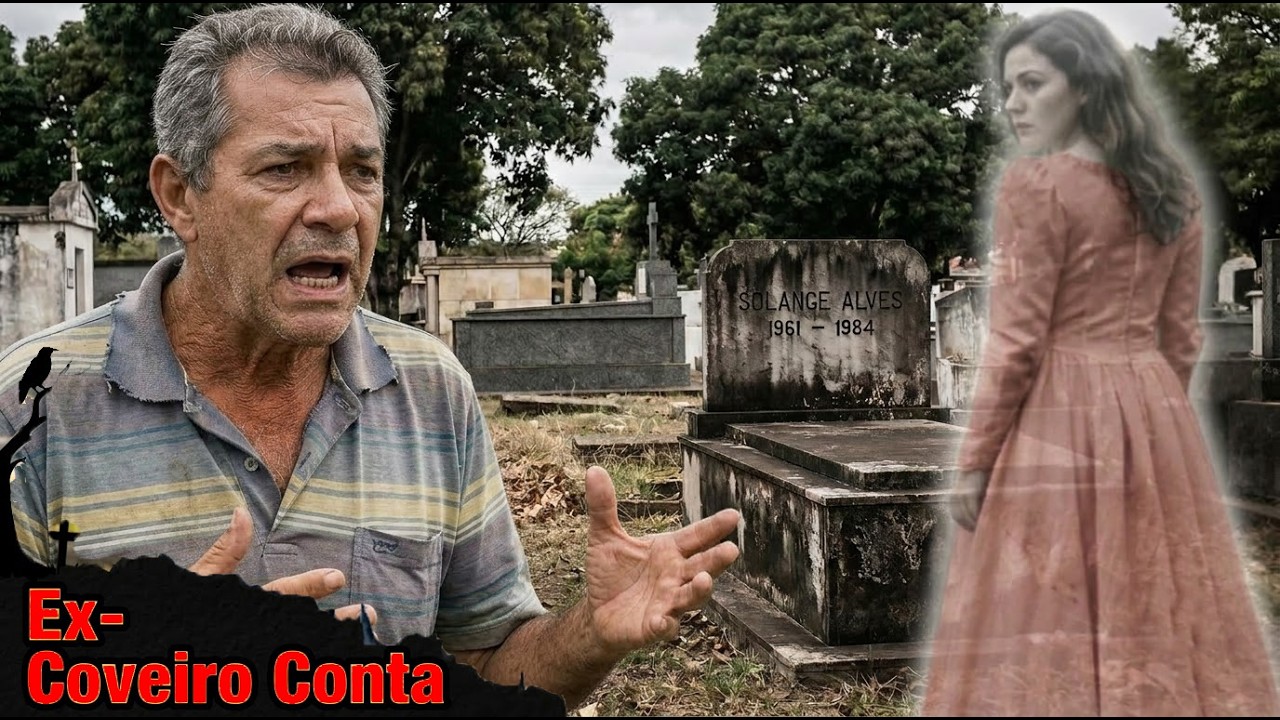
On September 17, 1984, I buried my fiancée in the dress she had chosen for our wedding. I stood there on the edge of that grave, feeling something inside my chest that wasn’t just pain. And seven days after the burial, I returned to the cemetery. That ‘s when a man I’d never seen before approached, looked at me, and asked if I was the girl’s fiancé.
After that, he said he had a message for me. And that I didn’t need to believe, I just needed to hear. My name is Arlindo Pereira da Costa, I am 72 years old, and this is my story in a few minutes. At the wake, before they closed the coffin, I approached, looked inside, and then I saw.
Solange was wearing the wedding dress that she herself had chosen for our wedding. White, simple, beautiful, just the way she liked it. The wake was held at her parents’ house. The room was full, but quiet, in a way I had never seen before. People stood there, staring at the ground. Nobody knew what to say.
I didn’t have the right word for it. She was too young and it had all happened too fast. And nobody was ready. I stood in front of the coffin for a while. I couldn’t speak, I couldn’t think straight. Her face was calm, with nothing to show what had happened that afternoon. It was as if she were just sleeping, waiting. And it was at that moment that the tightness in my chest began.
Something I didn’t know, that didn’t have a name. That wasn’t the pain of losing someone; it was different, but profound, as if some presence had stopped by my side. And the feeling didn’t go away. She stayed there while I said goodbye to her. Solange was 23 years old. She was a simple girl, raised right here in Bauru, from an honest and hardworking family.
We met at a party of a mutual friend and started dating that same year. We dated for three years before I proposed to her. We were happy with the plans, the date set, and the invitations already sent out. The dress was being kept at her parents’ house, and the final details were being arranged.
It was that final phase, when everything is in place and we’re just waiting for the day to arrive. She was organized and liked to have everything ready in advance, in her own way. I had chosen the venue, the decorations, and finalized every detail ahead of schedule. And that Saturday afternoon, she was just washing the porch of her parents’ house.
A simple, everyday thing. On September 15, 1984, she slipped, fell, and hit her head on the porch floor. The parents heard the noise from inside and ran. She was unconscious. They took her to the hospital as quickly as they could, but Solange didn’t survive. He died the same day, a few hours after the fall.
I was at home when the phone rang. He was her father. The voice already said it all [clearing throat] before the words even spoke. I ran to the hospital, but when I arrived, she was already gone. I stood in a hallway, staring at a closed door, unable to go inside. It was an ordinary Saturday afternoon.
She was washing the balcony, and it didn’t make any sense. I went back to her parents’ house that same night. We stayed in the room for a while, hardly saying anything. Her mother was crying silently with a handkerchief in her hand. The father kept staring at the floor. My head was empty, but my chest was full of that tightness that wouldn’t go away.
And the guilt came slowly, but it came, because I hadn’t gone to her house that afternoon, like I sometimes did. If I had been there, maybe things would have been different. I knew it was pointless to think like that, but our minds don’t ask for permission. And that guilt crept into me without me realizing it.
On the day of the funeral, I asked to help carry the coffin. It was the last thing I could still do for her. And each step was harder than I expected. It wasn’t just the weight of the coffin; there was something else mixed in there. As we walked towards the grave, that tightness from the wake returned, different, but present, as if something were there beside me on that path.
But I didn’t look away . I went all the way. And when we arrived at the grave and they began to lower the coffin, I stood there on the edge, watching. As the earth covered the coffin, it grew heavier and heavier inside me. It wasn’t sadness, it was already beyond sadness. It was as if something was being sealed away there along with her, beneath that earth.
People started leaving little by little, family, friends, acquaintances, everyone went home. I stood there, unable to take the first step to leave. I stood there in front of that land, not knowing what to expect. When I finally moved, the cemetery was almost empty and the day was drawing to a close.
I left there a different person than when I arrived. It wasn’t just sadness, it wasn’t just longing, it was that thing that had started at the wake, that had grown during the funeral, and that had become trapped inside me. When I passed through the cemetery gate, I didn’t know what it was. All I knew was that she was mine now and that she wasn’t going away easily.
When I got home after the funeral, the first thing I did was sit down in the kitchen. I did n’t pay any attention, I didn’t eat, I just sat and stared at the table. On top of it was a note from Solange in her handwriting, a list of things for the wedding. I left it there, I couldn’t even touch it.
The next day, I went to work, not because I was feeling well, but because staying home doing nothing was worse. At home, the silence was different, a full and heavy silence that lingered in every corner. At work, at least, there was noise, there were people, and that helped pass the time without thinking so much.
At work, colleagues did n’t know what to say. Some came to shake hands, to say they were very sorry. Others looked away as if they did n’t know how to treat me. I understood. I didn’t know what to do with myself either. And the day went by. But there was no escaping the night . The room smelled of her. It wasn’t strong, it was soft, as if it had lingered in the air in a way that wouldn’t go away.
I would lie down, close my eyes, and that smell would still be there. I would stand still, afraid to breathe too deeply and have him leave. It was on the second night that the dreams began. I dreamt about Solange. She was wearing a wedding dress, standing in front of me, looking at me. Her mouth was moving as if she were saying something, but I couldn’t hear anything.
The next day, I dreamed again, and the day after that, every day, she appeared in the same way, in a wedding dress, her mouth moving, trying to tell me something I couldn’t hear, and every day I woke up in the middle of the night, staring at the ceiling of my dark room, without understanding what it meant.
One of those nights, after waking up from such a dream, was when I heard it. It was weak, distant, like someone speaking from the other side of a thick wall. It was impossible to understand what it was, but it was a whisper. I stood still, trying to listen better. It lasted a few seconds and then stopped. I tried to find an explanation.
Was it the wind, the neighbor, or tiredness? I knew it had to be this way, but the following night it happened again, and this time I didn’t try to explain, I just listened quietly until it stopped. I understood my dreams; in my dreams I knew I was asleep, but what I heard when I was awake, lying in the dark, that I didn’t know what it was.
And that’s what really unsettled me. And the guilt continued to grow beneath it all . Why hadn’t I gone that afternoon? Why didn’t I go that Saturday? These were questions that wouldn’t leave me alone. They came to work, they came at lunchtime, they came when I was trying to sleep, and each time they came back they weighed a little more than before.
Each day was the same as the previous one, only a little more tiring. I would wake up, go to work, come back, try to eat, try to sleep. It was a meaningless routine, done only to pass the time. Solange’s family would call from time to time to see how I was doing. I kept saying I was fine, but I wasn’t.
The week went by like that, and that tightness in my chest that had started at the funeral hadn’t gone away; on the contrary, it had settled in me like something from which there was no return. And I carried that burden from one day to the next. On the seventh day after the burial, I woke up feeling different, as if something was waiting for me.
I got up and stood at the window for a while, looking out at the street. And then I knew, I needed to go to the cemetery. I didn’t know what I expected to find, I only knew that I needed to go. It was that feeling you get when you know you have a place where you need to be, even without being able to explain why.
I got dressed, grabbed my house keys, and left. The cemetery was about a 20-minute walk away. I went walking. I walked the whole way in silence, with my hands in my pockets, looking at the ground. I wasn’t thinking about anything specific, just walking. And as I got closer, that slight tightness from the morning began to transform into something else.
And when I got to the gate, I paused for a moment before going in. It was the first time since the day of the funeral. So I took a deep breath and went in slowly. It was still early. The cemetery was quiet, almost empty. There were one or two visitors way back there , far away, and some gravediggers working in another area, distant from where Solange was.
The sun was strong, but inside the cemetery it felt cooler. I walked slowly along the stone path to the place where I knew she was. As I got closer, the air felt different. It was as if the space around that tomb had been separated from the rest in some way I can’t explain. I walked more slowly, almost without wanting to make a sound.
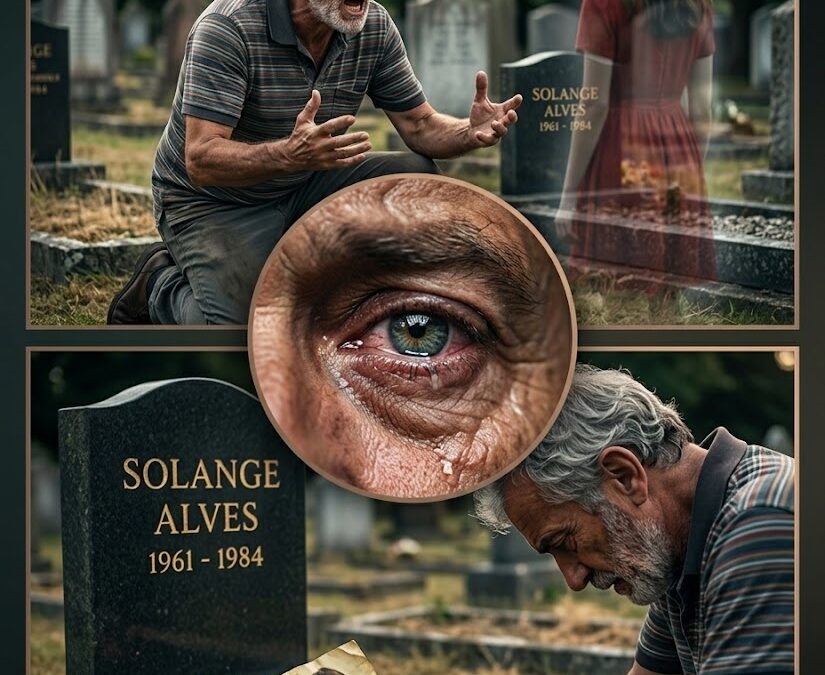
And when I got to the front of the tomb, I stopped. The tombstone was there with her name, Solange Alves, her date of birth, and the date September 1984. Between them was a small line, and in that small line was everything she had lived through. 23 years old. I bent down and cleaned the tombstone with my hands, slowly and carefully removing everything, as if it were something that needed to be done the right way.
I had no cloth, I had nothing but my hands. And then I stood in front of the tomb and tried to pray. I’m not much of a prayer, I never have been, but I tried there. The problem was that I didn’t know what to order. What should I ask for? That she would come back? It would n’t make any difference. Asking to understand what had happened would n’t have gotten an answer either.
So I just stood there in silence with her. I was in no hurry, I had nowhere to go. At that moment, that tomb was the only place that made sense for me to be. It was there that I felt something strange again, but this time it was different from anything I had felt before. It wasn’t the tightness, it wasn’t the smell, it wasn’t the whisper, it was a tranquility that arrived suddenly, without warning, as if someone had placed their hand on my shoulder without me seeing. I didn’t move.
I stayed quiet, letting it be there. I do n’t know how long I was like that. Time flows differently inside a cemetery than on the street. We lose track of time easily. I was so immersed in that moment that the rest of the world had disappeared for a while. There was no more work, no more home, no more difficult week. That was all there was.
And that’s why I didn’t notice when the gravedigger arrived. He had stopped a few meters from me and watched me for a while before approaching. I only realized it when I heard the sound of his footsteps on the dry ground. I turned around suddenly, startled by the noise that broke the silence. He was an older man , around 60 years old, dressed in work clothes, with calloused hands from working the land every day.
His face was serious, but not gruff. It was the face of someone who had seen a lot over the years and had learned not to be surprised by anything. He stood there, looking at me before speaking. He looked at me and politely asked if I was the fiancé of the girl who was buried there. So, with that word, groom.
He didn’t ask if I was a relative, if I was a friend, if I was family. He specifically asked if I was the groom. I stood there , unable to answer immediately, wondering how that man knew. I had never seen him in my life. It must have taken me a few seconds to be able to speak. I looked at him, looked at the grave, and tried to understand what was happening.
That man worked there. He could tell who was buried in each grave. But knowing that I was the groom, that I couldn’t explain. So I replied in a low voice, like someone who is still not sure what they are hearing. She said yes, that I was her fiancé. And the gravedigger nodded slowly, as if that confirmed something he had been expecting to hear.
He wasn’t agitated, he wasn’t nervous, he was calm, like someone who is about to say something that needs to be said and knows that the moment is right. He took a step towards me, slowly. [clearing throat] And when he spoke again, his voice was low. He said he had a message for me. He used the word “message”.
And then he said that I didn’t have to believe him, that he understood if I thought it was crazy, but that he needed to hand it over, that he had kept it for days and couldn’t hold it in any longer. Sin. I heard that word and something inside me stopped. It was as if some part of me already knew that this was coming.
As if the dreams, the whispers, the perfume had all been a preparation for that moment all week. I didn’t say anything, I just kept looking at him, waiting for him to continue, and he understood that I wanted to listen. She took a deep breath, looked at the tomb for a second, as if asking permission to speak, and began to tell her story.
He said that a few days ago, while working on a nearby grave, he had seen something he wasn’t expecting to see. I had seen a woman in a white dress standing in front of that tomb. He didn’t immediately pay attention, thinking she was a visitor, but when he looked closer, he realized the dress was different. It was a long, white wedding dress with lace.
And the woman stood there, quiet, looking at the tombstone. He says he approached, but she didn’t move when he got close. She stood there, staring at the gravestone, as if she hadn’t noticed he was there. And when he came even closer, she turned her face and looked at him. He stopped talking for a second at that point. I saw his face change.
It wasn’t fear, it was the expression of someone who has experienced something they still don’t quite know how to deal with. He looked at me, then looked at the grave, and then said that she had spoken to him, that she had said something, and that it was for me. She said she didn’t blame her fiancé for anything.
Those were the words the gravedigger used, that it wasn’t his fault he hadn’t been there that afternoon, that it wasn’t anyone’s fault, and that she needed him to know that, and she said she loved him. The gravedigger said this while looking directly at me. They were few words, simple, but I heard each one of them in a way I had never heard anything in my life.
I do n’t know what happened to my legs. They faltered, and I held onto the edge of the grave to avoid falling, both hands on the cold stone of the tombstone, staring at the ground. I couldn’t speak, I couldn’t think. Then, the tears came on their own. And it was at that moment that I felt the weight I had been carrying since the funeral begin to lighten.
That guilt that had crept into me without my realizing it, that had remained lodged there all week, gradually loosened itself , as if someone had opened a window inside me. I understood at that moment why the week had been that way. The dreams, the whispers, the scent of perfume inside the house weren’t things in my head, they were hers.
She was trying to reach me somehow and hadn’t been able to. He even used that gravedigger as a route, that man who didn’t even know me. I straightened up and looked at the gravedigger. He was standing beside me , quiet, hat in hand, with that air of someone who had done what needed to be done and was now waiting. I couldn’t say anything, I just looked at him and I think he understood.
Then he said he needed to get back to work. He put on his hat, turned around, and walked off down the dirt path without looking back. I kept looking at his back until he disappeared among the tombstones. So, I was alone again. I stayed there for a long time. After he left. I spoke to her softly, looking at the gravestone.
I told her I had heard the message and that I missed her. And I told her that I loved her and always would . I don’t know how long I talked to her like that. It wasn’t much, but it was enough. And when I stopped, the silence around the grave was different from what it had been when I arrived. It was lighter.
It was a silence of someone who had already said what needed to be said. And I think she does too. And on the way back home, I didn’t look at the ground, like I had done on the way there. I kept looking ahead. The neighborhood was the same, the streets were the same, the houses were the same, but I was different.
I was no longer the same person who had left home that morning, and I still didn’t quite know who I was now. In the days that followed, things slowly settled down. The guilt never returned in the way it was before. The dreams about her continued for a while, but they were different. She seemed calm, just looking at me. And I would wake up with a calmness I hadn’t felt before, as if she had achieved what she was trying to do.
I never remarried. It wasn’t because of a promise, it wasn’t because of sadness. Over time, people would ask me if I did n’t want to rebuild my life. I replied that I was fine, and I was. The truth is, I never wanted to, not because the pain didn’t go away—it did—but because I’d already had my love, and that had been enough.
Some people think we have multiple loves in our lives. It could be, but it wasn’t like that for me. For me, it was just one, only one. And it was so much that it lasted a lifetime. And it lasted because what we built during those three years of dating, that engagement, that wedding plan, stayed inside me in a way that nothing could erase.
Today I am 72 years old. Forty-two years have passed since that September of 1984. And I still think of her with a feeling that she hasn’t gone anywhere and is somehow still out there, just as she was in that cemetery with that gravedigger. And that feeling makes me feel good. For a long time I kept all of this to myself, but I learned that certain things shouldn’t be carried alone until the end. No, because it’s heavy.
This isn’t heavy, but it’s beautiful. It’s a story that didn’t end the way we planned, but it also didn’t end in that cemetery in 1984. If you’ve ever experienced something like this, a dream, a sign, a message that stayed with you for years, leave an “I believe” in the comments , because sometimes stories don’t end when we think they do.
May God be with you, and until the next report.