FILHO da FAXINEIRA atendeu uma ligação em ÁRABE… e salvou o CEO da FALÊNCIA!
FILHO da FAXINEIRA atendeu uma ligação em ÁRABE… e salvou o CEO da FALÊNCIA! 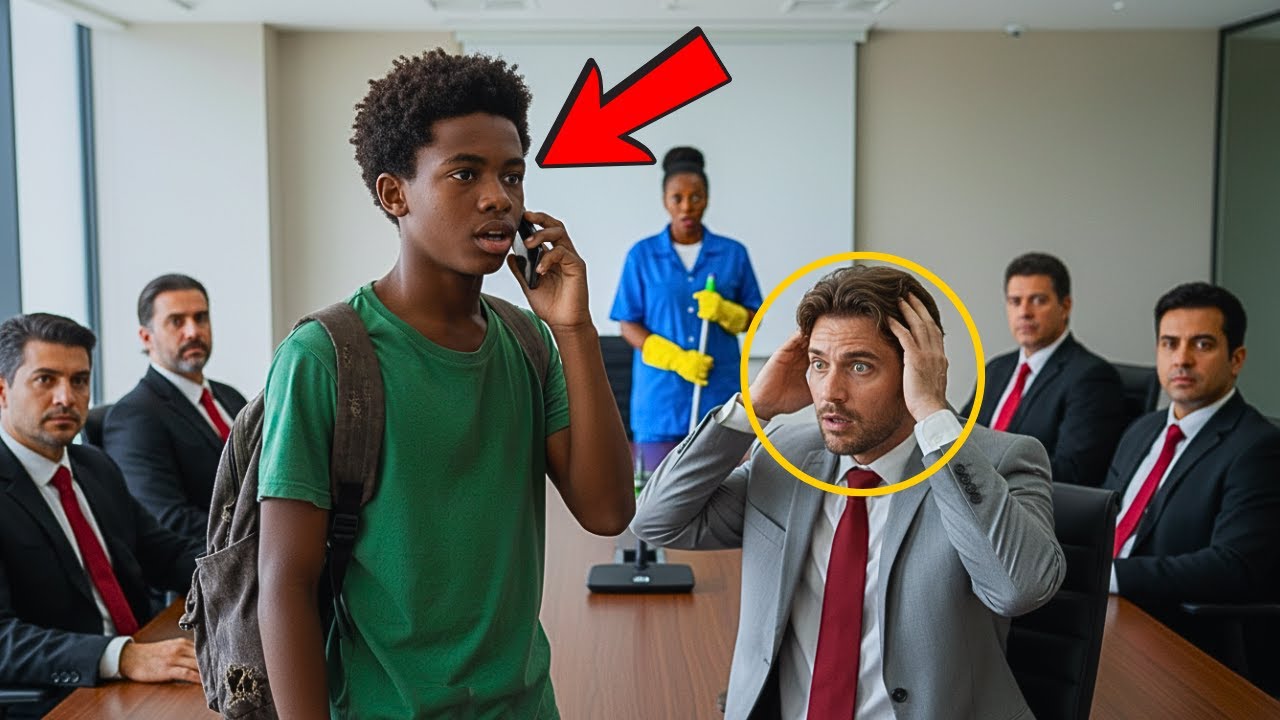
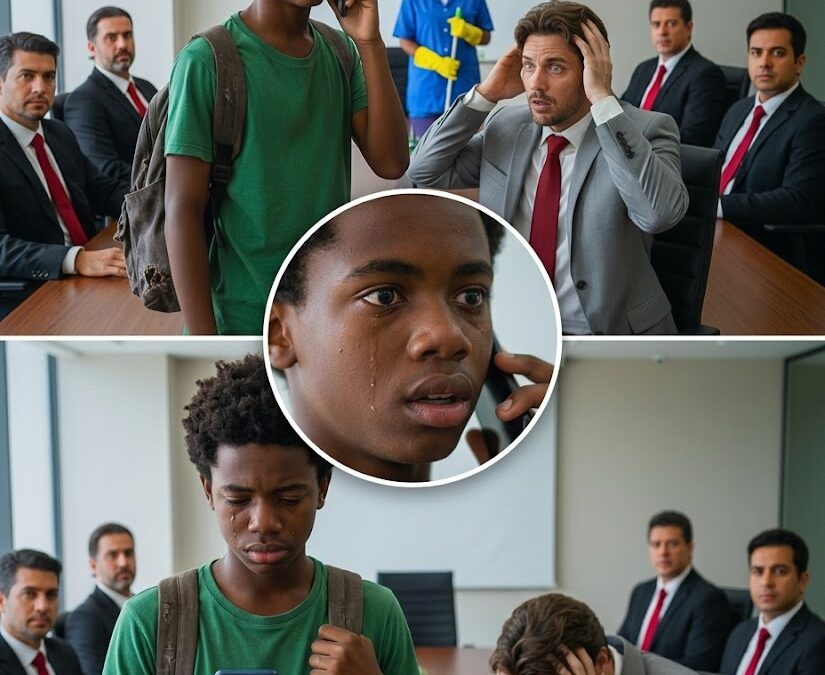
The investor’s voice came through the speakerphone in Arabic. The executive translated quickly and confidently. In the hallway, the cleaning lady’s son froze. That wasn’t what the man was saying. If they signed it that way, it would all be over. He looked at his mother. The door was locked.
Hitting her there would cost her her job. Not hitting them would cost the entire company. In the late afternoon, the corporate building was tense. Employees left in silence, many carrying boxes in their hands. It wasn’t a day for moving, it was a day for saying goodbye. Rumors had been circulating for weeks. The company was going bankrupt.
That day was crucial. If the meeting on the top floor failed, bankruptcy would be announced that same week. Vera pushed the cleaning cart down the hallway of the executive floor. It was the final shift. The building was almost empty, but the air was heavy. She knew that atmosphere.
I’d already seen people leave crying, bosses avoiding eye contact, office doors closed with serious conversations on the other side. Leaning against the wall, waiting for his mother to finish her chores, was David, in his slightly worn public school uniform, backpack slung over his shoulder. He always accompanied her at the end of the workday.
They went to the bus stop together. It had been routine since the separation. The father had left years before. The person who stayed close was his paternal grandfather, a simple man who passed away two years ago, and who spoke fluent Arabic, not because he studied it, but because he lived it.
He raised David in his free afternoons, between coffee and conversation, between jokes and memories. He taught his grandson without a method, without a textbook, just through interaction. David learned by listening, responding, making mistakes, and getting things right. And when the grandfather died, the language remained as a mark, as a living memory.
Vera was mopping the floor with automatic movements, but her gaze was far away. She knew that building was falling apart, and when a place like that collapses, people like her are the first to go . Cleaning lady not included in recovery plan. David was fiddling with his cell phone, but without really paying attention.
He could sense the atmosphere as well. She would glance at her mother from time to time. She never complained, never said she was tired, but he could see it in the way she took a deep breath before pushing the stroller, in her silence on the bus, in her body that arrived home as if she had carried the weight all day. The hallway was silent, with only the sound of the cart’s wheels and the distant hum of a printer switching off.
Then, suddenly, a door slammed shut . Vera stopped. David lifted his head. It was the meeting room on the top floor. The door was closed, but the sound leaked out: tense voices, someone speaking loudly, another responding even louder. Vera motioned for David to be quiet. She knew the rules: don’t listen, don’t ask questions, don’t exist when there’s a closed meeting. But the sound continued.
And then, from the other side of the door, a deep voice began to speak: “Not in Portuguese, in another language.” David frowned, took a step closer, then another. He was Arab. He recognized it in the first sentence, not because he understood everything, but because the rhythm, the sound, the cadence were familiar.
It’s like hearing someone calling your name from afar. Vera noticed the change in her son. David was no longer using his cell phone. He stood there , staring intently at the door, his breathing different. “What was that?”, she whispered. They are speaking Arabic.
David answered softly, almost without moving his mouth. Vera looked at the door, then at her son. So what? I know that language, Mom. She knew, of course she knew, but she never imagined it would matter. She never imagined that the afternoons with her grandfather, the coffees at the kitchen table, the somewhat awkward conversations in two languages would have any significance outside that house.
On the other side of the door, the conversation was heating up. Someone banged on the table. A tense voice in Portuguese trying to calm things down. Another voice, further away, replied in Arabic. It sounded like a speakerphone call. David moved closer. Vera gripped the broom handle tighter, as if it could protect them both from something invisible.
He closed his eyes and tried to focus. He sometimes took out words whole. Others were just fragments, but the tone was clear. That wasn’t a friendly conversation; it was a negotiation on the edge, the kind that decides everything. Vera didn’t understand Arabic, but she understood tension. I could tell when something was about to fall apart.
And what she heard, even without understanding the words, was the sound of something breaking in real time. David opened his eyes and looked at his mother. She said nothing, but she saw the same look he had when he remembered his grandfather, when he sat quietly in his room, staring at the wall, as if he were hearing a voice that no one else could hear.
She didn’t ask, she just waited. And inside that room, unbeknownst to anyone, a mistranslation was about to destroy that company’s last chance of survival. Inside the room, the CEO stood leaning on the table, his hair gray, his shirt sleeves rolled up, and deep dark circles under his eyes. He stared at the phone in the center of the table, like someone looking at the last plank before shipwreck.
On the other end of the line, a deep voice spoke in Arabic: “Tone, firm, direct, without beating around the bush.” He was a Middle Eastern investor, the last card the company had to play. Seated next to the CEO, with an upright posture and controlled expression, was Rogério, in his early 30s, wearing a well-tailored suit, a tight tie, and impeccable hair.
He was the executive responsible for international relations and at that moment he was also the only one in the room who supposedly understood Arabic. Rogério listened to the investor’s voice and translated it to the CEO quickly, confidently, almost without pausing. He seemed in control, he seemed competent, but inside he was improvising.
He didn’t speak Arabic as fluently as he pretended to . I knew the basics, business phrases, formal greetings, enough to appear fluent in quick meetings. But that conversation was dense, technical, full of legal terms and contractual conditions. And Rogério was translating what he thought he was hearing, not what was actually being said. He knew it, but he couldn’t admit it, not there, not at that moment.
His position in the company depended on that negotiation. If the agreement failed, it would be associated with the failure. If he admitted that he didn’t understand everything, he would lose the credibility he took years to build. Then he translated: “Quick, safe, skipping parts he didn’t quite grasp, softening demands that seemed too harsh, distorting terms he didn’t know how to translate accurately.
The CEO listened, took notes, responded, trusted, he had no choice. That was the last meeting, the last investor, the last chance before bankruptcy was announced. The investor spoke another long sentence, full of details. Rogério translated it into three generic lines. The CEO frowned, but didn’t question it. There was no time for doubt, only for decision.
He’s asking if we agree with the general terms, Rogério said, adjusting his tie. And what exactly are they? The CEO asked wearily. Basically what we’ve already discussed. They provide capital, we restructure the debt, maintain the current management. The CEO took a deep breath and the control clause.
Rogério hesitated for a fraction of a second. He had heard something about control, but hadn’t caught the detail, so he improvised. He said it’s flexible, they want participation, but without direct interference, a lie, or rather, Wrong translation. The investor had said exactly the opposite. Participation with veto rights in strategic decisions.
A tough clause, the kind that changes everything. But Rogério didn’t understand, or didn’t want to understand, because if he translated correctly, he could back out. And if he backed out, the deal would die. And if the deal died, Rogério would be remembered as the executive who was in the room when everything collapsed.
He wasn’t lying out of malice, he was lying out of fear, out of ego, out of desperation disguised as confidence. On the other end of the line, the investor continued talking. This time, more slowly, as if repeating something important. Rogério translated again. Too fast. Too generic. The CEO looked at him. Are you sure that’s it? Absolutely.
Rogério answered without hesitation. And at that moment the lie was complete. Not because Rogério was a villain, but because he was human. And humans, when cornered, lie to survive. Meanwhile, outside in the corridor, Davi remained leaning against the wall, his mother beside him holding him.
The cart, unsure whether to stay or leave. He listened to everything, word by word, phrase by phrase. And the more he listened, the more the discomfort grew inside him. Something was wrong, very wrong. It wasn’t just a matter of vocabulary, it was a matter of meaning. What the man was saying in Arabic and what he heard being translated into Portuguese didn’t match.
It was like listening to two different conversations happening at the same time. David looked at his mother. She noticed, she knew that look. It was the same look he had when he was sure of something but did n’t know how to explain it. “Mom!” he whispered, “they’re translating it wrong.” Vera felt her stomach clench. ” What do you mean? What the man is saying isn’t what they’re saying in here.
Are you sure?” David was silent for a second, then nodded. “I am.” Inside the room, the conversation continued. The investor’s tone became more serious. He repeated a phrase twice, as if to ensure he had been understood. Rogério translated again, softened it again, and David, outside, closed his eyes. He knew what that meant.
The phrase meant something. He knew, because his grandfather used a similar expression when talking about serious things, things that couldn’t be ignored. It was a clause, a condition, a central requirement, the kind that, if misinterpreted, would destroy any chance of survival. And it was being translated incorrectly.
David opened his eyes and looked at the closed door. Then he looked at his mother, and at that moment, without yet knowing it, he was seconds away from making the most important decision of his life. The investor’s voice grew louder. It wasn’t a shout, it was firmness, the kind of tone that doesn’t allow for misunderstanding.
He repeated a phrase slowly, each word separated as if spelling something important to a child. David froze that phrase; he knew not only the meaning, the structure, the weight. His grandfather used that expression when talking about serious promises, agreements that couldn’t be broken, conditions that, if ignored, would have consequences.
And what Rogério had just translated for the CEO had nothing to do with what the investor had said. Nothing. David felt his heart race. He looked at the door, then at his mother. She noticed the change in his face. It was no longer doubt, it was certainty. “Mom, they’re translating completely wrong,” he said, his voice trembling. “Very wrong.
” Vera held his arm. “Are you absolutely sure?” I am. The man said one thing and the guy inside translated something completely different. But it could just be a way of speaking, couldn’t it ? David shook his head. It’s not a way of speaking, it’s a lie or a serious mistake, I do n’t know. But it’s not the same thing.
Vera took a deep breath. The hallway suddenly seemed smaller . The noise of the conversation inside the room grew louder, or perhaps it was just the tension that made everything seem more intense. She looked at the cleaning cart, looked at the uniform she was wearing, looked at her son, a public school student, grandson of a simple man who spoke Arabic because he had lived in the world, not because he had studied at a university.
Who would believe him? Who would listen to a boy who was only there because he was waiting for his mother to finish her shift? But then she remembered something, she remembered Claudia. Claudia was a cleaning lady too, she worked On the third floor, she had two small children. Three weeks ago, she was called into the supervisor’s office .
They said she had meddled where she shouldn’t have. She had commented to a colleague that she had overheard a conversation about layoffs. She hadn’t spread rumors, she hadn’t invented anything, she had only commented. She was fired that same day, without warning, without a chance to explain, without anything. Vera remembered Cláudia’s face as she left the building with her bag in her hands, her eyes red, her mouth pressed together trying to hold back tears in front of her children, and now she was there facing the same choice. Knocking on that door meant
risking everything. Her job, her stability, the money that paid rent, food, Davi’s school, everything. But not knocking meant letting a mistake happen, a mistake that could destroy the company. The same company that went bankrupt would fire her anyway . She looked at Davi again. “Are you really sure?” asked the voice, now more serious.
“Mom, I learned this language listening to Grandpa. It wasn’t school, it wasn’t a book, it was life. I know what he said and I know it’s not what they ‘re saying here.” Inside. Vera closed her eyes for a second, took a deep breath. When she opened them, the fear was still there, but so was the decision. “So, we’re going there,” she said. Davi’s eyes widened.
” Mom, you could lose your job, and if I do n’t do anything, I’ll lose it anyway when this place goes bankrupt.” She put down the stroller, straightened her uniform, looked at the meeting room door, like someone looking at a mountain they need to climb without a rope. Inside the room, the conversation continued.
The CEO asked something. Rogério answered quickly, confidently, translating what he thought the investor had said. The investor spoke again, now with a more impatient tone. Vera took a step towards the door, stopped, looked back. Davi was standing there, pale, but with a firm gaze. She took another step, then another, and knocked on the door. Silence.
She waited. Nothing. She knocked again, harder. On the other side, she heard footsteps. The door opened just a crack. Rogério appeared, irritated, blocking the way. “What is it?” he said dryly. “I need to speak to the person in charge,” Vera replied. Her voice firm, but her heart racing. “We’re in a confidential meeting. Come back later.
” He began to close the door. “It’s about the translation,” Vera said quickly. Rogério stopped, looking at her suspiciously. ” What do you mean? My son understands Arabic. And he said the translation is wrong.” Rogério’s face changed. Irritation turned to something between surprise and contempt. ” With all due respect, this is a serious matter. This isn’t the place for guesswork.
” He paused, searching for words. “It ‘s not guesswork,” Davi said, appearing beside his mother. “I understand the language, and what you’re translating isn’t what the man is saying.” Rogério looked at the boy. School uniform, worn-out backpack, worn-out sneakers. He almost laughed. Almost. “Look, kid, I’ve been working with this for years.
I have certifications. I’ve done international business on three continents. I think I know what I’m doing.” ” I’m not doubting the Lord,” Davi replied. His voice trembling, but “Firm. I ‘m just saying that the phrase he repeated now doesn’t mean what you translated.” From the back of the room, the CEO’s voice cut through the air. “Rogério, who is it?” Rogério hesitated.
He could close the door, send them both away, pretend nothing had happened, but the investor’s voice on the other end of the line grew louder. He was repeating the phrase again, irritated. As if he wasn’t being understood? The CEO stood up. ” Rogério, what’s going on?” Rogério took a deep breath, turned to the person—”It’s the cleaning lady, sir, and her son, saying the translation is wrong.” The person frowned.
Tiredness, irritation, disbelief, all together. Is this serious? Vera stepped forward. “My son understands Arabic, sir. He learned it from his grandfather. And he’s sure there’s a mistake in the translation.” The CEO looked at Davi, 16 years old, backpack, a frightened but firm look. Then he looked at Rogério. “I should call security right now.
” Vera He felt the ground disappear beneath him. David turned pale. ” Sir, I just wanted to wait.” The CEO interrupted, raising his hand. He looked at the phone. The investor’s voice kept repeating, growing increasingly impatient. He clenched his teeth, looked at Vera, then at David. “If this is a joke, if this is a waste of time, you’re out of here now and never coming back .
Understood?” Vera swallowed hard and nodded. David did too. He took a deep breath. Then, against all logic, against all hierarchy, he said, “Let him in.” Rogério reluctantly opened the door. His face was a mixture of contained irritation and discomfort. He knew this could ruin everything, not the negotiation. Himself. Vera went in first.
David followed, eyes downcast, hands sweating. The room was large, with a glass table, leather chairs, paintings on the wall, everything expensive, everything distant from his world. In the center of the table, the phone on speakerphone. The investor’s voice continued speaking, now with a visibly impatient tone. The CEO stood leaning on the table, arms crossed, deep dark circles under his eyes, shirt wrinkled.
He looked at David as one looks at the last card in a deck that should have already been exhausted. “Do you understand Arabic?” he asked directly. ” Yes, sir,” David replied in a low voice. ” Where did you learn?” “From my grandfather. He spoke fluently. He taught me since I was little.” The CEO looked at Rogério, then at the phone.
The investor’s voice continued, repeating itself, louder and louder. ” Okay,” the CEO said. “I’ll give you a chance, but if it’s a waste of time, you leave now and I won’t speak to you again. Understood?” Vera nodded. David did too. He pointed to the phone. “He just repeated a phrase three times. What did he say?” David approached, his heart pounding, his hands trembling.
He heard the phrase again. He closed his eyes, tried to focus, and then, as he was about to answer, he froze. His tongue froze, the words vanished. He knew what the man had said. He knew. But the Nervousness blocked everything. His father frowned. And then David tried to speak. Nothing came out. Rogério crossed his arms, his expression showing he knew this was going to go wrong.
Vera touched her son’s shoulder lightly, without pressure, just her presence. David took a deep breath, opened his eyes, looked at his mother. She said nothing, she was just there. He breathed again, slowly, and then, finally, the words came out. He said, his voice still trembling. He said that their participation in the capital needs to come with veto power in strategic decisions.
It’s not a suggestion, it’s a condition. Without that, there’s no agreement. Silence. The CEO looked at Rogério. Isn’t that what you translated? Rogério hesitated. Just a fraction of a second, but it was enough. I didn’t exactly put it in those terms, he said, adjusting his tie. I simplified it so as not to scare them. The general meaning was, The general meaning is not the same thing as the exact condition. The CEO cut him off abruptly.
He looked at David. Let me see if ” I understand. Does that mean they run the company, even without being the sole owners?” David nodded. “Yes, sir. Any major decision requires their approval. If they don’t approve, it doesn’t happen.” The man closed his eyes and took a deep breath. This wasn’t a bailout; it was control disguised as an investment.
The investor’s voice spoke again, this time asking something. His tone was direct and impatient. “Sir,” he looked at David. David heard what he had just asked, this time without hesitation. He was in now. The fear was still there, but less intense. ” He asked if it’s clear that without a veto they won’t sign, and he wants to know if you agree or if you prefer to end the conversation now.
” The man closed his eyes, took a deep breath, then looked at Rogério with a mixture of disappointment and contained anger. “Did you know this? I interpreted it differently,” Rogério said, his voice losing firmness. I thought he was negotiating, that he had room to maneuver. It wasn’t room for maneuver, it was a central clause.
Rogério lowered his head; he had no answer. The CEO turned to David. Can you continue translating? David looked at his mother, and she felt her. He looked back at Sou. Yes, sir. Sou sat down and pointed to the chair next to him . So, sit here and translate word for word, without simplifying, without softening.
I need to know exactly what he’s saying. David sat down. His hands were still trembling, but he pressed them together under the table. Vera stood leaning against the wall, watching. Rogério stood to the side, motionless, unsure where to look. His face didn’t show anger, it showed emptiness, like someone who had just realized the ground had disappeared from under their feet.
The CEO cleared his throat and spoke into the phone in English, asking the investor to repeat the key conditions. The investor’s voice replied: “In Arabic, slowly, clearly, David listened, translated, phrase by phrase, slowly, carefully, without skipping anything.” And for the first time that afternoon, the CEO understood what was really being proposed.
It wasn’t a bailout, it was a controlled purchase; it wasn’t flexibility, it was a strict requirement; it wasn’t easy salvation, it was survival at a high price, but it was real, it was clear, and for the first time, it was honest. The CEO listened to everything, took notes, and asked questions. David translated the answers.
The investor began to speak more calmly. He realized that he was finally being understood. The conversation lasted another 20 minutes. David translated each phrase flawlessly, without softening it, without fear of being harsh when the phrase was harsh. In the end, the CEO thanked the investor and asked for 48 hours to analyze the actual proposal.
The investor agreed. He hung up. Silence. He took off his glasses, ran his hand over his face, and looked at David. If you hadn’t come in here, I would have signed a contract I didn’t understand. And in a week, by the time he discovered the truth, it would already be too late. David didn’t know what to say, he just shook his head.
The gentleman looked at Vera and said, “If the lady hadn’t knocked on that door, none of this would have happened.” Vera swallowed hard and didn’t answer. She simply gripped the bag’s strap tightly. The CEO looked at Roger. He said nothing, just looked. And that silence was heavier than any words. Rogério stood still, his gaze downcast, shoulders slumped.
The voice that once translated with confidence no longer existed. He wasn’t yelled at, he wasn’t humiliated, but he was emptied of energy. And that hurt even more. The Sen stood up. Rogério, we’ll talk tomorrow. Rogério nodded. He left the room without looking back, without looking at anyone. The door closed, and only three people remained inside the room .
A CEO who almost lost everything, a cleaning lady who risked everything, and a boy who saved everything without knowing he could. The CEO stood still for a moment, just looking at the table, at the now-switched-off phone, at the scribbled notes on the paper. He took a deep breath, then looked at David. Do you have any idea what just happened here? David nodded sincerely.
No, sir. I only translated what I heard. You just prevented me from signing a contract that would have taken control of my own company away from me. Without realizing it, I was going to give everything away, and by the time I realized it, it would be too late. Vera was leaning against the wall, quiet but attentive.
She could see the weight of those words falling on her son. He was processing it, trying to understand the magnitude of what he had done. The CEO sat down again and gestured for David and Vera to sit down as well. Vera hesitated, but sat down. David too. This company has 120 employees. The CEO began, his voice tired but firm.
People who depend on the salary from here to pay bills, support their families, and make a living. If we break up, it’s not just me who loses. There are 120 people on the street, plus their families. He paused. Because I trusted the wrong translation. I trusted someone who pretended to know more than they actually did.
David looked down. I didn’t do anything wrong, sir. I only said what the man said. And that’s exactly what saved everything. The reply was: You didn’t invent anything, you didn’t exaggerate, you weren’t trying to impress, you just told the truth. And the truth, kid, is worth more than any nice diploma hanging on the wall.
Vera felt something tighten in her chest. It wasn’t empty pride, it was recognition. Someone was seeing her son for real. He looked at Vera. The woman risked her job to do what was right. This is not common. Most would have remained quiet, afraid, and rightfully so. I was scared. Vera answered in a low voice, but David was sure, and I trust him.
The CEO nodded, remained silent for a few seconds, then picked up a business card from the table and wrote something on the back. “I’ll ask someone from HR to speak with you in the next few days.” It’s not a favor, it’s recognition. You will have stability here. Fair hours, respect, safety. Vera’s eyes widened. I wasn’t expecting that.
Sir, I am not charity. It cut itself firmly. It’s a consequence. The lady did something that saved this company. And I don’t forget that. He looked at David. And you, kid, how old are you? 16. Sir, where do you study? Public school in the neighborhood. The CEO wrote something else down on the paper.
I will ensure that you have access to a better school. A real structure, support, not just for learning a language, but for developing your mind, reasoning, critical thinking, everything. David was speechless. Vera too. I’m not doing this because I ‘m a nice guy. Sen continued. I’m doing it because it’s the right thing to do.
You have potential, and wasted potential is a loss for everyone. He stood up, extended his hand to David, then to Vera. Thank you, truly. David shook his hand firmly, still processing everything. Vera squeezed too. He felt a lump in his throat, but he held it in. The CEO opened the door. They left.
The hallway was empty, now silent. The cleaning cart was still leaning against the wall, where Vera had left it before knocking on the door. She looked at the stroller, then at her son. “Everything went well ,” David said softly. “Yes,” Vera replied. But I was terrified to death. They chuckled softly, nervously.
The kind of laughter that comes after great tension. Vera grabbed the stroller, Davi grabbed the backpack, and together, as always, they headed towards the exit. Three days later, Vera was called to HR. She entered the room with a heavy heart. Even after everything, the feeling of insecurity hadn’t completely disappeared.
Years of working in silence teach you to expect the worst. But this time it was different. The HR woman was direct, without beating around the bush, without being fake. He said that Vera would be transferred to the polling station shift. Fixed hours, 100 hours of forced overtime, adjusted salary.
Contract regularized. One is not a favor. The woman repeated it as if she had memorized the phrase. It’s recognition, but it will take about three weeks for everything to appear in the system. It has to go through approval, payroll adjustments, that sort of thing. Vera nodded. Three weeks. She could wait.
I had waited years for much less. And regarding David, the woman continued shuffling through papers. The company has an agreement with two private schools. It’s a social responsibility program that we already use for employees’ children in specific situations. Full scholarship, but requires passing an entrance exam. It’s not automatic.
Vera felt her stomach clench again. Assessment. Placement test to see which grade level he fits best in and if he needs extra support in any subject. This is standard procedure under the agreement. Vera looked down. David was going to have to prove he deserved it again, as always.
But at least this time he was going to have a chance. He left the room with the papers in his hands. Forms, dates, instructions. It wasn’t magic, it was bureaucracy, but it was real. Two weeks later, David took the test. 3-hour exam: math, Portuguese, essay, English. He left the room exhausted, insecure, thinking he had gotten half of it wrong.
But a week later the result arrived. Approved. Recommended for students needing further training in STEM fields, but approved. The scholarship has been confirmed. David went to visit the school with his mother. They walked through the corridors, looked at the rooms, the library, the courtyard. Everything was big, clean, and organized.
“Will I be able to keep up?” David asked quietly as they walked. “Go, Vera.” He answered firmly. You always succeeded, even when no one believed in you. He looked at her, smiled, a small but genuine smile. Meanwhile , on the other side of the corporate building, Rogério was cleaning his desk. There was no scandal, no tense meeting, no shouting.
The CEO simply called Rogério in for a chat. He said the company was restructuring and that they needed people they could completely trust. Mistakes happen, but broken trust is difficult to rebuild. Rogério was dismissed discreetly, without fanfare, but he knew, everyone knew. In the following days, he walked through the empty corridors, collecting his belongings. No one greeted him.
No one asked where he was going, not out of malice, but because he had become invisible. The silence weighed more heavily than any accusation. He carried the box with his belongings, went through reception, handed over his badge, and left without saying goodbye, without looking back. And in that silence, the consequence was complete.
It wasn’t revenge, it wasn’t public humiliation, it was something worse, it was irrelevance, it was the loss of the place he thought was rightfully his. It wasn’t destroyed, but it was emptied. And that, in a way, hurt more. As Rogério left the building for the last time, Vera entered for another shift. But this time it wasn’t the night shift, it was morning, with sunlight streaming through the windows, with people greeting each other with dignity.
David was at his new school, sitting in the classroom, trying to keep up, trying to belong. It wasn’t easy. He was different. It came from somewhere else. He spoke differently, he dressed differently, but he was there, and that in itself was a victory. A few weeks later, the CEO finalized the deal with the investors.
It wasn’t the deal he wanted, it was the real deal, with harsh clauses and heavy conditions, but it was honest and it was enough to save the company. 120 employees kept their jobs. 120 families continued paying their bills. 120 lives that could have fallen apart did not . And all because a boy heard a phrase and a mother had the courage to knock on a door.
It wasn’t heroism, it was necessity, it was instinct. He did the right thing even though he was scared. And sometimes that ‘s enough. Two months later, Vera and Davi were leaving the building in the late afternoon. She had finished her shift. He had gone to pick her up after class, as he always did.
They walked together down the hallway, passed the reception desk, greeted the security guard, and exited through the revolving door. The bus stop was the same. Three blocks away. The route was the same, the street, the traffic light, the corner, everything was identical. But something had changed. Vera no longer walked with her body hunched over, she no longer looked at the ground all the time.
She walked upright, not out of pride, but simply because she no longer carried the weight of someone who could be discarded at any moment. David was walking beside her. New backpack, new uniform, notebooks inside the backpack, homework, tests to study for. He was tired, but it was a different kind of tiredness.
It was the weariness of someone who is building something, not of someone who is merely surviving. They arrived at the stop and sat on the bench. The bus was still going to take about 10 minutes. How was your day? Vera asked. Difficult. David answered honestly. There are topics I’ve never seen before, and everyone there already knows them.
I try to keep up, but it’s too much . Vera looked at him. Will you be able to do it? What if I can’t do it? You are going. Not because it’s easy, but because you’ve always managed to do it. David stood still, looking at the street, at the cars passing by, at the people returning from work.
Mom, do you think Grandpa would be proud? Vera felt a tightness in her chest, but she smiled. He would stay not because of the new school, not because of what happened, but because you did the right thing, even though you were scared. David nodded, swallowing hard. I hardly did anything, I almost stayed quiet, but I didn’t , and that’s what matters.
The bus appeared in the distance. Vera stood up. David too. They went in, passed through the turnstile, and sat together in the back, as always. The bus left, passing through the same streets, the same traffic lights, the same scenery as always. Vera looked out the window; the corporate building was in the distance .
She thought about everything that had happened at the meeting, the door she had knocked on, the fear she had felt, the risk she had taken. He thought of Rogério, of his silence, of his discreet departure. He felt no anger, no pity, he simply felt that things had taken their natural course. Consequence, not revenge. David had his head resting against the window, his eyes half- closed, tired.
But calmly, Vera looked at him. The son who learned Arabic by listening to his grandfather. The son who saved an entire company without even knowing he could. The son who was still learning to occupy the space he had always deserved. The bus moved slowly, as usual. Vera closed her eyes for a second, took a deep breath, and then realized something.
That building was no longer just the place where she cleaned the floor. It was the place where, for a few minutes, everything could have ended, where one mistake almost destroyed everything, where an impossible decision changed the course of 120 lives. Not because someone shouted, not because someone was humiliated, not because someone became a hero, but because someone listened and because someone had the courage to speak.
The bus turned the corner. The building disappeared from sight. Vera opened her eyes, looked at her son; he was asleep, his breathing calm, his face relaxed. She smiled slightly, silently, and thought: “Tomorrow is another day, same route, same journey, same life, but now with dignity.” And in the end, that was all.
If you enjoyed the story, leave a like and comment on which part touched you the most . See you in the next video.