O BILIONÁRIO Apresentou A NOIVA Para A AVÓ…Então Ela Disse: “É Melhor Você Casar Com A EMPREGADA!”
O BILIONÁRIO Apresentou A NOIVA Para A AVÓ…Então Ela Disse: “É Melhor Você Casar Com A EMPREGADA!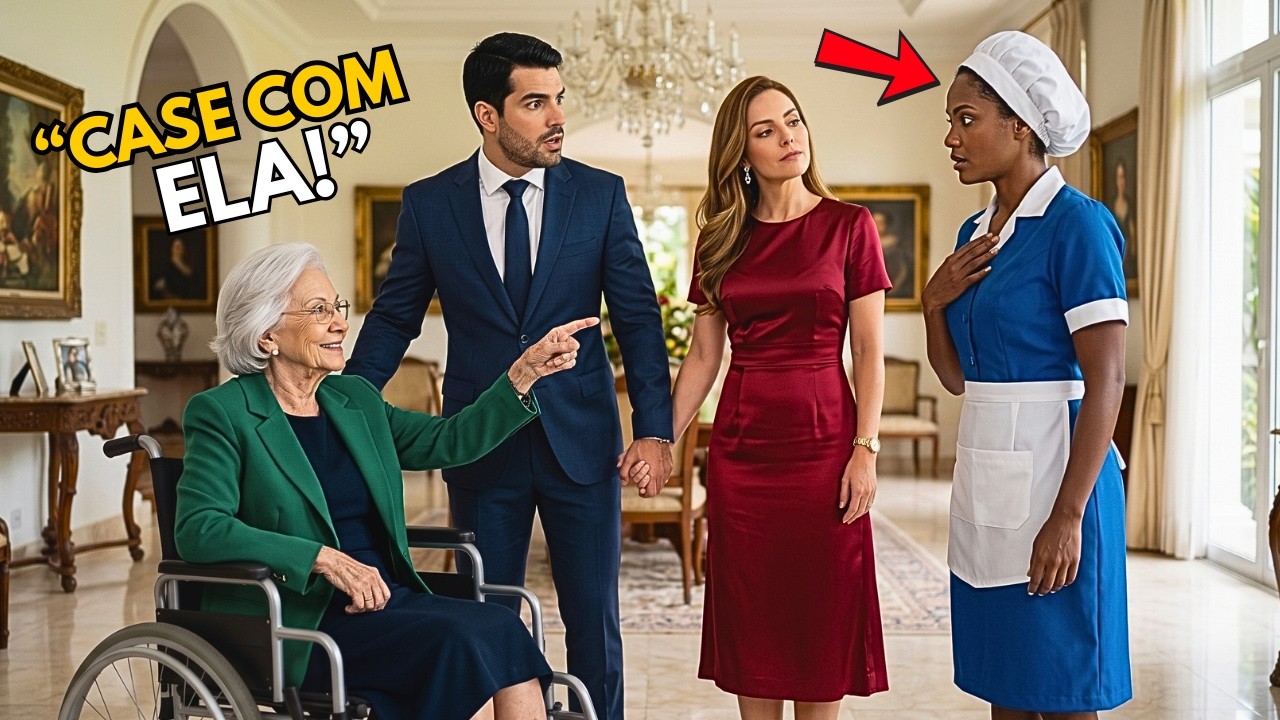
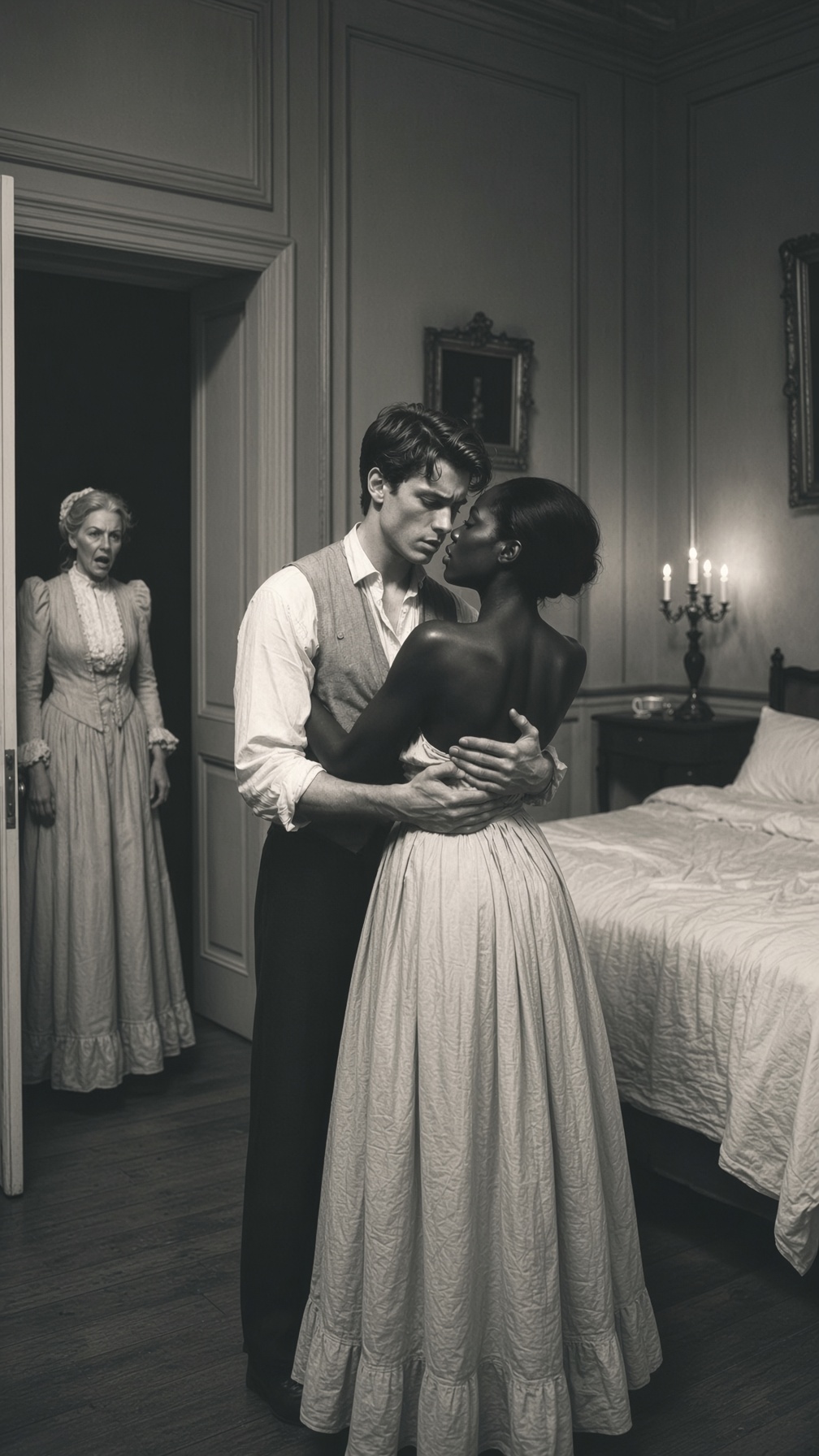
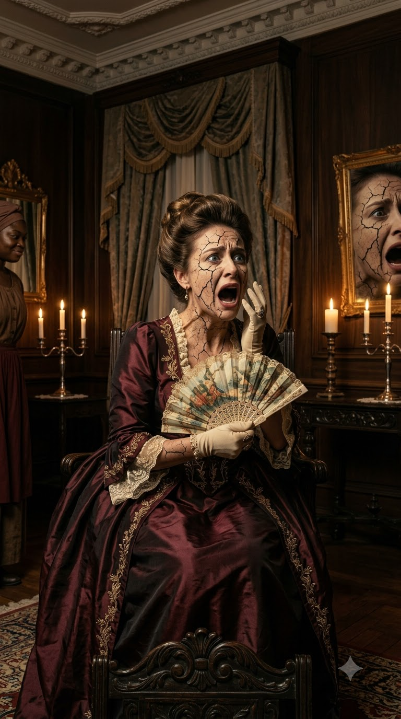
Rafael was a billionaire. Giovana was already treating that mansion as if the wedding had already taken place. When the glass spilled onto the table, he looked to the side and simply said, “Clean it up now.” Without looking, without thanking, Marina cleaned everything in silence, invisible to the two of them.
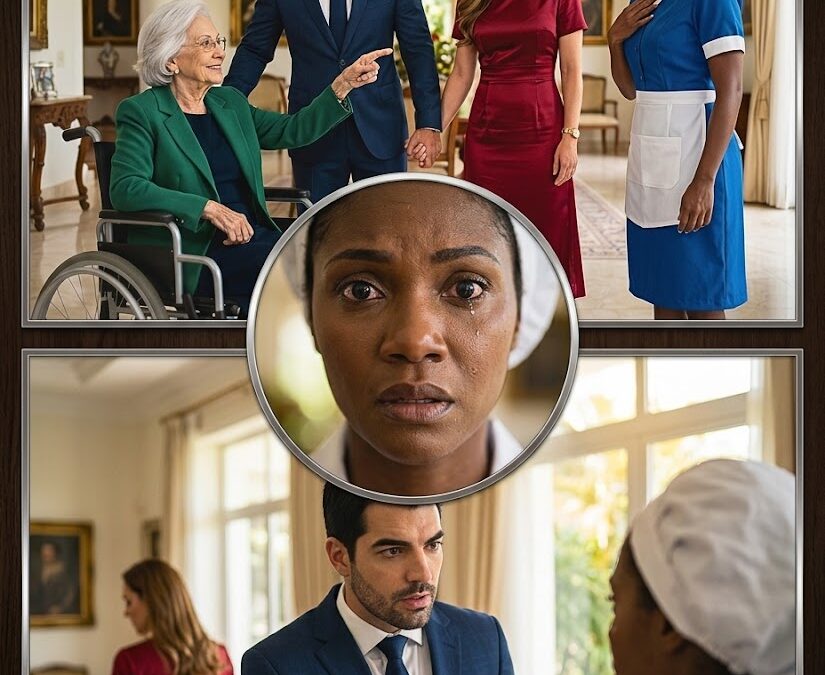
Only one person at the table saw it. The 91-year-old grandmother, who had remained silent all night, unexpectedly looked at her grandson in front of everyone and said, “You’d be better off marrying the maid.” Before continuing, leave a like and write in the comments. Would you have the courage to say the same thing that Mrs.
Eunice said? Rafael Monteiro arrived on Friday, as he always did, in a suit, unannounced, with the energy of someone who had just left a meeting and had n’t completely switched off yet. He was 36 years old, owned two logistics companies in São Paulo, and had a habit of showing up at his grandmother’s mansion as if visiting a safe haven between storms.
This Friday was different. He didn’t come alone. Giovana entered through the main door with the naturalness of someone who had rehearsed that scene in her head several times . A discreet dress, a beige leather bag , a measured smile. The kind of smile that looks warm, but is actually gauging the surroundings while smiling.
She looked at the chandelier, the paintings on the walls, and the antique vases that Dona Eunice had kept for decades. He recorded everything, said nothing. Marina was in the room when they entered. She had just finished tidying the sofa cushions and was holding a tray with two glasses of water with lemon that no one had asked for, but which she had prepared because she knew Rafael always arrived thirsty after a drive.
Geovana glanced at her once, just once, and immediately looked away , not with anger, not with outright contempt, but with something worse, with the indifference of someone who looks at a chair and moves on, as if Marina were part of the decor, as if she weren’t a person standing there holding two glasses of water with slices of lemon cut diagonally, because Dona Eunice preferred it that way.
Marina placed the glasses on the side table without making a sound and left the room. No one said thank you. Dona Eunice was on the balcony when Rafael found her. The elderly woman was 91 years old, had been in a wheelchair for four years, and had a mind that still functioned better than most.
She had her beige shawl draped over her shoulders and her reading glasses perched on her lap, gazing out at the garden with the calm of someone no longer in a hurry for anything. Rafael bent down, kissed her forehead, then stood beside the chair with the posture of someone about to give an important presentation.
“Grandma, this is Giovana.” Giovana stepped forward with a ready smile, extending her hand elegantly. Mrs. Eunice, what a pleasure to meet you. Rafael talks to me so much about you, ma’am . The old woman looked at the outstretched hand for a second, then shook it slowly, as if she were in no hurry at all . “That’s right,” said Mrs. Eunice.
It wasn’t a question. Giovana’s smile did n’t waver. She was good at it. The three of them sat down on the porch. Rafael talked about the trip, the traffic, and a new project in Campinas. Giovana would add compliments at the right times, laugh at the right times, and ask questions about the house with the interest of someone who is genuinely curious or who has learned to appear that way.
Dona Eice would reply: “Polite, precise, without excess.” But while he was answering, he was observing. He watched as Marina crossed the balcony with her afternoon medication on a small tray. Giovana was talking about a trip to Lisbon and didn’t pause her sentence. [clearing throat] He didn’t look, he didn’t acknowledge anyone’s presence.
Marina placed the glass with the pills next to the elderly woman, lightly touched her shoulder with her usual discreet gesture that said, “It’s here whenever you want it,” and left without making a sound. Dona Eunice noticed the gesture, but noticed that Giovana didn’t. Filed away. The sun was setting, and the conversation was becoming lighter, in that way that happens when people are trying to make a good impression and are almost succeeding.
Rafael was relaxed. Giovana was in tune. It seemed like the dinner was going to end well. That’s when Giovana’s glass tipped over. It was nothing. With a careless gesture, the passion fruit juice spilled onto the beige linen tablecloth. Giovana pulled her chair back so as not to get her dress dirty and looked around with that expression of someone waiting for someone to show up and solve the problem.
She said nothing, called no one, simply waited with the posture of someone accustomed to things resolving themselves around her. Marina appeared 30 seconds later with a cloth, efficiently cleaned the table, replaced the small tablecloth with a dry one, and left. Giovana didn’t say thank you. Rafael didn’t notice. Mrs.
Eunice noticed both things. Dinner is over. Giovana went to the guest room. Rafael stayed on the balcony with his grandmother, content, waiting for some comment. The old woman remained silent for a while, gazing out into the dark garden. “She is beautiful,” said Mrs. Eunice. ” Finally, Rafael smiled.” “AND.
” The old woman remained quiet for a little while longer, then said in a calm voice, as if she wasn’t provoking anyone, but simply being honest. Okay, I know a lot of that. What I want to know is what she does when no one important is watching. Rafael didn’t know what to answer. The old woman adjusted her shawl over her shoulders and simply said, “Tomorrow morning, send Marina to have coffee with me.
” And he said nothing more . Marina didn’t sleep well that night. It wasn’t because of Giovana, it wasn’t because of the overturned glass, nor because of the thank you that never came. She already knew these things. They no longer hurt in the same way they used to. What kept her awake was something else: Dona Eunice’s request.
Tomorrow morning, tell Marina to have coffee with me. In all her years working at that house, Mrs. Eunice had never asked for that. The old woman was kind and recognized a job well done. He would say good morning, he would say good night, sometimes he would comment on the weather or on some news he had heard on the radio.
But sitting down for coffee, chatting, that was different. And Marina didn’t quite know what to do with what was different. He arrived at 5:40, as usual, brewed coffee, placed Dona Eunice’s cup on the thermal stand, and stood gazing out the kitchen window for his customary two minutes. The garden was still dark; the birds had not yet begun to roam.
At 6:30 he went to the elderly woman’s room. Dona Eice was already awake, sitting in her wheelchair near the window, with her shawl over her shoulders and a cup in her hands. There was a wooden chair positioned to the side. It wasn’t the chair that was normally placed there. Someone had moved it. The elderly woman herself, probably aware of the difficulty this must have caused.
Marina looked at the chair, then looked at Dona Eunice. ” Sit down,” the old woman said as if it were the most natural thing in the world. Marina sat on the edge with the posture of someone who is still unsure if she can occupy the entire space. Dona Eunice didn’t say anything for a moment.
He gazed at the garden, which was beginning to appear in the light of dawn. The old trees, the flower bed that Marina watered on Tuesdays and Thursdays, the small fountain that no longer worked, but which the old woman wouldn’t allow to be removed because her husband had placed it there 40 years ago. “Who taught you to write like that?”, Mrs. Eunice asked suddenly.
Marina blinked; it wasn’t what she expected to hear. “With my grandmother?” She answered. She said that Letra Bonita was the only business card that didn’t ask for money to have. The old woman remained quiet, as if savoring the sentence. Her grandmother was wise. It was. They remained silent for a while. It wasn’t an uncomfortable silence.
It was the kind of silence that exists between people who don’t need to fill the air with words to feel good in each other’s company. Then, Mrs. Eunice pointed to the chessboard that was on the dresser. “Do you know how to play?” Marina looked at the chessboard. The pieces were arranged as if someone had prepared them beforehand.
“No, Mrs. Eunice! Thank goodness.” The elderly woman took a sip of coffee without looking up. “If I had known, I would have suspected you came to steal my money.” Marina stopped, looked at the elderly woman. Mrs. Eunice had the corner of her mouth raised, that restrained half-smile of someone making a joke, without fully revealing herself. Marina laughed.
Not the polite laugh of an employee, not the controlled laugh of someone at work. It was a real laugh, short and surprised, which she immediately tried to hold back with her hand. The elderly woman observed. “You laugh little,” she said. Marina lowered her hand. “Yes, those who laugh usually carry too much weight.
” Marina didn’t answer. She looked at the garden. The light was changing, that transition from gray to gold that lasts only a few minutes and that most people fall asleep while it happens. They stayed there for a while longer, the two of them looking out the window. Mrs. Eunice asked a few more questions about the city where Marina had grown up, about her grandmother who taught her beautiful handwriting, about whether she preferred rain or sun.
Simple questions, without weight. Marina answered calmly, without She didn’t defend herself against anything, without anticipating judgment, she simply answered. It was in one of these answers that Dona Eunice asked about the back room, whether Marina thought the window should be on the right or left side when she renovated.
Marina thought for a second about the right side. The afternoon light hits better there. For someone resting in that room at the end of the day, it makes a difference. The elderly woman looked at her for a moment longer than necessary to process an answer about the window. Then she said: “Right, indeed.
” And she didn’t specify if she was talking about the window or something else . When Marina went to get up to resume her work, Dona Eunice said without looking at her: “I don’t want you to leave this house.” Marina stood still with her hands on her knees, about to get up, and remained like that for a second, which seemed longer. “I wasn’t planning on leaving, Dona Eunice.
” ” I know.” The elderly woman took the last sip of her coffee. “I just wanted you to know that I ‘m not planning on leaving either.” Marina stood up, carefully picked up the empty cup , placed it on the tray, and walked to the door. She was already in the hallway when she heard the elderly woman’s voice one last time, low, almost to herself.
” This one here learned something that hurts.” Marina didn’t turn around, she kept walking, but she held the tray a little tighter than she needed to. That same day downstairs, Giovana was having coffee with Rafael on the balcony and asked, in the light voice of someone just making conversation, “How long has Marina worked there?” Rafael said it had been more than a year.
Giovana nodded, stirred her coffee, and didn’t ask anything else, but the question lingered. And when Rafael left to answer his cell phone, Giovana stared down the hallway, where Marina had passed minutes before with the elderly woman’s coffee tray. And her gaze was no longer the gaze of someone seeing a chair, it was the gaze of someone who had begun to pay attention to something she would have preferred not to have noticed. Giovana took exactly 40 seconds.
Days. Four days to find what she was looking for. Four days to transform a vague suspicion into documented certainty. Four days. And Rafael hadn’t even realized she was looking for something. It was a Thursday night. Rafael had arrived from São Paulo more tired than usual, his tie loosened and his cell phone in his hand since he walked through the door.
Giovana had carefully prepared the setting. Open wine, dimmed living room lights, her coat thrown on the armchair with the calculated naturalness of someone who wants everything to seem casual. She waited for him to sit down, waited for him to take his first sip, then went to her bag, took out a beige folder and placed it on the coffee table.
She didn’t throw it, she placed it calmly, with the care of someone who knows that gestures speak before words. Rafael looked at the folder, looked at her. What is this? Open it. He opened it. The first page was a file with a photo, Marina’s face, the same photo as on a document, serious, without a smile.
Below the photo, full name, CPF (Brazilian tax identification number), date of birth. And right below, in bold, what Giovana had underlined it with a red pen before printing. Professional registration suspended. Administrative process underway. Rafael turned the page. The second page had copies of documents from the process, pages from an administrative inquiry opened by the Professional Nursing Council.
Marina’s name appeared repeatedly, always as the accused. Misappropriation of controlled medications, unauthorized access to stock, formal complaint filed. The third page had clippings, not [clearing throat] from newspapers, but from internal records that Giovana had obtained through someone she didn’t name. The name of the clinic, the period, the amounts involved.
Rafael turned each page slowly, without speaking. The silence lasted as long as it does when someone is processing something they didn’t expect to find. Giovana stood on the other side of the table, with her glass of wine in hand, waiting. She had rehearsed what she was going to say, had thought about the words carefully, chosen the tone—not alarmed, not accusatory, concerned, the tone of someone who brings difficult information because they care.
” I know it’s uncomfortable,” she said. ” But I needed to show you. This woman has…” “A serious history, Rafael. She works in the same house as your grandmother, takes care of her, has access to medication, to everything.” Rafael stared at the last page. “Where did you get this? That doesn’t matter.
What matters is what’s written.” He closed the folder slowly, as he had opened it, placed it on the table, and stared at it for a moment. Not at Giovana, at the folder. “You investigated my grandmother’s maid.” Giovana didn’t back down. “I protected your family.” Silence. Rafael stood up, picked up his glass of wine, and went to the window.
He stood with his back to her for a while, a moment Giovana couldn’t measure. She expected him to agree, to thank her, to call someone, to make a decision right there. He turned around. “I’m going to talk to my grandmother.” That wasn’t what she had expected to hear. ” Rafael, this isn’t a matter for… Goodnight, Giovana.
” He left the room with his glass in hand and went upstairs. Giovana stood there, looking at the folder on the table. The low light in the room made the beige cover seem almost… Golden. She took a long sip of wine and pondered what had gone wrong, because something had. She felt it. Upstairs, Marina knew nothing.
She was in the hallway outside Dona Eunice’s room, folding bed linens that had just come out of the dryer when she heard Rafael’s footsteps coming up. It wasn’t the time for him to appear there. She looked up as he passed and noticed something in his face. No, anger, it wasn’t anger. It was the face of someone who had just read something and hadn’t yet decided what to do with what they had read.
Rafael knocked on his grandmother’s door. He entered without waiting long. Dona Eunice was awake, with the bedside lamp on and a book in her lap that she probably wasn’t reading. She looked at her grandson as he entered, assessed his face with the speed of someone who has been reading faces for nine decades, and closed the book without marking the page.
” Sit down,” she said. Rafael sat on the edge of the bed, remained silent for a moment, then counted the folder, the documents, what was written, what Giovana “I had said it.” Dona Eunício listened to everything without blinking, without interrupting, her hands clasped in her lap and her eyes fixed on her grandson, as if listening not only to the words, but to the space between them.
When Rafael finished, she was silent for a while. Then she asked in the calm voice of someone who wasn’t nervous, “And do you believe it?” Rafael opened his mouth, closed it, and looked at his own hands. “Two seconds. Three?” ” No,” he said. The old woman nodded once slowly. “Then you know what to do.” Rafael sat there a little longer without speaking.
The lamp cast a warm, yellow light in the room. The kind of light that makes everything seem older and more important at the same time. When she left, Dona Eunício stared at the closed door. Then she looked down the hallway. She knew Marina was there folding clothes, listening or not listening, carrying or not carrying the weight of an accusation she didn’t even know had reached that house.
The old woman turned off the lamp. In the dark, she murmured to no one in particular, “This one here doesn’t know she’s being judged, and yet she behaves as if she does .” Pause. That tells me everything. Rafael woke up before sunrise. It wasn’t his usual habit. On weekends at the mansion, he would sleep until 8, sometimes even 9, enjoying the silence that São Paulo never offered.
But that Friday he was awake at 5:45, staring at the bedroom ceiling with Giovana’s folder, still occupying a space that wasn’t physical. It was the kind of thing that keeps spinning in his head and doesn’t let his body rest. He went down to the kitchen. Marina was there with her back to him, straining coffee.
She heard the footsteps, turned her head slightly to confirm who it was, said, “Good morning ” with her usual naturalness, and went back to what she was doing. There was no tension in her movement, nothing different. She didn’t know. Rafael was sure of that now. If she knew, he would see. He had learned to read enough people in his life to recognize when someone is carrying a weight he knows.
Marina wasn’t carrying that weight; she was carrying others. He could see that now too. With a clarity he didn’t have a week ago. He [cleaning] [Throat] She picked up a cup, poured coffee, and leaned against the counter. Marina arranged the tray for Dona Eunice, with the movements of someone who has done it for so long that her body knows the way without needing to think.
Cup, thermal holder, pills at the right time, water biscuit that the elderly woman liked, but pretended not to like. Marina, she stopped, turned around. Did you work in nursing before coming here? A short silence, not of hesitation, but of evaluation. I did, she said, a while ago, and said nothing more.
She picked up the tray and went to the hallway. Rafael stayed with the cup in his hand and that answer in his head. A while ago, two words that contained an entire story and revealed nothing. At 8 a.m., Dona Eunice sent for her grandson. He arrived at her room expecting a conversation. What he found was something else.
The elderly woman was positioned near the window, with the morning light hitting her face sideways, and there were two chairs placed facing each other. No, next to her, facing her, as in a conducted interrogation. “By someone who has all the patience in the world.” “Sent,” she said. He sat down. Dona Eice didn’t start by talking about Marina; she started with a question Rafael wasn’t expecting.
“How long has it been since you knew the name of someone who works for you?” He frowned. “What do you mean?” The new maid, the one who arrived six weeks ago. What is her name? Rafael opened his mouth. Is it closed? I did not know. The gardener who comes on Tuesdays. The elderly woman continued in a calm voice, as if she wasn’t attacking, just pointing.
The driver who picked you up from the airport last month. The girl who irons clothes here every Monday. Silence, Grandma. “I’m not criticizing you,” she said. I’m showing you something . Pause. Marina has worked here for over a year, every day, including the days you’re not here, including the day my blood pressure went up and the nurse on duty had left, including the day I couldn’t move from my bed and needed someone who knew what to do without me having to explain.
Rafael remained quiet. She saved her grandmother. Dona Eunice simply said: “Not just once, but several times, calmly, technically, with the care of someone who knows what they ‘re doing. And you never asked where this knowledge came from, because you never needed to think about it.” Long pause.
His fiancée asked, but she asked to use it as a weapon. Rafael stood up, went to the window, turned his back to it for a moment, looking at the garden that Marina watered on Tuesdays and Thursdays. “Do you know what happened to her?” he asked without turning around. “I know enough,” the old woman said. “I know she went through something that shook her to her core.
I know she didn’t tell anyone, because it’s not in her nature to ask for help. And I know she came here because she needed to stay strong while she sorted things out. Pause. The rest you’ll have to find out for yourself . Not because I don’t know, but because you need to be the one to go after it.” Rafael turned.
“Why me?” The elderly woman looked at him with the patience of someone who has lived long enough to know that some questions people ask when they already know the answer, but still need to hear it aloud. “Because you went to the kitchen this morning,” she said, ” and didn’t get coffee.” Rafael stood still.
Dona Eunice picked up the book from her lap and opened it. The gesture of someone who had ended the subject not because it was over, but because enough had been said. “Now go. You have things to do.” He went that afternoon. Rafael Monteiro did something he hadn’t done since taking over the company. He canceled two meetings in São Paulo without rescheduling.
He stayed at the mansion for no stated reason. Just an excuse about documents that needed an in-person signature. He went to the area From the service desk, where Marina was ironing clothes. He arrived with two glasses of water, a small gesture that she immediately perceived as out of the ordinary, and asked directly, without beating around the bush: “Why did you end up in nursing?” Marina continued ironing.
The iron glided over the white linen. “I didn’t stop, I was stopped.” And she recounted, recounted with the voice of someone repeating the story to herself. So many times that the words flowed without stumbling, but the weight was still there: the training, the four years at the clinic, the specialization she built alone in the early hours of the morning because no one was going to build it for her.
The two promotions and then the clinic owner, the investigation, the accusation, her name underlined in red on a document she hadn’t written and didn’t deserve to sign. Three years and four months of legal proceedings, innocence proven, the conviction of the real culprit, and her registration still blocked by a fee she hadn’t been able to pay in installments.
Rafael listened to everything without interrupting. When she finished, she remained silent for a considerable time. “How much is the fee?” he asked. Marina looked at him not with hope, but with the clarity of someone who She learned not to expect more than the world offers. R$ 840, she said, and the engagement dinner was scheduled for the following week.
The table had been set since 5 pm. White linen tablecloth, silverware that Dona Eunice kept for special occasions, tall candles in silver candlesticks that her husband had brought back from a trip 40 years ago. Flowers in the center, white roses chosen by Giovana, delivered by a florist who had charged enough to pay Marina’s salary for two weeks.
Marina had helped set everything up. She had folded the napkins, aligned the silverware, checked that the glasses were unmarked. She had done it with the same care she put into everything. Not because the dinner deserved it, but because the work deserved it. It was a distinction she had learned early on. The quality of what you do doesn’t depend on who will benefit from it.
The guests arrived in sevens: Rafael’s family, two uncles, a cousin, his older brother who lived in Brasília and had flown in especially for the occasion. Giovana’s family. The Parents, a younger sister, a couple of close friends who served more as an audience than as family. Dona Eunice was positioned beside the main table, in her wheelchair, wearing a dark blue dress that Marina had helped her choose that afternoon.
The elderly woman had remained silent while Marina held the options in the closet until she pointed to the blue one without hesitation. This, she had said, blue is the color of someone who doesn’t need to draw attention to be noticed. Marina had kept this phrase in mind, not yet knowing that she would need it later. Dinner began.
Giovana was radiant. The kind of radiance that comes from someone who has prepared to be seen: a burgundy dress, a discreet necklace that cost more than it looked, hair that had taken two hours to style and looked natural. She skillfully conducted the conversation , asked questions of the older guests, laughed at the right moments, touched Rafael’s arm with the casual familiarity of someone who already considers the space her own.
Rafael was quiet, polite, present, answering when asked, but quiet. Marina served, came and went. From the dining room with the tray, she collected plates, filled glasses, checked if anyone needed anything. Invisible, to most, the kind of invisibility that is not an accident, but training. She had learned to move in a crowded room without anyone taking their eyes off what they were doing to look at her.
But two pairs of eyes followed her. Dona Eunice, from the chair next to the table, followed her every movement with the quiet attention of someone who doesn’t need to disguise what they observe. And Rafael, from his place at the head of the table, with the corner of his eye, discreet, almost imperceptible, but constant.
It was in the middle of dinner that it happened. Dona Eunice’s glass of water tipped over, a small accident, the kind that happens when an elbow accidentally touches the edge of the table. The water spilled onto the white linen tablecloth and onto the elderly woman’s plate. Giovana was sitting next to her.
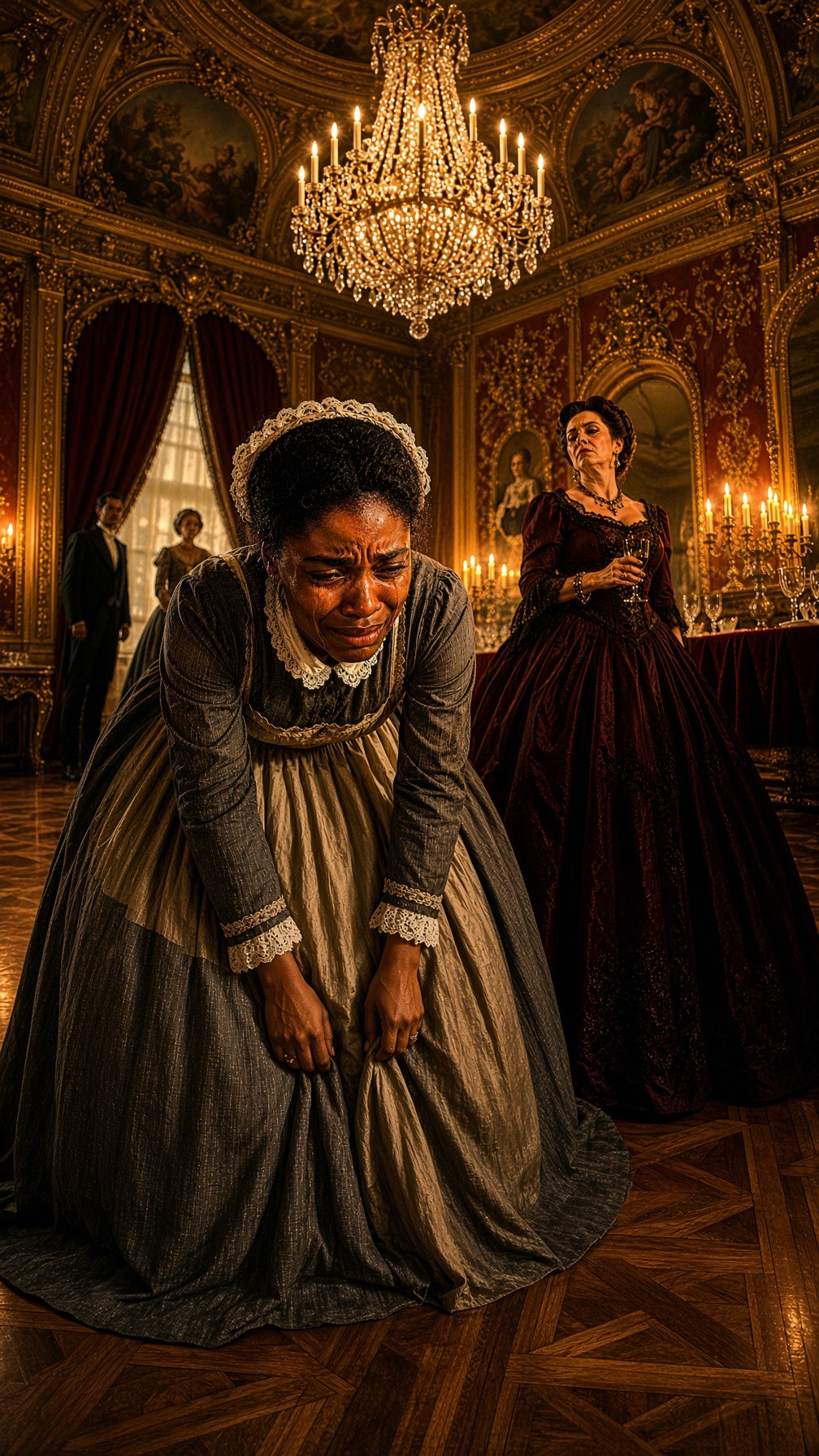
What happened in the next 3 seconds was quick, but Dona Eunice saw every detail with the clarity of someone who has spent 91 years learning to read what people do before they see it. To think. Giovana moved her chair aside, a quick, instinctive movement, so as not to wet her dress. Then, she looked around with the expression of someone expecting the problem to be solved, slightly raised her hand towards Marina, without looking at her, and made the gesture: two short , dry finger snaps .
The kind of gesture one makes to call a trained animal or to signal a waiter in a bad restaurant, without looking, without saying the name, without acknowledging that there was a person on the other side of that gesture. The room became slightly quiet, not in total silence, but in that partial silence that happens when some people notice something and others pretend not to have noticed.
Marina appeared, wiped up the water with the service cloth, changed the damp napkin, checked Dona Eunice’s plate, did everything with her usual efficiency, quick, silent, without expressing anything on her face. Giovana had already returned to the conversation. She was smiling at Rafael’s sister about something that had happened in Lisbon.
Marina took two steps towards the corridor. It was then that Dona Eunice set down her spoon. The sound was small, metal against porcelain, but in the specific tone of that moment, some people heard it. The conversations around them faded, one by one, like someone turning off the lights in a room at a time. The old woman looked at her grandson Rafael.
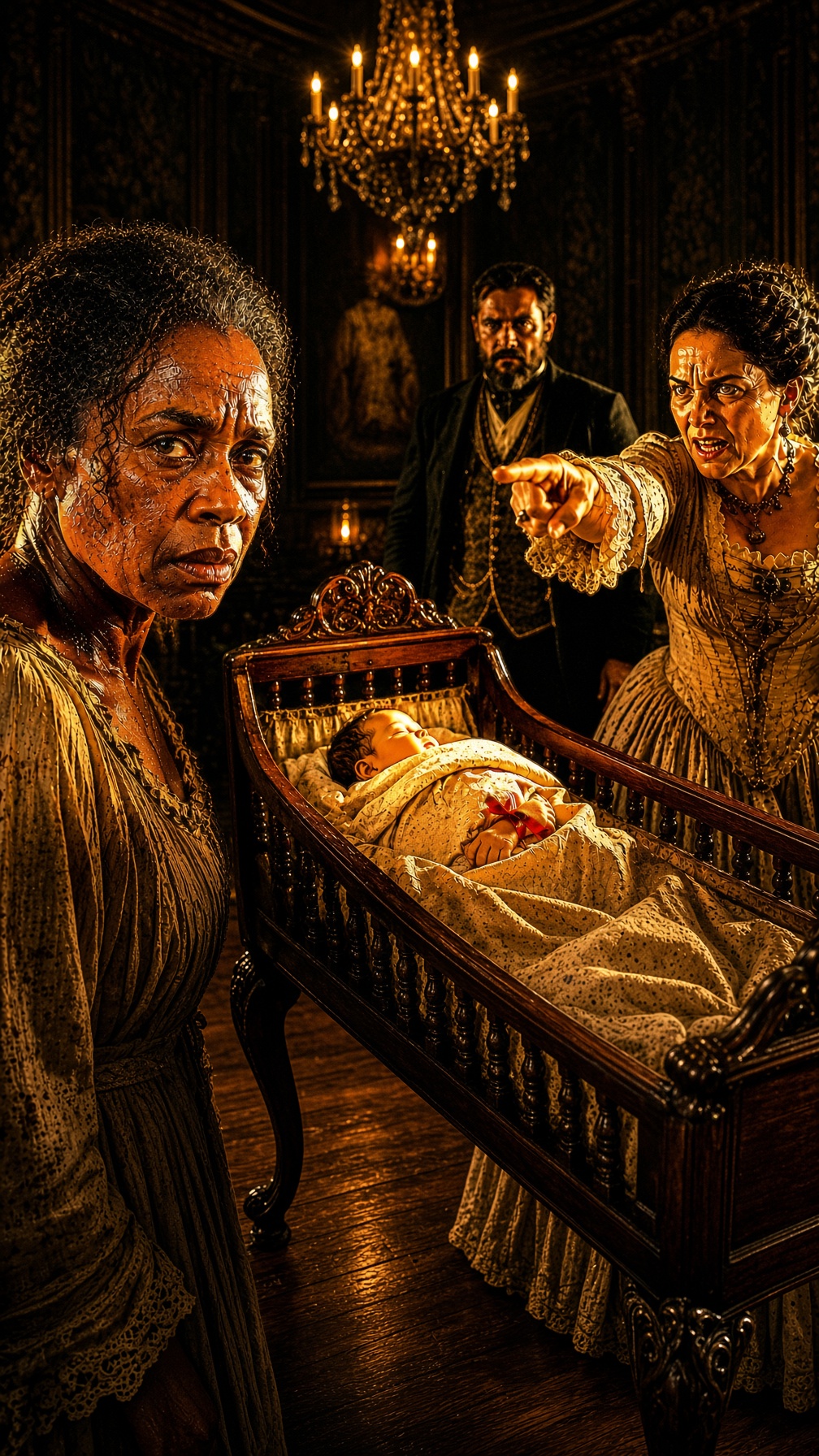
Her voice wasn’t loud, it didn’t need to be. He looked up from his glass. Dona Eunice spoke with the calm of someone who isn’t provoking anyone. She’s simply saying what’s true in the only way she knew how, which was direct and without embellishment. “You’d better marry the maid.” The whole table stopped.
Giovana stood motionless with her fork suspended in the air, halfway between her plate and her mouth. Rafael’s sister audibly held her breath . Giovana’s father exchanged a quick glance with his wife. Someone at the corner of the table slowly placed the glass down, as if any noise could break something that shouldn’t be broken.
Dona Eunice continued with the same voice, with the same calm. Not because she was a maid, but because when the glass tipped over, she was the one who cleaned it. And when the Her grandmother lost her breath last week, and she was the one who stayed. Not out of obligation. She could have called someone. Pause.
You’ve known her name for a few weeks. She’s been taking care of me for over a year. The silence that settled after that was different from all the other silences of the night. It was the kind that doesn’t easily dissipate, the kind that people take home and think about for hours later in bed, staring at the ceiling.
Giovana put the wine glass on the table with more force than she intended. The crystal made a dry sound, and everyone heard it. Marina was standing with her back to her, at the edge of the hallway, with the dishcloth in her hand. She hadn’t heard everything, but she had heard enough. She didn’t turn around, she stood still for exactly 3 seconds.
Then she continued walking, but her hands trembled slightly. At the table, Rafael looked at his grandmother. The elderly woman had returned to looking at her plate with the serenity of someone who had said what she had to say, and needed nothing more than that. Giovana was looking at Rafael, waiting for him to say something, to correct her, to soften the blow, to He took her side in front of everyone, as a groom should.
Rafael said nothing, and that silence was louder than any words he could have chosen. The guests left shortly after 10. There was no fight, no scene. The farewells were polite, hugs were given, cars were called. Giovana’s family left first. Her father with his tie loosened and a closed face.
Her mother with the smile of someone saving her thoughts for home. Her younger sister looked at Rafael for a second longer than necessary before leaving. Giovana stayed, tidying things that didn’t need tidying, collecting napkins that the service had already collected, aligning chairs that were already aligned. She stayed because she knew that leaving at that moment would be admitting something she wasn’t ready to admit yet.
Rafael found her in the living room. They stood facing each other [clearing their throats] for a moment. The kind of silence that exists between two people who already know what will be said, but neither wants to be the first. It was Rafael who He spoke. It wasn’t a fight. He had learned from his grandmother that the most important conversations don’t need volume to be heard.
He said he had confused admiration with love. He said he had confused compatibility with connection. He said he couldn’t imagine building a life with someone who did n’t see the people around them, not out of declared malice, but because of an absence he had taken too long to name. Giovana listened to everything with a quiet face.
Then she said, in the controlled voice of someone holding back a lot. All this because of a maid? No, Rafael said, because of me. Giovana grabbed her bag, left without slamming the door, which somehow was more definitive than if she had slammed it. Rafael stood in the empty room for a while, then went to his office, opened his laptop and looked for the contact information of a lawyer he had met at a logistics event months ago.
Someone who worked with administrative law and professional council processes. He sent a message. It was late, but he sent it. The reply arrived the next morning. The lawyer’s name was Marcos. He arrived at the mansion at 10 a.m. with a briefcase. The lawyer’s manner was sharp and direct, like someone who charges by the hour and doesn’t waste words.
He sat with Rafael in the office, opened his laptop, and asked for the full name and case number. Rafael provided everything Marina had told him. Marcos typed, waited, read the screen carefully, then read it again. “The case is closed,” he said. “Innocence recognized, main defendant sentenced to 4 years, served two in closed regime, currently in semi-open regime.
Two partners also convicted.” Rafael nodded. “And her record?” Marcos continued reading. ” Reinstatement requested, approved by the board.” Pause. “Holds due to non-payment of court fees.” ” How much?” The lawyer looked at the screen, looked at Rafael, looked at the screen again, as if needing to confirm before saying it aloud, because the number seemed too small to be the reason for so much. “R$ 840.
” The silence that settled in the office was unlike any other silence that week. Rafael stared at the lawyer without blinking. It wasn’t anger, it was something harder to name. It was the kind of feeling that appears when… You discover that a person lost years of their life, an entire career, the professional identity they had built with effort, study, and late nights, and that the last obstacle between them and their life back was a fee they spent on dinner without a second thought.
R$ 840, he repeated, as if he needed to hear it again to believe it. That’s what it says, Marcos said, with the neutrality of someone who has seen enough absurdities not to be surprised anymore. I can process the payment today, if you want. The record is reinstated within 48 hours after the payment is processed. Rafael was quiet for a moment, then said: “Do it.
” Marcos closed his laptop, put away his briefcase, stood up at the office door, and stopped. May I ask who this person is? Rafael looked out the window. Someone who shouldn’t have gone through this. The lawyer nodded and left. Rafael stayed in the office longer than necessary.
He kept thinking about something Mrs. Eunice had said days before. Not because I don’t know, but because you need to be the one who goes after it. And now he understood the full weight of that. In that phrase, his grandmother had waited for him to arrive at that moment on his own. She had trusted that he would arrive. That trust weighed more than he had anticipated.
That afternoon he went to his grandmother’s room, sat beside her without speaking for a while. Dona Eunice had the book in her lap, her glasses on her nose, the afternoon light shining obliquely through the window. “I paid,” he finally said. The old woman didn’t immediately look up from the book, turned a page, then slowly closed the book and looked at him.
“I know,” she said. “How do you know?” It happened this morning. Dona Eunice looked at him with that half-smile she reserved for occasions when the world behaved exactly as she had hoped. Because I’ve known you since you were 4 years old and cried for half an hour because you thought you had accidentally hurt an ant. Pause.
When you find out that someone has been treated unfairly, you can’t just let it go. Rafael stared at his own hands. “She doesn’t know,” he said [clearing his throat]. “No,” the elderly woman confirmed. “I’ll have to tell you.” Dona Eonice thought for a second, then said: “Let it reach her the right way.
Some things lose their weight when we rush to deliver them.” Rafael nodded. He sat there next to his grandmother for a while longer, while the afternoon light changed color through the window. At some point, without either of them realizing exactly when, the conversation was replaced by silence. The perfect silence, the silence of two people who don’t need words to be comfortable together.
Downstairs, Marina was preparing afternoon tea, unaware that 48 hours later her cell phone would vibrate with a notification she had been waiting for for 3 years and 4 months, unaware that when it arrived, the first person she would want to tell was a 91- year-old woman who had asked her to sit down one morning and had never again let her feel invisible.
The notification arrived on a Wednesday afternoon. Marina was in the kitchen peeling potatoes for dinner with her cell phone face down on the counter, as she always left it while working. When the screen lit up, she did n’t look at it immediately. I was used to ignoring notifications in the middle of my shift.
It was only when she finished the potato that she turned the device around, read the sender, and stopped. It was from the Professional Nursing Council. Marina stared at those words for a second that seemed longer than a second has the right to be. Then she opened the message with the care of someone opening something that could be good or could be just another bureaucratic hurdle, another deadline, another obstacle she hadn’t anticipated.
He read it, and read it again. The potato peeler was still in his right hand. She hadn’t noticed. She stood there, cell phone in one hand and knife in the other, reading the same lines for the third time . Because when you wait for something for 3 years and 4 months, when it finally arrives, it takes the brain a while to believe it’s real.
The registration had been reinstated. She could practice nursing again. Marina slowly placed the knife on the counter, set her cell phone down beside her, stood with her back to the kitchen window, looking at the wall in front of her, the white wall with the old tile that she had scrubbed hundreds of times.
And it remained like that for a period of time that she herself could not measure. She didn’t cry, it wasn’t like her, but she breathed differently. The kind of breathing that happens when a weight that’s been on your shoulders for so long that you’ve forgotten it’s there is finally lifted.
And it takes the body a moment to relearn what it’s like to stand without it. Then he went to Mrs. Eunice’s room . The elderly woman was awake, as she almost always was at that time of day, with a book in her lap and her glasses perched on her nose, the light streaming through the window at that fleeting, late-afternoon angle that she silently enjoyed every day.
Marina came closer, said nothing, showed her cell phone, Dona Eunice read it, returned the device, slowly took off her glasses and stood looking out the window. The two remained like that for a while. Marina stood beside the chair, Dona Eunice sat down, both gazing out at the garden, where the light shifted from gold to orange in the treetops of the ancient trees.
Without speaking, there was nothing that needed to be said at that moment, nothing that words could adequately convey. It was Mrs. Eunice who broke the silence. In a low voice, as if not speaking in order to be heard by anyone. Besides the person next to you . I like the days you work. And he said nothing more.
Marina stayed there for a few more minutes beside the old woman, gazing at the garden until the light changed color completely, and the orange turned into the quiet purple of dusk. Then he left without making a sound. That night, Rafael found out. At dinner, Dona Eunice recounted the news with the calm of someone informing someone of something that was already inevitable, as if the notification were merely the official confirmation of something that life had already decided beforehand.
Rafael was silent for a moment, then got up from the table and went to the kitchen. Marina was there preparing the early morning tea that Dona Eunice drank when she couldn’t sleep. The kettle was on the fire, the cup was set aside, the meltto. She moved slowly, with her back turned, with her usual precise movements, without haste, without waste.
He noticed Rafael’s presence before he could say anything. It did n’t turn around immediately. He stayed with his back turned for another second, then put down the spoon and turned around. She looked at him. “You were the one who paid,” she said. It wasn’t a question. Rafael stood near the door. I went.
Marina stared at him for a while. Her face showed no exaggerated gratitude, no overwhelming emotion. He had that expression that appears when someone has been truly seen for the first time and is still figuring out what to do with it. The kind of look that goes deeper than gratitude and more honest than any words she could choose.
Why? She asked. Rafael was quiet for a moment, looked at the ground, then looked at her. Why couldn’t R$ 840 be the reason? He said, “You’re welcome .” Marina stared at him, then looked at her own hands, then at the cup on the counter. Your grandmother always knew who I was. She finally said, in the calm voice of someone saying something she had thought about many times but never said aloud .
That was enough for more than a year. Pause. Thank you for wanting to know as well. She [clearing her throat] picked up the tray with the tea and went into the hallway. Rafael stood still in the kitchen, leaning against the counter, listening to her footsteps receding down the wooden hallway. She heard her grandmother’s bedroom door open, heard Dona Eunice’s low voice, and then Marina’s laughter.
The same short, surprised laugh that had escaped him on the day of the chess game. That laugh she always tried to hold back with her hand, a laugh that was more honest than anything she could say with words. The laughter of someone who has carried too much weight for too long and occasionally manages to forget for a moment.
Rafael stood there , listening. The following morning, Marina arrived at 5:40, as usual. She strained the coffee, placed Dona Eunice’s cup on the thermal stand, and gazed out the window for her usual two minutes , but this time there was something different hanging on the chair near the back door: a carefully folded white lab coat, ironed without a mark, with her name embroidered on the left pocket in discreet blue thread: Marina, in the same right-slanted lettering that her grandmother had taught her.
She stood there , looking at him for a while. Then he went to the chair, picked up the lab coat, ran his fingers over the embroidered name, and put it on. When Mrs. Eunice woke up and Marina entered the room with the breakfast tray, the elderly woman saw her in her lab coat for the first time. He stared for a moment at the whiteness of the fabric, at the name on the pocket, at the way Marina was standing, which was different, not in posture, but in something harder to name, the way of someone who had returned to herself. Dona Eunice picked up the
cup with both hands, looked at her granddaughter, who wasn’t really her granddaughter, at the nurse who had spent a year invisible in that house and who was now standing in the morning light with her name embroidered on her chest. And she said it with the voice of someone who needs nothing more than the right words.
Finally, this story reminds us that a person’s true worth is never in the position they hold, the money they have, or the clothes they wear, but in how they treat those who can offer them nothing in return. Life always finds a way to reveal who sees people and who only sees positions. If this story touched your heart, leave a comment telling us what lesson you took from it.
And if you ‘re not already subscribed, subscribe to the channel and turn on notifications to follow other exciting stories like this one. Until next time. M.