O CAIXÃO DE CHUMBO FOI ENTERRADO PARA NÃO SER ABERTO… EU COMETI O ERRO DE QUEBRAR O LACRE
O CAIXÃO DE CHUMBO FOI ENTERRADO PARA NÃO SER ABERTO… EU COMETI O ERRO DE QUEBRAR O LACRE 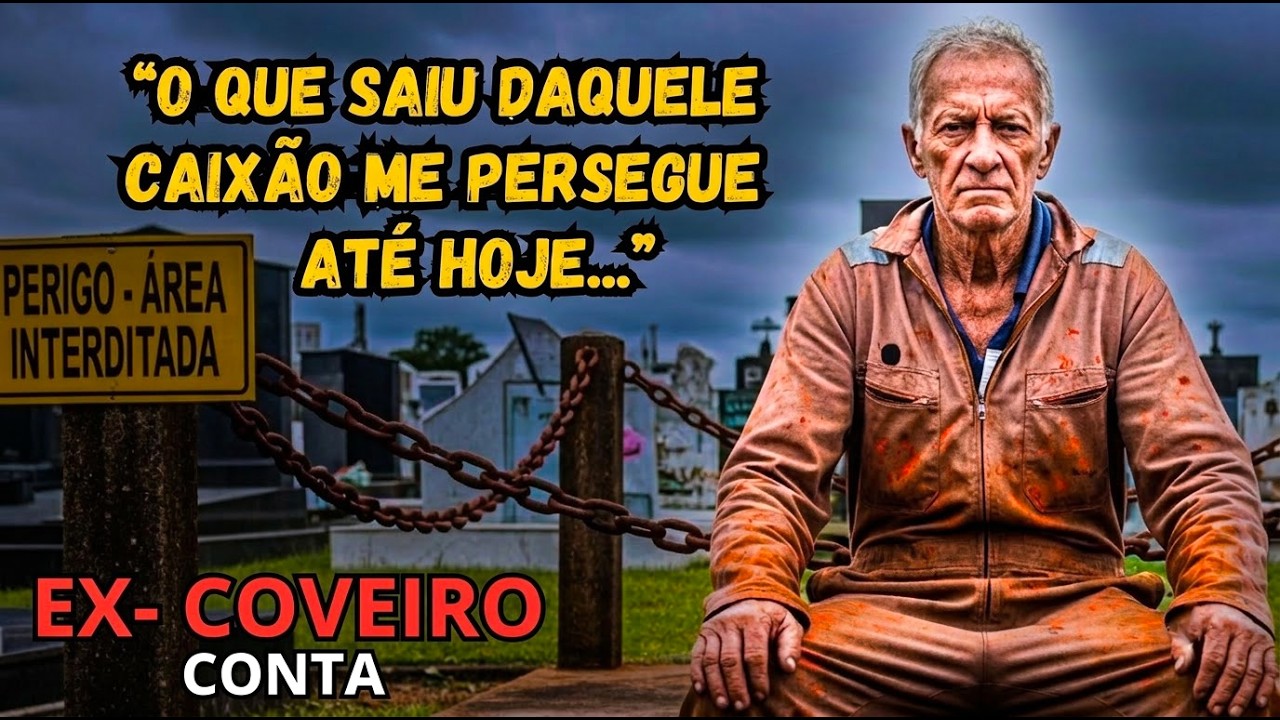
In the Saudade cemetery in Campinas, there is a section where the birds don’t sing and the weeds die as soon as they sprout. And I’ve worked there for 40 years and have always respected the old rules of never going near court 13 after it rains. But in 1995, the city hall ordered an old grave to be exhumed to make room, and the gravestone had no name, only a date engraved on it: 1888.
When we dug with a shovel, it hit metal and not wood, and we discovered that it was a solid lead coffin welded at the edges, as if they wanted to ensure that nothing could get in or out. And from inside it came no smell of death or dry bones, but a muffled, constant sound, like heavy breathing.
My name is Valdomiro Santos, but everyone knows me. By Miro, I am 68 years old and I will tell you what came out of that coffin when the weld broke and why I have never been able to sleep again without leaving the light on. Campinas is a city that grew up on top of old stories, and the Cemitério da Saudade (Cemetery of Longing) is the heart of those memories.
It’s a beautiful place, full of works of art and sculptures of angels that look like real people, but those who work the land know that beauty doesn’t disguise the weight of what lies beneath. I started working there very young as a bricklayer’s assistant and later became the official gravedigger.
I learned the trade from a man named Tião, who taught me that cemeteries have their own geography. He told me that there were places where the earth accepted the body and places where the earth spat it back out. Block 13 was one of those places where the Earth seemed to reject anything we tried to plant or bury.
It was a sweltering Tuesday morning in October 1995, and the heat was already rising from the asphalt before 9 a.m. The work order came directly from the municipal administration, requiring the release of space in the old wing because the cemetery was full and they needed more spaces. The grave indicated on the paper was number 404 in block 13.
I looked at the paper and felt a bad taste in my mouth. I knew that grave. It was a shallow grave without a cross or a photo, just a rough granite stone on top, where someone had carved the date 188 in their hand. I called my work partner, who was a young guy named Jefferson, to help me. Jefferson was strong and willing, but he lacked the cunning and respect that time gives you.
When we arrived at the place, I noticed that the air there was different. There was no wind in court 13. The air was still and heavy, like a curtain of wet velvet. And it had a faint scent that was neither floral nor candle-like. It was a metallic smell, like the taste of blood in your mouth.
When we bite our tongue, we start digging. The soil in that block was strange. Normally, cemetery soil is black and damp, but there the soil was gray and dry like campfire ash. With each swipe of the hoe, a fine dust rose that made us sneeze and stung our noses. Jefferson complained that he was feeling dizzy, but I told him it was the heat and that we needed to finish this quickly. We had dug about 1.
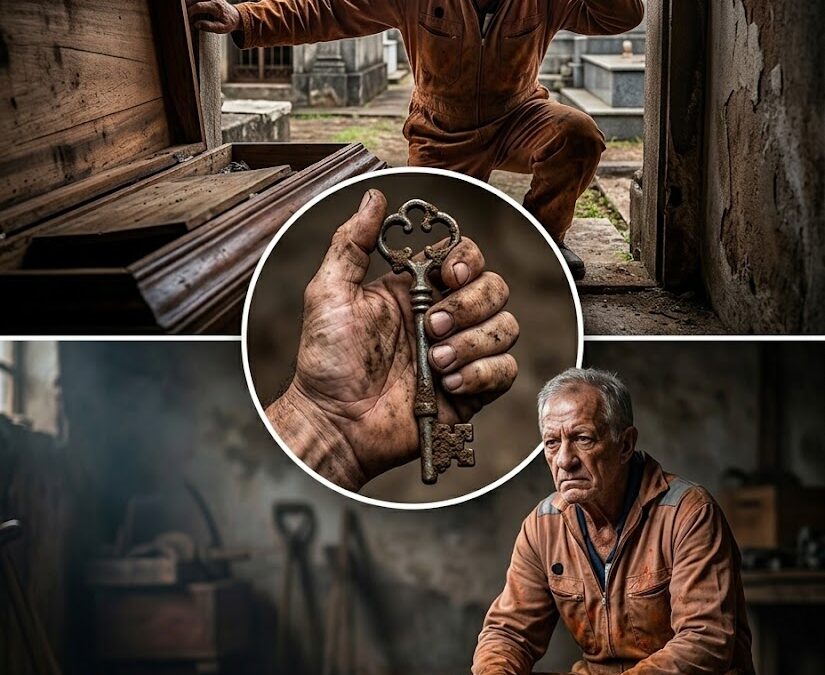
5 meters when Jefferson’s shovel hit something hard. The sound wasn’t the rotten wood sound you’d expect from a coffin over 100 years old. It was a dull, metallic sound. I wiped the dirt away with my hand and saw the matte sheen of the metal. It wasn’t a coffin handle, it was the entire coffin, a rectangular box made entirely of dark, heavy lead.
I had heard of zinc or lead coffins, used in the past to transport bodies of those who died of contagious diseases or to bring back people who died in Europe, but I had never seen one like that. That one had neither lathes nor [music] plates. It was a crude box made to isolate the contents from the rest of the world.
And the strangest thing was the edges. The lid wasn’t nailed on, it was welded on. There was a thick line of lead solder running all the way around the coffin, sealing it hermetically. I told Jefferson to stop. My instincts were screaming that something was wrong. In 1888, Campinas suffered from a yellow fever epidemic , but those who died from the fever were buried quickly in wooden coffins.
Lead was expensive. Who would spend a fortune to bury a nameless body in a forgotten block? I went up to the surface and called the administrator. I explained the situation and said that I thought it was dangerous to open it because there might be old contamination inside. The administrator, who was an office man who only thought about numbers, went down to the grave, looked at the coffin, and laughed at my concern.
He said that any bacteria or viruses had already died out 100 years ago and that lead was worth money. He ordered us to open it, take the bones to the ossuary, and take the coffin to the junkyard. I tried to argue, reminding him of old Tião’s stories about court 13, but he said that if I didn’t do it, he would have someone else do it and I would get suspended.
I returned to the hole with a heavy heart. Jefferson was down there and he was pale. He looked at me with wide eyes and said the coffin was warm. I thought he was delirious because of the sun, but when I touched the metal, I felt the lead was warm, not burning hot, but warm, as if it had been in the sun and not under six feet of cold earth.
And it was at that moment, with my hand resting on the metal, that I felt the vibration. It was a subtle and rhythmic vibration. It sounded like a very slow heartbeat or heavy breathing coming from inside. I pulled my hand away quickly, as if I’d been electrocuted. I looked at Jefferson and saw that he had felt it too. We knew we shouldn’t open that thing, but the order had been given and the manager was up there, looking on with his arms crossed, waiting for the job to be done.
I grabbed the chisel and the sledgehammer. The plan was to break the weld on the side and lift the lid with a crowbar. [music] I positioned the chisel at the metal joint and gave the first blow with the hammer. The sound of iron striking lead echoed through the cemetery like a cracked bell. The weld was thick and strong. I had to hit it hard.
With each blow, it seemed as if the heat inside the coffin intensified. The air inside the cave became suffocating. When I managed to open the first crack in the weld, it happened. No green gas came out like in the movies. A sound came out , a sharp sound of pressure escaping, like a tire going flat.
And along with the sound came a smell that made me vomit instantly. It wasn’t a smell of rot, it was a sweet, chemical smell. The smell of ammonia mixed with burnt oil and something reminiscent of sun-baked meat. Jefferson fell to his knees, twisting and covering his face with his shirt. I should have left .
I should have grabbed Jefferson and run, but that damned curiosity held me back. I wanted to see what was inside. I continued hammering with the chisel, widening the gap further. The metal gave way and I used the crowbar as leverage. The heavy lead [music] lid slid open with a horrible creaking of distorted metal. We pushed the lid aside and it fell to the ground with a dull thud.
I pointed the flashlight inside, expecting to see bones and old rags. But the coffin had no bones. The coffin was filled to the brim with a black, viscous liquid that looked like tar or thick motor oil. The surface of the liquid was smooth and mirrored like black glass. The bottom was not visible.
We just stared at it, not understanding. A body doesn’t melt and turn into oil like that. And that liquid hadn’t evaporated in 100 years. Suddenly, the surface of the oil moved. A large bubble rose from the bottom and burst on the surface, releasing more of that unbearable smell. And then another bubble, and another.
The liquid began to boil while cold. The administrator upstairs yelled, asking what we were waiting for to remove the remains. I yelled back that there were no bones, just black mud. He told us to empty the coffin with buckets. Jefferson grabbed a bucket and submerged it in the liquid. When he pulled out the full bucket, it happened.
The liquid in the bucket churned and spurted out as if it had a life of its own. He sneezed on Jefferson’s arm, where the liquid touched the boy’s skin, began to smoke, and turned red instantly. Jefferson screamed in pain and dropped the bucket. The black liquid seeped across the ground and, instead of being absorbed, it began to pool in puddles that seemed to be moving toward us .
I helped Jefferson out of the hole by pulling him by his shirt. His arm was covered in dark blisters that were growing visibly. We left the pit and I told the administrator that it was toxic waste and that we needed to call the fire department. The man got angry and said it was nonsense. He picked up a shovel and went over to the edge to look.
When he leaned over, the ground at the edge gave way. It wasn’t a normal landslide. The earth seemed to have been pulled down. The administrator slipped and [music] fell into the open coffin, plunging his legs into that pool of black eyes. He screamed and tried to hold onto the lead edges.
Jefferson and I ran to pull him away. We managed to grab his arms and pull him out of there. The legs of his pants were covered in the black substance. The fabric of his clothes began to disintegrate as if it were wet paper, and his skin, the skin on his legs, was gray, not dirty with ash. The color of its skin had changed; it looked like the skin of a dead, cold shark.
He was yelling that he couldn’t feel his legs. We took him to the infirmary and they called an ambulance. They said it was chemical contamination, but I knew it was n’t. While we waited for help, I went back to court 13 to try and cover the hole. I couldn’t leave that open. When I got there, the scene sent chills down my spine.
The black liquid had overflowed from the coffin and was covering the bottom of the grave, but it wouldn’t stay still. He climbed up the earthen walls, defying gravity. He was trying to get out of the hole, and in the middle of the black puddle inside the coffin, something was forming. The liquid rose and took on shapes that resembled human faces in agony. that were falling apart.
Right after that. I grabbed the lead lid and, with an effort that nearly broke my back, managed to throw it back on top of the coffin. The impact caused the liquid to splash to the sides. I started throwing dirt into the hole as fast as I could. I threw dirt on the coffin until it was completely covered.
I threw dirt on the hole until it was full. I was sweating profusely and praying. I felt like I was burying something alive. When I finished leveling the land, I [clearing my throat] was exhausted. The ground where I had stepped was hot. The tools we used, the shovel and the chisel, were on the ground.
I went to pick them up to take them away and I got a shock. The metal of the tools was rusty, but it wasn’t normal rust, it was a thick, dark rust [music] that crumbled in your hand. In less than an hour, the metal had aged 100 years. I went back to the locker room, washed my hands with soap and a brush until they bled. The smell of that oil wouldn’t go away.
I went home feeling like I was sick. My head ached and I had a metallic taste in my mouth. Jefferson was admitted to the hospital that day with a high fever and delirium. The administrator lost the use of his legs, and doctors couldn’t explain why. That night I woke up in the middle of the night terribly thirsty . I went to the kitchen to get a drink of water.
When I turned on the light, I saw that the faucet in the kitchen sink was dripping, but it wasn’t water dripping, it was a thick, black drop. I turned off the tap forcefully, but it kept dripping. The black liquid fell onto the white dish and began to spread, forming patterns.
I looked at the drawing and recognized it was the date. And eight. I ran to the bathroom and looked at myself in the mirror. My eyes were red and the whites were turning yellow. I lifted my shirt and saw. On my stomach, the skin was turning gray, a small spot the size of a coin right on my belly button, the same color as the administrator’s skin.
The plague had come with me; I hadn’t just opened a coffin, I had broken the seal of a prison. That wasn’t a biological disease, it was a spiritual disease, a stain on the soul that manifested itself in the flesh. And now it was in my blood. I heard a sound coming from the living room, wet and heavy footsteps, as if someone had emerged from a tar pit and was walking through my house.
I grabbed a knife from the kitchen and went to see. There was no one in the room, but the smell was still there. The smell of ammonia and rotten meat. And on the beige carpet in the living room there were footprints, black and oily marks that burned into the fabric. The footprints led from the front door towards my room. I understood the message. It wanted a body.
The lead coffin had held its shape for a century. But now that the seal had broken, the thing needed a new shell. And she was testing my resilience. I went back to the room and locked the door, knowing that a lock doesn’t keep out smoke. I sat on the bed and stared at the gray spot on my stomach.
She seemed to have grown a little. I needed to figure out how to seal it again . I needed to know who had been buried there and why. The following day would be a race against time, a race against the gray stain that wanted to turn me into a statue of dead flesh. I spent the night awake, sitting on the bed, watching the gray spot on my stomach grow millimeter by millimeter, and feeling my blood cool inside my veins, as if it were turning into liquid metal.
I knew that if that stain reached my heart, I would be dead, or worse than dead, I would become one of those gray flesh statues that the cemetery administrator had turned into at the hospital. As soon as the sun rose, illuminating the Campinas sky with an orange hue of pollution, I left home. I didn’t go to the hospital because no doctor would know how to treat a cemetery curse.
I went straight to the municipal library to search through the city’s old newspaper archives for what had happened in 1888 that would justify burying someone in molten lead. The librarian gave me a strange look because of my sickly appearance and wrinkled clothes, but she let me in.
I spent hours sifting through microfilm and old newspapers that smelled of vinegar. Most news reports focused on the yellow fever epidemic that decimated the city at that time and the abolition of slavery. But I found it in a footnote in a sensationalist newspaper of the time. The note mentioned the secret burial of a woman named Isadora, who was known in the poorer neighborhoods as the plague lady.
They said she hadn’t caught yellow fever, but that the fever had been born within her. They said that wherever she stepped, the earth died and the water turned black. The news report stated that the population wanted to burn her body to purify the city, but the authorities, fearing the smoke would spread the disease, decided to seal the body in lead and bury it in the deepest part of the cemetery, without a priest or a cross.
The lead wasn’t meant to protect the body, it was meant to protect the earth from the body. Isadora was not just sick; she was a living source of spiritual and physical contamination that the science of the time could not explain and that religion feared. And I had just opened her cell door.
I left the library certain of what I needed to do. The lead had failed because we broke it. Now I needed something stronger than metal. I needed elements that the earth would respect. I went to a hardware store and bought 20 meters of thick steel chain, four high-security padlocks, and two 50 kg bags of coarse salt.
Then I went to a building materials store [music] and bought quick-drying cement and quicklime. I spent almost my entire monthly salary, but money is useless if you’re wasting it. I arrived at the Saudade cemetery around noon. The place was strange; there wasn’t much activity for a Wednesday, and the few visitors who were there seemed to be walking quickly with their heads down.
The birds that always made noise in the trees had disappeared. The silence was so heavy it hurt my ears. I went straight to the locker room to get the wheelbarrow and tools. My coworkers asked me about Jefferson and the administrator, and I lied, saying they were improving. I couldn’t cause panic or let anyone near plot 13.
I put all the material in the cart and pushed it towards the open grave. With each step I took, I felt the mark on my stomach burning. She was reacting to the closeness. When I arrived at block 13, the scene was worse than I had imagined. The earth I had thrown on top of the coffin the day before was damp and pulsating.
It wasn’t a rapid pulse, it was a slow breathing movement, as if the ground were the chest of a sleeping giant. From the midst of the churned earth gushed that black, viscous liquid. It didn’t slide down , it went up. It was forming small puddles that joined together and bubbled, releasing that smell of ammonia and rotting meat.
The grass around the grave, within a 2 m radius, was dead, not dry, but black and oily. And in the center of the pit, the earth began to open up on its own. A crack appeared, and from within it I saw the gray hand of smoke trying to form. The plague lady was trying to materialize. I didn’t waste any time.
I tore open the first bag of coarse salt and threw it mercilessly onto the black earth and the bubbling liquid. When the salt touched the substance, a violent reaction occurred . The ground hissed loudly, as if I had thrown water on boiling oil. A white, foul-smelling smoke rose. I heard a scream that seemed to come from deep within the earth, a sound of a woman screaming in pain and rage.
I kept throwing salt. I threw the 100 kg, covering the entire area of the pit and making a white barrier around it. The black liquid receded, shuddering and bubbling. The bruise on my stomach hurt so much that I had to bite my lip to keep from screaming. But I felt that her progress had stalled.
The salt was cutting off the connection. I took the quicklime and sprinkled it over the salt. The chemical mixture heated the earth. I knew that it would burn up anything organic that was trying to come up. Then, I prepared the cement right there on the ground, mixing it with water and more salt. I wasn’t just going to patch the hole, I was going to make a tombstone that no one would ever be able to break again.
While I was mixing the cement with the earth, it really shook . The coffin down below hit the bottom of the grave. Boom, boom, boom. The entity knew I was trying to arrest her again. Her voice entered my head. It wasn’t a clear voice, it was a buzzing of flies forming words. She said I already belonged to her. She said that the lead was in my blood and that I would rot from the inside out if I didn’t let her go.
I yelled at her to shut up and started pouring cement into the grave. The heavy concrete fell on the salt and lime, muffling the hisses and screams. I filled the hole to the brim, leveling it with the ground. The cement began to dry quickly because of the heat and the chemical reaction. But I didn’t stop there.
I grabbed the steel chains. Iron is a metal that ancient entities dislike. He cuts the magic. I started running the chain around the area of the pit, crossing over the fresh cement. I made a tight metal mesh and locked it with padlocks. I sank the chains into the soft cement so that they would be permanently stuck there once it dried.
I was exhausted. My skin was ashen with dust and sweat. My hands were bleeding from the effort. I sat on the edge of the grave, watching the cement dry. The voice in my head was getting weaker. The buzzing of flies faded until it became a distant silence. The spot on my stomach stopped burning.
She didn’t disappear. It lay there, hard and cold, like a war scar, but it stopped growing. I stayed there until nightfall. When the moon appeared, the cement was as hard as stone. The grave was sealed. A rough slab of gray concrete. You cross chains of rusting iron. It looked like a scar in the cemetery soil.
I dragged myself back home . That night I slept for the first time without dreaming of puddles of black oil. The next day, I learned that Jefferson had come out of the coma, but that he had lost his memory of what had happened. He thought he had been in a car accident. The administrator never walked again and was retired due to disability.
They said it was a rare degenerative disease. I continued working at the cemetery of longing. I couldn’t go out. I had become the jailer of that thing. I needed to make sure that no one ever touched that court again. I invented a story that the soil there was contaminated by polluted groundwater and surrounded the area with barbed wire and danger signs.
The new administration believed in them and left that corner abandoned. Years passed and I grew old watching over block 13. The vegetation never grew again on that concrete slab. Salt and lime killed the land forever. The chains had rusted and fused with the stone, creating a frightening appearance that keeps curious onlookers away.
The spot on my stomach is still there. It is gray and cold to the touch, feeling like a piece of lead sewn into my skin. Sometimes, on very hot days, or when someone dies of a contagious disease in the city, the spot itches and throbs. It’s Isadora down there , smelling death and wanting to come out to feed. But I am here.
And as long as I’m alive and able to carry a sack of salt on my back, that door will never open again. I live alone in a small house near the cemetery wall. I didn’t get married or have children because I was afraid of passing on the poison in my blood. My life was lonely, but it was necessary. I see people strolling through the cemetery, taking pictures of the beautiful statues, unaware that just a few meters away, beneath a layer of concrete and chains, lies a slumbering evil that could destroy everything. Today I am 68 years old and I
am tired. My bones ache and my breathing is labored. I know the lead in my blood is taking its toll. I am dying little by little, turning to stone from the inside out. But I’ve already prepared everything. I left a will with a trusted lawyer, instructing that when I die, my body be cremated and the ashes mixed with cement to make a second layer of concrete on top of grave 404.
I will continue to watch over it even after I am dead. I’m going to be the last lock on the door. If you go to the cemetery of longing and see an area surrounded by barbed wire and danger signs, where an old man with grayish skin sits on a bench looking at the ground, don’t go near it. Don’t ask what’s there. Believe the sign.
The danger is real. And he is hungry.