O CEO pediu a opinião da EMPREGADA em tom de DEBOCHE no meio da reunião… e LEVOU uma AULA
O CEO pediu a opinião da EMPREGADA em tom de DEBOCHE no meio da reunião… e LEVOU uma AULA 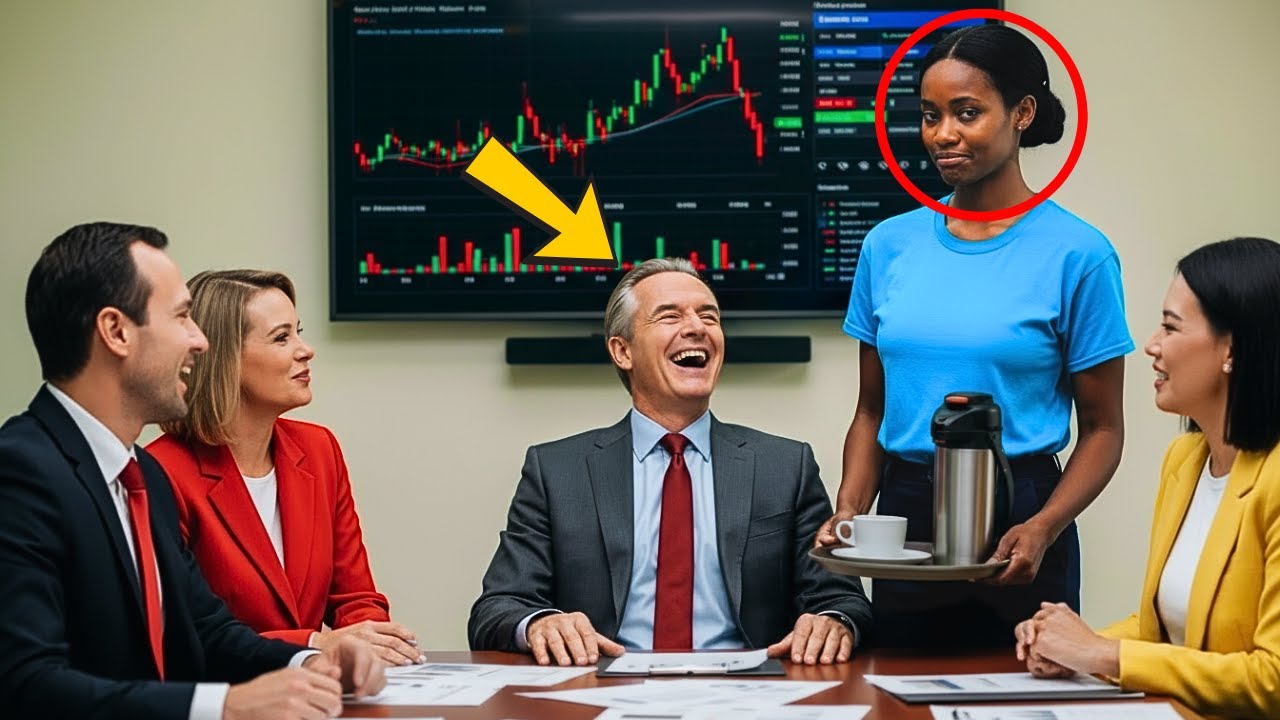
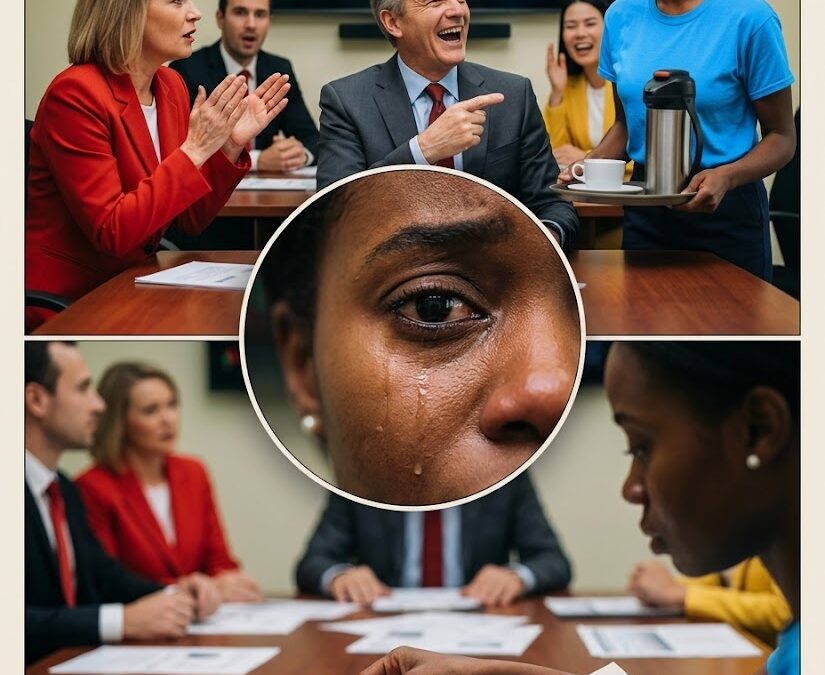
When the CEO looked at her in front of all the investors and said, “Since you’re always wanting to say something, why don’t you say it now?” He expected silence, he expected shame, he expected the girl from the café to lower her head and walk out the door. But what happened in the following minutes made that man swallow every smile he had ever given, because Dalila did not remain silent.
And what she said changed everything. Every Monday at 8:15 in the morning, Dalila pushed the same cart down the hallway on the 12th floor. Hot coffee in a thermos, white cups lined up, sugar, sweetener, stirrers, folded napkins, everything in its place, everything clean, everything silent. The meeting room at Bicon Consultoria had a long, dark wood table , leather chairs, and a huge television on the wall displaying graphs.
Dalila would enter through the side door, position the cart in the corner, and stand there waiting in case someone needed anything. Nobody ever needed her, at least not her. On that particular Monday, the meeting was about a new contract, a large client in the logistics sector called Grupo Lotus. Geraldo, the CEO of Bicon, led the conversation with his usual confidence.
Dark gray suit, expensive watch, gray hair combed back. Geraldo was 54 years old and had a way of speaking that left no room for doubt. When he said something was like this, it was like this. Full stop. No one disagreed with Geraldo, not because he was always right, but because disagreeing with him was costly. Everyone there knew that.
Those who didn’t know learned quickly. The team was presenting the figures for the proposal when Dalila, from the corner of the room, frowned. She had heard that same client mentioned two meetings ago. At the time, the delivery deadline was a problem. The customer complained, Bicon adjusted it. Now they were offering the same deadline, as if the problem had never existed. Dalila looked around.
Nobody seemed to remember. Without much thought, she murmured, “Quiet, polite, almost apologizing for existing. Sorry, but hadn’t this deadline been a problem before?” The room was silent for 2 seconds. Two seconds that felt like 10. Geraldo looked up from the screen, glanced at Dalila, not angrily, but with something worse, with that half-smile of someone who finds it funny when a child tries to talk about adult things.
“Not now, okay,” he said, without even taking his hand off the mouse. We’ll talk later. They were n’t going to talk. Dalila knew this. We’ll talk later. It was a polite way of saying, “Be quiet.” She lowered her head and went back to the corner. No one in the room looked at her. Nobody said, “Wait, what did she mean?” Nobody asked anything.
The proposal was approved. The deadline remained the same. But Dalila wasn’t just the coffee girl, and her life exacted a high price for every mistake others made. Dalila was 26 years old. Dark skin, hair always tied up in a low bun, and a name tag that read ” general services.” I earned one and a half minimum wages .
She lived with her mother, Dona Jurema, in a two-room apartment in Jardim das Acáccias, a neighborhood that was almost a 2-hour bus ride from the commercial center where the company operated. Dona Jurema was 63 years old and had a serious kidney problem. She needed expensive medication, frequent checkups, and a special diet that cost more than Dalila could comfortably afford.
Each month was a juggling act. Rent, medicine, food, travel expenses. There were coins to spare. Sometimes not even that. Before working there, Dalila was studying business administration. At a private college, she paid her tuition at night with a discount she got for a high score on the entrance exam. For two years, she was one of the best students in her class.
The teachers praised how she understood numbers, how she connected data with strategies, and how she saw the error coming before it happened. But when her mother became permanently ill, the accounts changed. Dalila needed to work full-time. He tried to keep them both for six months. I would leave work at 6, take the bus, arrive at college at 8, return home at midnight, and wake up at 5.
My body held up, but my bank account didn’t. She suspended her enrollment, promising to return the following semester. It had already been three semesters. Knowledge, however, did not lock itself away. Dalila continued reading. She would download articles on her phone during lunch, and watch free online classes in the early hours of the morning with the volume low so as not to wake her mother.
And in Bicon’s meetings, while no one was looking at her, she swallowed everything: numbers, deadlines, and lies. Dalila collected the cups after everyone had left. She washed them one by one in the pantry upstairs, dried them with a cloth, put them away in the cupboard, all in silence. On the bus, on the way home, with her cell phone almost out of battery and her body feeling heavy, she opened the notebook she was carrying in her bag.
A simple, hardcover notebook, bought at a neighborhood stationery store. Inside, Dalila wrote down everything she heard in the meetings: numbers, client names, dates, deadlines. Not because someone asked her to, but because it was stronger than her. That night, he wrote under the last note: Lotus group deadline, same mistake as before.
Nobody remembered, nobody wanted to listen. He closed his notebook, rested his head against the bus window, and closed his eyes. Three weeks later, Bicon’s phone rang. The Lotos group called to complain. The deadline, as Dalila had predicted, has passed. The company lost part of the contract and received a formal warning from the client.
At the next meeting, Geraldo had a closed expression on his face. He tapped his pen on the table while demanding answers. I’d like to know whose idea it was to keep that deadline. I wanted names, I wanted someone to blame. The directors looked at each other in silence. No one would take responsibility. Nobody remembered.
Dalila, in the corner of the room, with her hands on the stroller, remembered. She remembered everything: the deadline, the meeting, the exact moment she tried to speak and was cut off, but this time she remained silent. Geraldo never knew that the answer he was looking for had already been given weeks before by the person he told to shut up, and this wouldn’t be the last time.
After the Lotus group incident, Dalila promised herself that she would stay quiet, that she would do her job, serve the coffee, collect the cups and leave, without comments, without murmurs, without trying to help those who didn’t ask for help. It lasted two weeks. In the third meeting after the incident, the team was discussing the renewal of an old contract with a pharmacy chain.
The finance director, a man named Fábio, presented the numbers with a confidence that Dalila knew well—the confidence of someone who doesn’t check their own data. Fábio was in his early forties , always wearing a well-pressed suit, polished shoes, and a smile that came too easily.
He was the type of man who treated those above him well and ignored those below him. With Dalila, he wasn’t just rude, he was worse. It was as if she didn’t exist. He walked past her in the hallway without looking away. He would order coffee without saying please. She would leave the dirty cup on the edge of the table without looking back.
At that meeting, Fábio explained that the contract with the pharmacy chain could be renewed under the same conditions as the previous year: same deadlines, same amounts, same structure. Dalila pressed her lips together from the corner. She remembered, because she wrote everything down, that three months earlier, in that same room, someone had mentioned that the pharmacy chain had changed its main supplier.
This meant that the volume of demand was going to change. And if the volume changed, the conditions could not be the same. She tried to stay quiet, she really did, but when Fabio said we can keep everything the same, without any risk, the sentence came out before she could stop it. Excuse me , but their supplier hasn’t changed.
Does n’t that change the volume? This time the silence in the room was different. It wasn’t just a surprise, it was unsettling. As if someone had broken a rule that everyone knew, but no one had written down anywhere. Fabio stopped talking. He turned his body in the chair, looked Dalila up and down slowly, like someone looking at a stain on the carpet that shouldn’t be there.
Who asked for your opinion? He said. He didn’t shout, he did n’t need to. Tom already said it all. Dalila felt her face grow hot, she opened her mouth to explain, but Geraldo was faster. Dalila, please, this isn’t your area of expertise. His voice was calm, almost gentle, but the message was always the same . Stay in your place.
She swallowed the sentence she was about to say, lowered her head, and looked back at the stroller. The meeting continued, the contract was renewed as it was, but something changed after that day. Not in the numbers, not in the company, but in the way people looked at Dalila. She used to be invisible, now she was a problem.
In the hallway, after the meeting, she overheard two analysts talking near the water fountain. They didn’t speak loudly, but they also did n’t try to speak softly. Did you see the girl at the coffee shop trying to give her opinion again? Every meeting is like this. I don’t know why they still let her stay in the room.
Dalila walked past them pushing the cart. They didn’t stop talking. Perhaps they didn’t even realize she heard, or perhaps they didn’t care. The following week, the meeting took place that Dalila tried hardest to forget afterwards. It was a Wednesday, the room was full, Geraldo was in charge, as always.
The agenda was the renegotiation of deadlines with three clients who had complained in recent months. An irony that nobody noticed. Two of those deadline problems were exactly the ones Dalila had tried to point out earlier. In the midst of the discussion, one of the managers suggested shortening the delivery time to show goodwill to the customers.
Dalila knew that this wasn’t going to work. The operations team was already overwhelmed. Shortening the deadline without increasing the team was a recipe for more delays, more complaints, and more losses. She wasn’t going to speak, she had decided, but the manager’s words kept nagging at her. And when there was a pause, one of those short silences that happen when someone changes slides, Dalila said almost voicelessly: “That deadline isn’t feasible.
” He didn’t finish the sentence. Fabio, who was sitting in the middle of the table, stopped what he was doing. He took his eyes off the notebook, looked at Dalila, and laughed. It wasn’t angry laughter, it wasn’t aggressive mockery, it was worse. It was the laughter of someone who finds it genuinely funny.
It was as if a child had walked into the meeting room and said that he or she knew how to fly a plane. Two other executives smiled along. One shook his head, looking down. Another bit his lip, trying to hold back a laugh. Dalila looked around , searching for someone who wasn’t laughing, someone who would make a gesture, a look, any sign that something wasn’t right.
Nobody did anything. Geraldo looked at her for a second, then returned his gaze to the screen. He didn’t defend her, he didn’t stifle the laughter, he simply let it happen. That silence, the silence of someone who could have done something but chose not to, hurt more than the laughter. Dalila collected the cups even before the meeting ended.
Nobody noticed that she left early. Nobody noticed anything that had to do with her. In the pantry, while washing the cups, her hands trembled. Not out of fear, humiliation, pent-up anger, or weariness of being treated as if she did n’t think, as if she didn’t know, as if the general services badge meant that her mind also belonged to general services.
That night, the bus was 40 minutes later than usual. Dalila arrived home around 10 o’clock. Dona Jurema was already asleep. Dinner—rice, beans, and an egg—was on a plate, covered with another plate on top of the stove. Dalila sat in the kitchen chair, pulled the notebook from her bag, opened it to the last written page, and looked at the notes, numbers, dates, client names, deadlines, observations—everything correct, everything there, everything ignored.
She closed the notebook, but this time she didn’t put it in her bag. She stored it at the bottom of the drawer, under the dish towels. And in that small kitchen, with the plate of cold food in front of her and the sound of her mother breathing in the next room, Dalila made a decision.
I was never going to open my mouth in that room again. But what she did n’t yet know was that in a few weeks Bicon was going to schedule the biggest meeting in the company’s history, and that at that meeting her silence would cost her far more than any words. The weeks that followed were the quietest of Dalila’s life inside Bicon.
She would arrive on time, prepare the cart, enter the room, serve the coffee, stand in the corner, collect the cups, and leave, without a word, without a murmur, without a glance that lasted longer than necessary. The executives didn’t even notice the change. For them, Dalila had always been silence. The difference between the silence of before and the silence of now was invisible to those who never paid attention.
But for Dalila, the difference was enormous. She used to stay quiet because nobody asked. Now she remained quiet by choice. And choosing not to speak when you know what to say is a kind of burden that few people understand, because she kept listening. That was the worst. I couldn’t turn it off. He would enter the room and, unintentionally, every wrong number, every impossible promise, every invented deadline would come along too.
Everything went in and stayed. In the second week of silence, a meeting was held regarding cost-cutting. Fábio presented a spreadsheet with numbers that Dalila knew were wrong, not by intuition, but by memory. She remembered the figures that had been discussed two months earlier, and the numbers on the current spreadsheet didn’t match.
Someone had rounded up, someone had hidden an expense, or someone simply didn’t know how to add. Dalila looked at the spreadsheet on the big screen, looked at Fábio explaining confidently, looked at the directors nodding in agreement, and remained quiet. During a break in that meeting, while refilling her thermos in the break room, Dalila ran into Sandra.
Sandra worked cleaning the floor; she was about 45 years old. He was the type who spoke little, but observed a lot. The two greeted each other every day, exchanged a quick smile, and sometimes shared lunch when their breaks coincided. Sandra was drying some glasses when she looked at Dalila and said bluntly, “You look different.
” Dalila placed the bottle under the hot water tap . Different how? I don’t know, it’s faded. Before, you’d come back from meetings looking like you wanted to say something. Now he’s back looking like he swallowed something. Dalila forced a smile. I ‘m fine, Sandra, just tired. Sandra didn’t insist, but before leaving she stopped at the door and said something Dalila didn’t expect.
Do you know what my grandmother used to say? The worst punishment is not speaking and being ignored, but knowing and having to pretend you do n’t know. Dalila stood still with the bottle in her hand. Sandra had already left when she realized she was holding her breath. By the third week, the company’s atmosphere began to change.
Dalila first noticed hushed conversations in the hallways, people going in and out of Geraldo’s office with thick folders, the operations manager walking faster than usual, and Geraldo’s secretary printing documents non-stop, with that expression of someone working overtime . Something big was being prepared.
On Thursday of that week, Dalila entered the room to serve coffee for the 10 o’clock meeting and saw something different. The table was set with more care. They had bottled mineral water in glass bottles, not plastic ones. The napkins were made of cloth, and in the corner of the table was a black folder with the Bicon logo in gold.
The kind of folder that only appeared when the company wanted to impress people from outside the company. Geraldo was on the phone, standing near the window. He spoke softly, but with a tension in his body that Dalila already knew, his shoulders stiff, his free hand gripping the side of his pants. When he hung up, he turned to the operations manager and said, “Next Friday, 10 AM,” and they confirmed.
“Of all of them?”, the manager asked. “Everything. And this time there can’t be any mistakes. This contract is worth more than everything we’ve closed this year together.” Dalila gathered the information as she did everything, silently, but inside, something froze. In the following days, the pieces fell into place.
She overheard snippets of conversations in the hallway, loose phrases in the break room, comments among analysts in the elevator. Investors from abroad were going to visit Bicon. Big names, the kind of meeting that could change the size of the company or ruin its reputation. On Tuesday, four days before the meeting, Dalila entered the room to collect the afternoon coffee cups and saw the documents scattered on the table. No one was in the room.
The presentation was still open on the laptop connected to the television. She shouldn’t look. She knew that. But her eyes were quicker than her reason. On the screen, the numbers of the proposal, the deadlines, the conditions, the guarantees. Dalila’s stomach sank. It was the same pattern, the same type of mistake she had seen before: deadlines that were too tight, guarantees that the company didn’t have the structure to fulfill, conditions that were too unreasonable.
Beautiful on paper, but crumbling in practice. But this time it wasn’t just any contract; it was the biggest deal Bicon had ever tried to close. If it went wrong, it wouldn’t just be a customer complaint, it would be a crisis. And if no one fixed it, someone would be held responsible later. And Dalila knew very well who it wouldn’t be.
It wouldn’t be Geraldo, it wouldn’t be Fábio, it wouldn’t be any of the directors in suits and expensive watches. It would be someone lower down, it always was. She stood in front of the screen for almost a minute, the dishcloth hanging from her shoulder, the cart behind her, the empty hallway. She thought about writing it down in her notebook.
Then she remembered the notebook was at the bottom of the drawer, under the dishcloths in her mother’s kitchen . She turned off the screen with her elbow, as if she could erase what she had seen. She pushed the cart out of the room and closed the door. On the bus that night, Dalila didn’t read anything on her phone, didn’t listen to music, just looked out the window, watching the streetlights.
They passed by one by one, all thinking the same thing. She knew what was going to happen, she knew, and she couldn’t do anything. Because every time she tried, she was told to shut up. Midway through the journey, her cell phone vibrated. It was the company’s internal group chat. A message from the operations manager, at 9:17 PM.
Friday can’t have any mistakes. Whoever is involved should prepare. If there’s a problem, someone will be held responsible. Dalila read it twice, put her phone in her pocket, and swallowed hard. When she got home, Dona Jurema was awake, sitting in the kitchen chair, with a glass of water and her evening medication in front of her. “You’re late, daughter.
Traffic, Mom. You look tired.” “I’m fine.” Dona Jurema looked at her in that way only a mother looks, the way that cuts through any prepared response and sees what’s behind it . But she didn’t say anything, just extended her hand and squeezed her daughter’s hand for a second. Dalila squeezed back and went to her room without dinner.
On Friday, she would enter that room. Again, she would push the same cart, serve coffee to people who never looked at her, watch in silence as Bicon walked straight into an abyss that only she could see. The question that wouldn’t leave her head was just one: What happens when you know the truth, but nobody wants to hear it from you? Friday, 7:30 in the morning.
Dalila got off the bus already in her uniform, her hair tied back tighter than usual. She didn’t sleep well. She tossed and turned in bed all night, the numbers she saw on the screen spinning in her head like a never-ending sign. The Bicon building was different that morning. The security guard at the entrance was wearing a suit instead of his usual uniform.
The lobby had been cleaned twice. Dalila knew because she saw Sandra’s bucket still wet in the corner. The elevator smelled of new cleaning products. Everything tidy, everything in its place, like a house being decorated to receive an important visitor. When Dalila reached the 12th floor, Geraldo’s secretary was already on the phone.
She paced back and forth with a clipboard, confirming schedules and noting names. In the hallway, two technicians adjusted the projector in the meeting room. An administrative employee carried black folders with the gold Beacon logo, the same ones Dalila had seen days before. She went straight to the break room.
She prepared the coffee with more care than usual. She chose the best cups, the white ones, without any signs of use, that were on the top shelf and only came down on event days. She put everything on the cart. A full thermos, sugar in a glass jar, sweetener, stirrers, cloth napkins. While arranging the cart, her hands worked automatically, but her mind was in the meeting room, on the numbers that didn’t add up, on the clause that no one had reviewed, on the deadline that was about to expire, like all the others.
At 9:40, the first investors arrived. Dalila saw them through the break room window that overlooked the hallway. Three men and a woman, dark suits, leather briefcases, shoes that made noise. The floor. The kind of people who walk with the posture of those who know exactly how much their time is worth. Geraldo greeted them personally in the elevator.
Open smile, firm handshake, voice loud enough for the whole floor to hear. “What a pleasure to receive you. The team is ready. Let’s get straight to the point.” Dalila had never seen Geraldo smile so much. It was the smile of someone who needs everything to go right. The smile of someone who bet high and now can’t afford to lose.
At 10 o’clock sharp, the meeting began. Dalila entered through the side door with the cart, as always, positioned it in the corner in the same way, stood up, hands crossed in front of her body, eyes on the floor, in the same silence, but nothing in that room was as usual. The table was full. On one side, the Bicon team.
Geraldo at the head of the table, Fábio to the right, the operations manager to the left, plus three directors and two analysts. On the other side, the four investors. Notebooks open, expensive pens, glasses of mineral water that Dalila had placed minutes before. The presentation began. Geraldo conducted with the As always, he was confident, pointing to graphs, explaining projections, showing numbers that looked solid on the big screen .
His voice was firm, his gestures calculated. Each slide seemed rehearsed. Dalila took in everything from the corner of her eye, every number on the screen, every promise in the air, and with each slide that passed, the tightness in her chest increased. On the third slide came the deadlines, the same ones she had seen on the screen days before.
Geraldo explained them as if they were perfectly feasible: 90 days for complete implementation, with a guaranteed result in the first quarter. Dalila knew that wasn’t possible. The operations team could barely handle the current contracts. Promising 90 days was like promising the sun would rise in the west. But Geraldo spoke with such conviction that even she, for a second, almost believed him.
On the fifth slide came the part that made Dalila’s stomach sink completely: the guarantee clause. Geraldo presented it as if it were a competitive advantage. ” If we don’t deliver on time, Bicon will assume the loss and return the full investment.” The phrase appeared on the screen in large letters, as if it were a… A seal of trust.
The investors exchanged glances. The woman from the Short Hair, Sunglasses group, the one who spoke the least and took the most notes, tilted her head to the side and wrote something in her notebook. Dalila recognized that clause. It was an expanded version of the same type of promise that Bicon had made before in smaller contracts.
And every time it caused problems. The company never managed to fulfill it. The difference was that before it was with clients who complained and accepted a settlement. Now it was with investors who wouldn’t accept excuses. If that contract were signed as it was, Bicon would be committing to something it couldn’t deliver.
And when the deadline passed, because it would, the guarantee clause would fall like an anvil on the company’s head. It would n’t be a loss of contract, it would be a crisis that could bring everything down. Dalila felt her body move before her mind authorized it. It was a step, a single step forward towards the table.
Her mouth opened almost instinctively, as if the words were pushing from the inside out. Then it stopped. The laughter of Fábio returned, tall, clear, as if it were happening again right then and there . Geraldo’s smile saying, “Not now!” The analysts in the hallway, the coffee lady trying to give her opinion again.
The notebook at the bottom of the drawer. The promise she made to herself in her mother’s kitchen. Dalila took a step back, returned to the corner, crossed her hands in front of her body. Her heart was beating so hard she was sure someone could hear. The presentation continued. Geraldo smiled. Fábio agreed.
The directors asked rehearsed questions that only served to let the CEO shine. Everything seemed perfect, but Dalila knew it wasn’t. And then, in the middle of a slide change, while Geraldo took a sip of water and the room remained in that brief silence that precedes the next speech, it happened. Geraldo looked to the corner of the room, looked at Dalila, and saw.
He saw the step she had taken, saw the recoil, saw the tense face, the clenched jaw, the tightly pressed hands. He saw the body of someone holding something with all their might. He could have Ignored, as he had done every other time. He could have turned his eyes back to the screen and moved on, but Geraldo didn’t ignore her, because at that moment, with the investors at the table and the most important contract of his life on the screen, Geraldo saw in Dalila the perfect opportunity, not to listen, but to teach a lesson, to
show control, to make it clear who was in charge in that room, in front of those who needed to see. He put the glass on the table, straightened his body, and flashed that half-smile that Dalila knew by heart. What came next, she would never forget. Geraldo slowly placed both hands on the table, like someone preparing a stage before going on stage.
The half-smile was still there. That smile that wasn’t one of joy, but of control. The smile of someone who knows they have an audience and wants to use it. He looked directly at Dalila, without looking away. Dalila, her name sounded strange in that room, not because it had never been said there, but because it had never been said like that, with intention, with weight, as if it were the first act of something.
The whole room looked to the corner, the directors, the Analysts, the four investors, all eyes that had never turned to her before were now fixed on her. And for the first time, Dalila wished she could be invisible again. Geraldo continued. ” I notice that in every meeting you’re there with that face, that manner of someone who wants to say something.
” He paused, looking at the investors as if sharing a joke. “It ‘s almost a tradition now.” Fábio let out a short, discreet laugh, just enough for Dalila to hear. Geraldo leaned back in his chair, opened his arms. ” Then go ahead, speak, take advantage of the fact that today there’s a real audience.
” He gestured towards the investors. “This is your chance. What is it that you want to say so badly?” The silence that fell afterward was the kind of silence that hurts. It wasn’t a pause, it was a trap. Everyone in the room understood what Geraldo was doing. He didn’t want to listen, he wanted to expose her. He wanted Dalila to stammer, apologize, lower her head, and prove in front of outsiders that he was right in never having paid attention to her. It was a demonstration of power.
Disguised as an invitation, Dalila felt the ground disappear beneath her feet. Her face flushed. Her hands, resting on the cart, began to tremble. Not too much. Enough for her to notice, but not enough for someone far away to see. Her fingers gripped the cloth covering the cart’s tray.
They gripped tightly, as if that piece of fabric were the only thing holding her upright. The first thought that came was the easiest: to apologize, to say it was nothing, that everything was fine, that she had nothing to say, to do what she always did: lower her head, gather the cups, and leave. It would be so simple, so quick, and no one there would remember the moment the next day.
But then came the second thought, and this one wasn’t easy: the image of the clause on the screen. The 90-day deadline that didn’t exist, the guarantee the company couldn’t fulfill, the contract that was about to be signed with an error that only she had noticed. And along with it came the certainty that if she stayed quiet now, that error would turn into a c
risis. And when the crisis… If she came, no one would remember that the girl at the coffee shop tried to warn her. Then came Fábio’s laughter, Geraldo’s phrase. Not now. Okay. Then came the sound of the analysts in the hallway, the low laughter, the polite mockery. Then came the night in her mother’s kitchen, the notebook at the bottom of the drawer, the promise never to open her mouth again.
Everything came together, all at once, like a wave that pushes and pulls in the same second. Dalila looked at the table, 12 faces looking at her, some with curiosity, others with pity. Fábio with that sly smile she knew by heart, Geraldo with his arms crossed and the expression of someone who already knows how the scene ends.
But he didn’t know, because in that second, in that single second that separated silence from speech, Dalila remembered something else. She remembered Dona Jurema, not the illness, not the medicines, not the bills. She remembered the voice, the phrase her mother repeated every time Dalila came home from school, complaining that someone had taken her for being too quiet, too studious. Too much, too poor.
Daughter, the day you open your mouth and say what you know, there will be people who will swallow their own laughter. Dalila released the cloth. Her fingers opened slowly, as if she were letting go of something much heavier than a piece of fabric. The cloth fell back onto the cart, silently. She straightened her body.
The shoulders that had been hunched since Geraldo said her name opened. Not dramatically, not like someone preparing for a fight. It was subtle. It was the kind of movement that only someone paying close attention would notice. The investor with thin glasses noticed. Dalila saw, out of the corner of her eye, the woman lean forward. Just a little, enough.
Dalila looked up from the floor, first at the table, then at the screen, where the presentation was still open, then at Geraldo. He was still smiling, but something in his smile had already changed. Perhaps it was her posture, perhaps it was the fact that for the first time in months Dalila wasn’t backing down.
The room waited, Geraldo waited. Dalila took a deep breath. No. It was a sigh. It was the kind of breath you take before jumping from a high place, not because you want to, but because there’s no turning back. And then she opened her mouth, didn’t raise her voice, didn’t point a finger, didn’t make a speech.
The first sentence that came out was so simple it almost seemed too small for that moment. “You asked me to speak, so I’m going to speak.” Her voice didn’t tremble, it wasn’t loud, it was firm. The kind of firmness that doesn’t come from confidence, it comes from exhaustion. The exhaustion of someone who has swallowed too much truth and there’s no room for any more.
Geraldo uncrossed his arms. His smile shrank, didn’t disappear, but shrank as if he had suddenly realized that the script he had in his head might not follow the path he had planned. Dalila took a step forward, just one. She took her eyes off Geraldo and looked at the screen. “This presentation has a problem. And if this contract is signed as it is, Bicon will be committing to something it ca n’t fulfill.” The silence changed.
It was no longer the silence of someone expecting embarrassment, it was the silence of… The person who had just heard something unexpected. One of the investors put his pen down on the table. The woman with glasses stopped writing. Geraldo opened his mouth to respond, but before any sound could come out, Dalila continued.
” And I can show you exactly where.” Dalila pointed to the screen. Her finger didn’t tremble. Her voice didn’t either. “This clause here, the guarantee clause, it says that if Bicon doesn’t deliver on time, they’ll return the entire investment.” She paused briefly, looked at the investors, not at Geraldo.
“The problem is that Bicon has already made this same promise before, three times, and all three times they failed to deliver.” The room didn’t move, nobody breathed heavily, nobody gasped. It was as if the air had become too heavy to circulate. Geraldo opened his mouth. Dalila didn’t let the space open. “The contract with the Lotus group at the beginning of the year, with a 60-day deadline, was extended to 92 days.
Bicon lost part of the agreement, leading to a formal warning.” She looked at the operations manager who had his pen hanging in the air. “Do you remember? You were the one who had to…” Call the client asking for more time. The operations manager didn’t say anything, but his face said it all.
The pen slowly descended to the table. Dalila continued. And it wasn’t just this time. Dalila looked at Fábio. He wasn’t smiling anymore. There was another contract before this one. The conditions changed, nobody adjusted, and the result was the same as always. The operations manager clenched his jaw. The investor with thin glasses stopped taking notes.
For the first time, she looked at Geraldo as if asking without speaking. “Were you going to let me sign this?” Fábio adjusted his tie, ran his hand over his neck, didn’t look at Dalila, looked at the table as if he had found something interesting in the dark wood. And now Dalila turned her eyes back to the screen. “They’re offering the same structure with the same kind of deadline, but for a contract 10 times larger, 90 days for complete implementation, with a full refund guarantee if they don’t deliver.
” She paused, letting the number weigh on her. “The operations team today can barely handle the existing contracts. I hear the complaints in the hallway every day. Who works?” “Operationally, we know that 90 days isn’t feasible. But nobody talks about that here because she hesitated for a split second.
Why doesn’t anyone here ask someone who knows?” The sentence hung in the air like smoke. It wasn’t an accusation, it wasn’t an attack, it was the truth stated in the simplest way possible. And precisely because it was simple, it hurt more. One of the investors, the oldest, with completely white hair, who hadn’t said a word until that moment, took off his glasses, not to clean them, but to get a better look.
He looked at Dalila as if she were someone who had just entered the room for the first time, even though he had been there from the beginning. The investor with the thin glasses had already opened the contract on her tablet. Her fingers moved quickly through the pages. When she reached the guarantee clause, she stopped, read it, reread it, looked at her colleague without saying anything, but her gaze spoke for her.
The second investor, younger, leaned forward and said to his colleague in a low voice, but one that everyone heard. ” She’s right, go straight to the guarantee section.” It was exactly the part Dalila had pointed to. The sound in the room changed. It wasn’t… There was more silence, but movement.
Fingers tapping on keyboards, pages being turned, glances crossing between investors with that silent language that business people use when they discover they almost signed something they shouldn’t have. Then came the voice Dalila least expected to hear. Fábio. The same Fábio who laughed at her weeks ago. The same one who asked: “Who asked for your opinion?” Without even blinking.
He raised his hand, asked for the floor and said: “Wait, she’s right.” Pull up that clause and compare it to what we offered Lotus. Dalila looked at him. Fabio didn’t look back. My eyes were glued to the screen. Serious? as if he had just woken up from a sleep he didn’t even know he was in.
He didn’t apologize, he didn’t acknowledge what he did, but the fact that he, of all people, confirmed what Dalila said, changed the atmosphere in the room. Because if even the finance director was saying she was right, then it wasn’t just a cleaning lady’s opinion, it was a fact. Geraldo didn’t move. He was in the same position as before, leaning back in his chair, hands on the table, but his face had changed. The smile was gone.
Their eyes were not on Dalila, nor on the investors, nor on the screen. They were nowhere to be found . It’s the kind of place you look to when you realize you’ve made a mistake and there’s no way to undo it. He had told her to shut up more than once in front of people, smiling, with false politeness, with the authority of someone who had never needed to listen to anyone.
And now, in that same room, with the same people and four more from outside, the truth was laid bare. The only person who had truly paid attention to him in that company was the one he treated as if she didn’t exist. Mockery has become a mistake. The mistake turned into a disgrace. And shame has nowhere to hide in a room with 12 people and the light on.
The older investor put his glasses back on. He looked at Geraldo, then at Dalila, then back at Geraldo again. “I think we need a break,” he said. The voice was calm and polite, but the message was clear. That contract wasn’t going to be signed that day. Geraldo nodded in agreement, said nothing, had nothing to say. The meeting ended without applause, without shouting, without any dramatic scene.
The investors closed their laptops and put away their pens. The woman with thin glasses looked at Dalila for two seconds before standing up. He didn’t smile, but made a small gesture with his head. The type of gesture that, among professionals, means: “I saw what you did.” Dalila stayed in the corner, waiting for everyone to start getting up. So he did what he always did.
She went to the table, collected the cups one by one, placed them on the cart, and folded the used napkins. The hands worked automatically. Inside, his heart was still beating strongly. She pushed the cart toward the door, the same side door she always went in and out through without anyone noticing. He placed his hand on the doorknob, pulled, and then heard Geraldo’s voice, different, without a smile, without mockery, without that tone of someone who is above everything and everyone.
A voice that Dalila had never heard from him before. The voice of someone who swallowed their pride and felt the bitter taste go down. Dalila. She stopped her hand on the doorknob, the door half open. Wait. Dalila didn’t turn around right away . She stood there with her hand on the doorknob, the door half open, the empty hallway on the other side, the cart behind her, its dirty cups swaying slightly.
The noise from the room, chairs moving, papers being put away, continued, but it seemed distant, as if a glass wall had descended between her and the rest of that world. He is. The word arrived differently. It didn’t come with orders, it didn’t come with mockery, it didn’t come with that tone of someone doing a favor, it came with weight, the weight of someone asking for something that costs their own pride dearly.
Dalila knew all of Geraldo’s voices , the commanding voice he used to give orders without raising his voice. The stage voice that emerged when there were outsiders around and he wanted to impress them. D’s voice was mocking, high-pitched, with a hidden smile, a voice she had heard more times than she cared to remember.
That voice was different, it was new, it was the voice of a man who, for the first time in that room, was not in control of the situation and knew it. Dalila slowly released the doorknob, not because she had decided to stay, but because her body needed a second more than her mind to process what was happening. She turned around. The room was almost empty.
The investors had already gone out into the hallway. Fábio was standing near the window, hands in his pockets and eyes on the floor, the posture of someone who wants to leave but doesn’t know if he can. The operations manager was putting papers in a folder without looking at anyone. The analysts had disappeared.
Only Geraldo, Fábio, and two directors remained, who seemed to be there more out of inertia than desire. Geraldo was standing, not behind a chair. He stood beside her, as if he had gotten up in a hurry. His hands were neither in his pockets nor crossed on his chest. They were loose, lying beside her body, open, the way a person is when they no longer have a pose to maintain.
He looked at Delilah, and this time, for the first time in all those months, he really looked. No to the badge, no to the uniform, no to the cart. He looked at her. “I need to ask you something,” he said. And I know I don’t have the right to ask. Dalila did not respond. She stood two steps from the door, her hands at her sides, waiting—not as she had waited before, head down, pretending she didn’t exist, but standing there , her eyes at his level.
Geraldo swallowed hard. I was wrong. The sentence came out short and dry, as if he had rehearsed something longer but could only manage to say the bare minimum. I’ve wronged you more than once. And what happened today showed me that I spent months ignoring the person who paid the most attention to me in this company.
Fabio, standing near the window, shifted his weight from one foot to the other. He didn’t look up, he didn’t say anything. But I was listening. Everyone was listening. Geraldo continued: “I don’t know what you studied. I don’t know where you came from. And that’s the part that embarrasses me the most, because I never asked even once. You stayed there in that corner the whole meeting.
And I never thought to ask what you thought of what you were hearing. I only asked for silence.” Dalila felt her chest tighten, not from sadness, but from something she couldn’t name. Maybe it was the relief of finally being seen. Maybe it was the anger of having had to go through all that to get to this moment.
Maybe it was both at the same time. She didn’t cry, not because she did n’t want to, but because that room didn’t deserve her tears. Not yet. Geraldo took a step forward, not much. Enough to close the distance without invading her space. ” Now I want you to sit here and review this contract with us.” He paused, ran a hand over his face as if carefully choosing his next words.
“After that, I ‘ll talk to HR and I want to pay for your college. I want to fix this properly.” He hesitated, then added more quietly, “It’s not to silence you, it’s…” “To give you back what I delayed.” Dalila didn’t answer right away. She stared at him, measuring each word, searching for the mockery hidden somewhere.
She didn’t find it. Geraldo continued, lower in tone. ” I want you to stay, not to serve coffee. I want you to stay in this room, at this table, giving your opinion, the whole meeting as part of the team.” The silence that followed was different from all the other silences in that story.
It wasn’t the silence of someone who is ignored, it wasn’t the silence of someone who is cut off. It wasn’t the silence of someone who is afraid, it was the silence of someone who finally has the power to choose what to do with the next second. Dalila looked back. The door was still half open. The hallway was empty. On the other side, the kitchen, the elevator, the ground floor, the bus stop, the two-hour drive home, the small apartment, the plate of food covered on the stove, the life she knew, the life that was safe, not because it was good, but because it
was predictable. Then she looked at the living room, the long table, the leather chairs, the screen. where the charts were still open. The cart in the corner with the cups she’d served all morning, everything the same, everything in the same place. But something had changed, and the thing that had changed wasn’t in the room, it was in her.
Dalila looked at the cart, looked at the name tag on her chest. General services. Two words that for months defined the limit of what she could be inside that building. Two words that said without saying how far she could go and where she had to stop. She took the name tag out of her uniform pocket, not angrily, not dramatically, with the calm of someone who had already made the decision before knowing she had made it.
She placed the name tag on the cart, next to the dirty cups, took a step forward. She pulled up the nearest chair, one of the leather chairs, the kind that had always been for executives, and sat down. Geraldo stood there, watching. He did n’t say anything, he didn’t need to. The gesture spoke volumes.
Fábio, near the window, finally looked up, looked at Dalila, sitting in the chair, looked at the cart in the corner with the name tag on top and, by The first time, his face had no smile at all, not a mocking one, not a polite one, not anything. It only had the silent weight of someone who realized too late the magnitude of their own mistake.
In the break room, at that very moment, Sandra was washing the coffee cups. She didn’t know what had happened in the meeting room. She didn’t know that the colleague she’d seen unconscious weeks before had just changed places. And she would find out later, during the lunch break, when Dalila sat at her usual table and recounted, her voice still a little shaky, what had happened.
And Sandra would smile in that quiet way of hers. She would only say one thing. My grandmother knew. In the meeting room, the cart remained in the corner, the dirty cups on top, the general services badge left to the side. Nobody picked it up. Dalila was sitting at the table. This time nobody asked for coffee.
Have you ever seen someone silenced when they were right? Tell us in the comments. And if you liked the story, leave a like and subscribe to the channel for more exciting stories like this one.