O FAZENDEIRO FLAGROU a EMPREGADA desmaiada na sua cama, suja de TERRA… e não acreditou no motivo
O FAZENDEIRO FLAGROU a EMPREGADA desmaiada na sua cama, suja de TERRA… e não acreditou no motivo 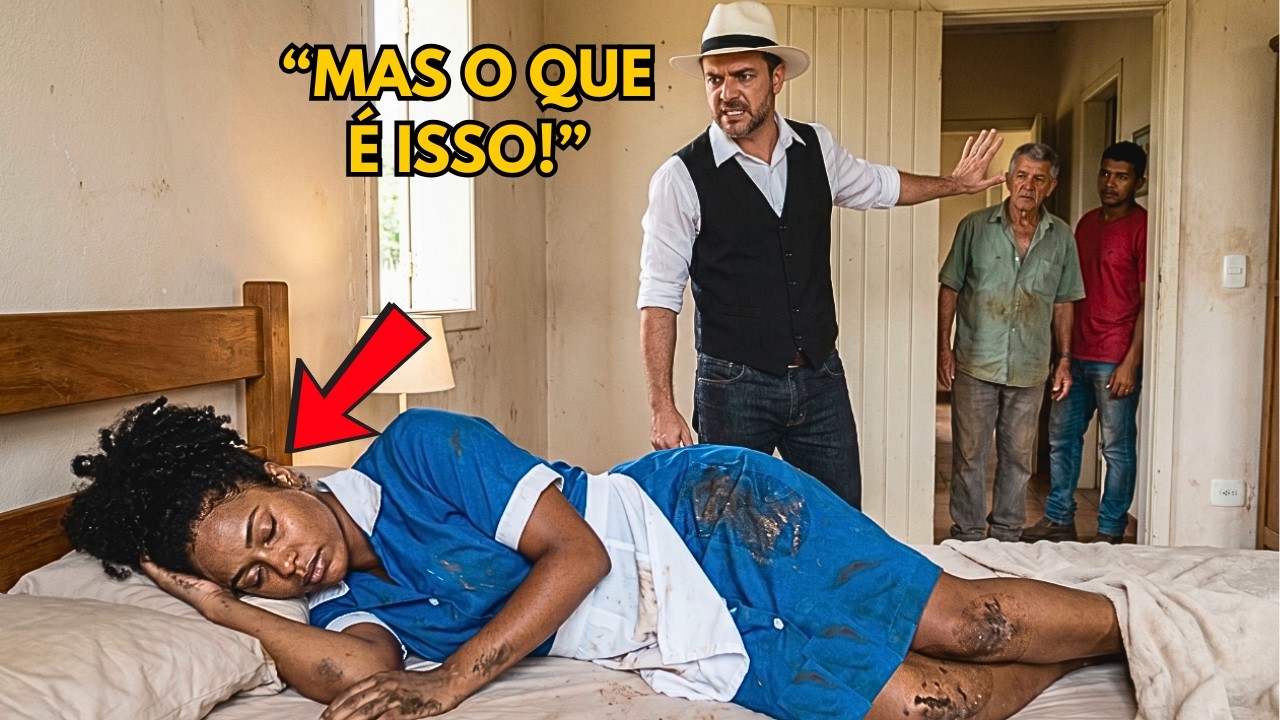
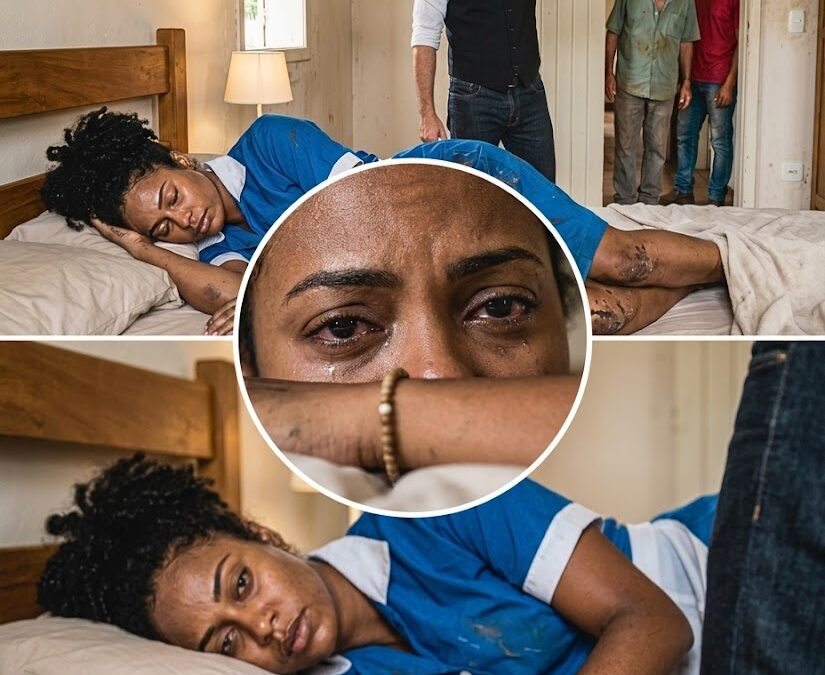
The farmer opened the door and found the maid passed out on her own bed, covered in dirt. He sent her away immediately without listening. But what she was hiding in the back of the farm was going to destroy everything he thought he knew. Michele arrived at the Vale Queimado farm with a small backpack and a recommendation from a long-time employee.
26 years old. Daughter of a farm worker, raised among fields and corrals. He didn’t speak more than necessary, did his work, and disappeared into his room. The farm owner was Rodrigo Menezes, 43 years old, a man of few words and no patience for mistakes. He inherited the Vale Queimado farm from his father and spent his entire life proving that he deserved what he received.
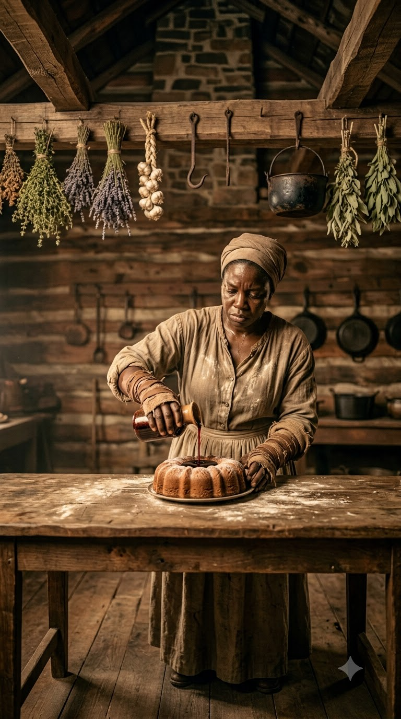
The farm was large, organized, and profitable. He hired Michele for the kitchen and for the services in the main house. She fulfilled all her obligations from day one. Dish on time, room cleaned before 8 am, nothing out of place. Gilmar, the foreman of the farm for 15 years, was the first to notice that she was different.
Not unlike a flashy manner, unlike the quiet manner of someone who is thinking about something they haven’t done yet. While the other employees finished their workday and left, Michele stood at the kitchen window, looking towards the back of the property, as if recognizing something. The land in the backyard was an old problem.
Rodrigo had commissioned a report years ago. The conclusion was straightforward. Degraded soil, too dry, beyond repair. He signed the paper, closed the drawer, and never set foot in there again. To him, that was dead and enclosed land. For Michele it was something else entirely. She recognized that ground on the second day.
He recognized the color, the texture, the way the wind stirred up the dust in spirals. The father had worked on land like that . And her father had once said one afternoon, a story she never forgot: ” Thirsty land is not dead land, it is land waiting for someone who knows how to listen.” Michelle waited two weeks, observed the farm’s routine, and mapped out everyone’s schedules.
Then, one Wednesday afternoon, she grabbed an old bucket from the shed, a hoe that no one used, and walked to the back alone. What she found was ugly. Cracked soil, dry on the surface, but with moisture just a few centimeters away, if you knew where to look. Dead roots that could have served as a base, stones in the wrong place, erosion starting at the edges—damage, but damage that could be repaired.
She stayed until dark that day, returned on Thursday, returned on Friday, returned every weekday. After work hours, while Rodrigo was in the office or in the field, Gilmar was patrolling the other side of the property. In the first few days he just cleaned, removed stones, opened up the furrow, and prepared the soil with what he had.
Then came the problem of the seeds. She didn’t have any money to spare. He bought cheap, hardy varieties, the kind his father called ” poor man’s seeds that turn into rich man’s food.” He mixed it with natural dubbing made from leftover kitchen scraps. Irrigation was the biggest challenge. No hose, no pump, no structure whatsoever.
She solved it with a bucket, literally back and forth. Back and forth until my arm hurt. Then he designed a system of sloping channels that took advantage of the natural slope of the land to distribute the water without wasting it. Her father had taught her that when she was too young to understand. Now he understood and documented everything.
Photos from the same angle every week. The land before, the land after. date. What had he done? Moisture measurement. Which seed had been planted where? In a simple black-covered notebook bought at a small-town stationery store, the handwriting is small and neat. I couldn’t explain why I was recording it. Perhaps it was instinct.
Perhaps it was the age-old fear that one day someone wouldn’t believe her. Four months like this, without telling anyone. Gilmar had seen her cross over to the back a few times with a bucket and a hoe. He didn’t ask. It wasn’t in his nature to ask about things that weren’t his business.
Rodrigo wasn’t paying attention, and Michele wasn’t going to tell. There was an afternoon in the third month when almost everything fell apart. Rodrigo returned home early from the office because a meeting was canceled. He crossed the central courtyard at the time when Michele would normally already be in the back. And that day she was kneeling among the juices, her back to the house, so engrossed that she didn’t hear the footsteps.
Rodrigo paused for a moment, looked in that direction, then turned toward the warehouse because there was a problem with the fuel pump that needed checking. He didn’t see what she was doing. He passed within 50 meters of the truth and didn’t stop to look. Michele only realized it when she heard the shed door close in the distance.
She stood there, hoe in hand, her heart racing. Then he went back to work and stayed later than usual that afternoon, as if he needed to compensate for the scare with another hour on land. Until the rain changed everything. In one week in March, it rained for three consecutive days, a volume the region had n’t seen in months.
The soil gained moisture, the sprouts responded well, but around the perimeter it gave way under the weight of the water. Michelle only found out late Friday afternoon when she went to do her usual rounds. Erosion was already advancing over the gullies that had taken weeks to build. She didn’t stop to think, grabbed the wire and pliers, and went alone.
He worked double shifts. The mud reached up to my knees. The wire scratched his arms more than once. The blouse ripped on one of the stakes. When it was over, I was at my limit. He arrived at the house through the back, as always. He went up to Rodrigo’s room. He had traveled to Cuiabá. He would only return the following day.
The task was quick: to collect the bed linens that were due to be changed. She folded the sheets, one by one, automatically. When she sat on the edge of the bed to fold the last one, the exhaustion of four whole months [clearing her throat] washed over her all at once. She fell asleep right there , unintentionally, without realizing it, with the earth in her arms and the scent of the countryside in her hair.
The meeting in Cuiabá had been cancelled at the last minute. Rodrigo found out while he was still on the road. A short message, without much explanation. He turned the car around without thinking twice. He wasn’t the type to wander around a hotel aimlessly. He preferred to go back, arrive early, sleep in his own room, and resume the next day without delay.
It was almost 11 pm when the pickup truck entered through the gate of the Vale Queimado farm. The farm was quiet, the lights in the barn were off. The empty balcony, everything in its place. Rodrigo parked, took off his boots at the entrance, and went straight up to his room. I was tired, not the kind of tiredness that goes away with a good night’s sleep, but the kind of accumulated tiredness from weeks, the kind that weighs down the back of your eyes.
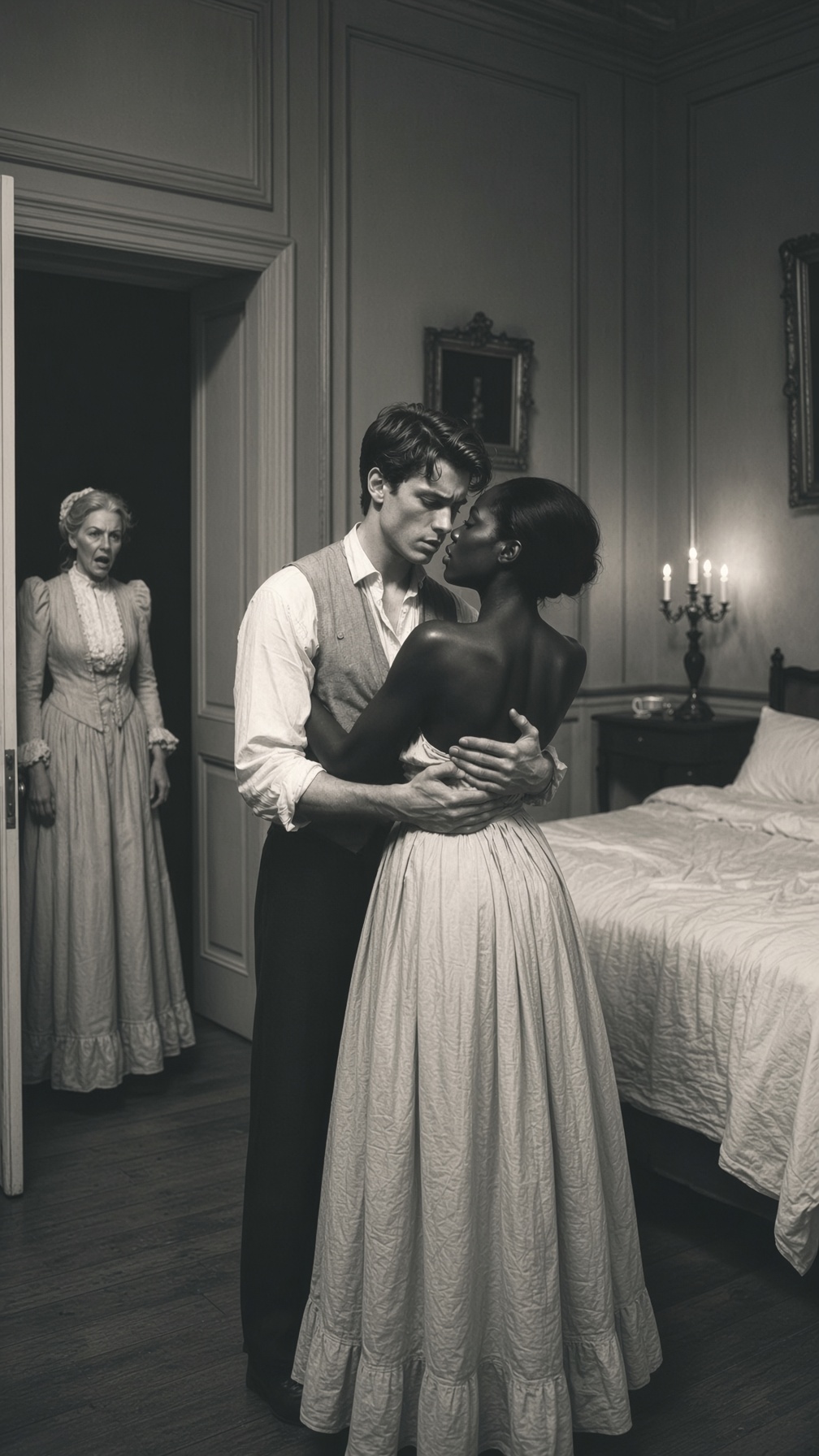
He opened the bedroom door in the dark, turned on the light, and stopped. Michelle was lying on his bed, her knees covered in dried mud, her arms bearing red marks he couldn’t immediately identify— scratches, but he didn’t know what they were from. Her blouse was torn on one side, her hair was spread out on the pillow, covered in dirt.
He stood still for 3 seconds, which seemed much longer than 3 seconds. Then she woke up. That wasn’t kind. He called her name twice in a tone that suggested he wasn’t asking, but demanding. Michelle opened her eyes, it took her a second to understand where she was, and then the real shock hit her. She jumped up , still disoriented, trying to explain herself while simultaneously trying to wake up properly.
I was working in the back, the gentleman was away on a trip, I went upstairs to collect the laundry and Rodrigo wouldn’t let her finish. In the background. He repeated it, and his voice had a cutting coldness to it. What funds? What were you doing in the back of my property? I need to explain. There’s something I started doing there.
The earth stops. He raised his hand. You’re in my room, covered in dirt in the middle of the night, for no reason that makes sense. Michele tried again, talking about the earth, the soil, the notebook, the weeks of work, but the words came out wrong, rushed, out of order, mixed with the still-fresh shock.
And the more she talked, the more it seemed like she was making up excuses on the spot. Rodrigo listened to her for less than a minute. Then he told her she was fired, that she should pack her things by the next day, that he had always treated her with respect in that house, and that he felt betrayed in his own room.
He said all this in a low, controlled voice: “The kind of anger that doesn’t need shouting to hurt.” Michelle stopped talking, not because she gave up, but because she understood at that moment that he had already decided before listening and that nothing she said in that state, exhausted, with mud on her knees, unable to put together a proper sentence, would change anything.
She left the room without answering. Rodrigo stood on the threshold, looking at the bed with the expression of someone who expected to feel relief but felt nothing. Then he turned off the light and went to the balcony. He couldn’t sleep. He sat outside in the dark, with the sound of crickets and the uncomfortable feeling of someone who had acted too quickly, but without being able to properly name what was wrong.
He was a man who trusted his own judgment. He always had been. And to back down would be to admit he was wrong. And that was something Rodrigo Menezes had learned from a young age not to do. So he sat in silence, the anger already cooling down and the discomfort growing in its place. The next morning, Michele went downstairs early, made breakfast, as always—bread, fruit, strong coffee—put everything on the table, and went to pack her suitcase in the back room.
She didn’t cry, didn’t complain to anyone, just calmly folded her clothes, zipped up the zipper, and leaned the suitcase against the wall. It was Gilmar who found her like that. [snoring] He had arrived before everyone else, as usual, and noticed the suitcase early in the morning, leaning against the back door. He stopped, looked at the suitcase, then at Michele, who was sitting on the edge of the bed with her hands in her lap.
“What’s wrong?” he asked directly, without beating around the bush. Michele looked up at him and told him. She told him everything. From the first afternoon she walked to the back, the seed bought with her own money, the juices she made by hand, the months of work after hours, the fence that collapsed in the rain, the arm torn by the wire, Rodrigo’s room, the sleep that came without warning.
Gilmar listened to everything without interrupting once. When she finished, he stayed He was silent for a moment. Then he excused himself , stood up, went to the shed, and returned with a machete in his hand. Before leaving, he turned to her and said only one thing: “Take me there.” Michele stood up, and the two went.
What Gilmar found at the back of the Vale Queimado farm left him standing in the middle of the path, with his machete lowered and the expression of someone seeing something he didn’t expect to see. The land he knew as gray and cracked was green. It wasn’t the sparse green of weeds that sprout after the rain.
It was dense, moist, with organized rows, irrigation furrows traced by hand, sprouts that already had height and strength, months of work visible in every detail. He stood there looking for what seemed like a long time, then took his cell phone out of his pocket and took pictures. He said nothing. He remained silent as he walked between the rows, looking at the ground with the attention of someone who understands the land and is reading every detail.
When he returned to where Michelle was standing, he didn’t go to Rodrigo, pick up the photos, put away his cell phone, and say: “Do you have the notebook?” She said yes. “Then you go to the boss with the notebook and tell him yourself.” “This story has to be told by the person who did it.” Michelle looked at him.
What if he doesn’t want to listen? Gilmar didn’t answer immediately. He looked once more at the green earth behind them, then at her. He will want to. But before any conversation could happen, something arrived at the farm that no one expected and that would change everything in a way that not even Gilmar, with all his years at Vale Queimado farm, could have foreseen.
Rodrigo spent the entire morning in the office. He wasn’t the type of man to avoid problems, but that morning he stayed, signed unnecessary papers, reread old reports, ordered coffee twice, doing what he always did when something bothered him. Work, hands occupied, mind quiet, but his mind wouldn’t be quiet.
The image of Michelle in the room kept returning, not in the way that had irritated him the night before, but in a different, unsettling way. The scratches on her arms, the torn shirt, the dirt on her knees, were marks of work, and some part of him knew it. But admitting that was opening a door he had angrily closed, and Rodrigo didn’t open doors like that. Easily.
That’s when Gilmar knocked on the office door, a man of 15 years on the farm, a man of few words, even fewer opinions, at least on matters that weren’t his concern. Rodrigo knew the foreman well; he knew when he appeared just to inform and when he appeared to say something that was weighing on him that morning— the latter situation.
“You should go see the funds before making any decisions,” Gilmar said. “That’s all .” Rodrigo looked up from his paper. “There’s no decision to make, Gilmar. I’ve already made it.” The foreman didn’t insist, didn’t argue, just nodded slowly and left. Rodrigo stared at the door, then went back to his papers.
Forty minutes later, he threw his pen on the table, grabbed his hat, and left. Not because he believed there was anything important there, but because Gilmar’s tone wasn’t that of someone asking a favor, but of someone giving a warning. And in 15 years, Gilmar had never given the wrong warning. The sun was already high when Rodrigo crossed the field towards the He knew every inch of that property.
He knew the smell of the soil after the rain. He knew where the ground sank a little deeper and where the bare rock lay close to the surface. He knew the back of the property like he knew an old problem, from afar, without needing to look closely. Therefore, when he reached the boundary of the area and saw what lay ahead, he stopped mid-step. The earth was green.
It wasn’t the sparse green of overgrown vegetation after the rain. It was a different kind of green, organized, dense, with hand-drawn rows, irrigation furrows following the natural slope of the land, sprouts with the height and color of something planted intentionally. Rodrigo slowly bent down, picked up a handful of soil, closed his hand, felt the moisture between his fingers, opened his hand and stared at that clod for a time he couldn’t measure.
He knew that soil, knew its color , its texture, its smell. And what he was holding in his hand wasn’t the soil he knew, it was another kind. It was soil that had been cared for. He walked slowly among the… Rows, looking at the ground with the attention of a man who understands the land and is reading a story he didn’t expect to find.
Each furrow was precise, each row had calculated spacing. Nothing was there by chance. In the corner of the area, stuck in a fence post, was a small black-covered notebook inside a transparent plastic bag . Rodrigo took the notebook out of the bag and opened it. The first thing he saw was a date, 4 months ago. Then, a short note, small and organized handwriting.
First soil clearing, stone removal, mapping of erosion on the edges. Next to it, a photo taken with a cheap cell phone, low resolution, clear enough to show the before, that gray and cracked ground he had discarded as lost. He turned the page, more dates, more notes, moisture measurements taken with simple instruments, hand-drawn sketches showing where each type of seed had been planted and why.
Photos week by week, always from the same angle, documenting every centimeter of progress. Rodrigo stood there, with the notebook open in his hand, reading those pages in the middle of a The land he had declared dead was now more alive than any other part of the farm, which he had tended to with money, machinery, and skilled technicians.
He felt something that took him a while to name. It wasn’t exactly admiration, but the feeling of someone digesting the magnitude of a mistake. Not because the discovery is bad, but because it reveals what was almost lost. And what was almost lost wasn’t just the land. It was a person who had given months of real work, silently, without asking for anything, and whom he had sent away without hearing a complete sentence.
He returned home with the notebook in his hand and the closed expression of someone chewing on something difficult. Gilmar was in the yard when he arrived. Rodrigo asked where Michelle was. The foreman indicated the back room with a nod. Rodrigo went there. The suitcase was leaning against the wall, closed. Michelle was sitting in a wooden chair near the window, her hands in her lap and the look of someone already preparing to leave.
Rodrigo stood on the threshold. His eyes went to her first, then to her hands, Then they returned. He held out the notebook. Michele looked at the notebook, then at him. Rodrigo hesitated. Words cost something. They always cost a man raised not to err. But he spoke, said he had seen, that he had understood, that he had erred in not listening before deciding, and that she wasn’t going anywhere.
Michelle didn’t answer immediately. She looked at him with a calmness that weighed more than any speech. It wasn’t anger, it was the weight of someone who had been discredited in the place where she had dedicated herself most and who was now hearing the recognition too late not to hurt. Then she agreed.
With a quiet coldness that said more than she had words to say. Rodrigo nodded, left, and it was only on the veranda, alone, that he understood that it had ended too well, because something was coming that he didn’t yet know was on its way. Cásio Menezes arrived at the Vale Queimado farm on a Tuesday afternoon, two days later, with a broad smile and a man beside him whom Rodrigo had never seen.
He was 38 years old and had the air of someone who He’d spent his whole life arriving later, after his older brother, after the inheritance, after decisions that were never his. He’d show up at the farm a few times a year, always with a different excuse and the same underlying reason: money. Rodrigo knew this.
He tolerated it because he was his brother and because there was an old guilt between them, one that neither dared to name. The man who came with him was called Walter Drumon, beige suit, polished shoes, a handshake that was too firm. The kind of firmness that isn’t confidence, it’s rehearsal. He introduced himself as an agribusiness entrepreneur.
He said he’d admired the Vale Queimado farm from afar for years and that he had a proposal worth hearing. A salesman’s voice, soft, measured, the kind that seems reasonable before you understand what’s being sold. Rodrigo received them in the main room. Michelle brought coffee and left quietly. Drumon opened a folder, blueprints, maps, numbers in a table, everything organized, everything professional.
The proposal was simple on the surface: acquire the back strip of the property, that area that had been declared… The old report deemed the land unproductive , and the plan was to develop an industrial subdivision project in the region. The offered amount was high, high enough to seem generous. Rodrigo listened without interrupting, looked at the numbers, and remained silent for a moment.
“This area is undergoing a recovery process,” he said slowly. Cásio entered before Drumon could respond. “What recovery, Rodrigo? You yourself told me that land was worthless. There’s a report that proves it. It’s sure money for something that produces nothing. Are you going to refuse?” “I didn’t say I’m going to refuse.
I said the situation has changed.” ” Change how?” Cássio forced a short laugh. “Did you hire someone to plant what kind of cabbage there?” Drumond placed his hand on the folder, delicately, as if calming the conversation. “Mr. Rodrigo, I understand that any change in the property generates doubt. That’s why we brought updated technical documentation .
” He opened another sheet. It was a report. Recent date, heading of a technical consulting firm, signature of an agricultural engineer. The document described in detail the area at the back of the… Vale Queimado farm, irreversibly degraded soil , no productive capacity, recommendation for sale or alternative use.
Rodrigo picked up the report, read the heading, read the date, glanced at the text. Cássio leaned slightly in his chair, two reports saying the same thing, Rodrigo, I have nothing to discuss. Sign it, solve this dead weight problem and still pocket a good amount. Rodrigo didn’t answer. He continued reading.
What Cássio and Drumon didn’t know, and what Rodrigo himself was still digesting, was what he had seen in the back two days before. Michele’s notebook , the week-by-week photos, the soil he had held in his hand, which was different from the soil he had signed off as dead years ago. But the report was there, official, technical, with signature and stamp.
And Cássio was on the other side of the table speaking with that voice of someone who had already calculated every argument in advance. And Drumon smiled with the patience of someone accustomed to waiting for the right moment. Rodrigo placed the report on He sat down at the table, picked up the pen, not out of greed, but out of exhaustion.
The exhaustion of years of hearing that that land was an unsolvable problem, of carrying an old report as proof of something he had never truly tried to resolve . The number in the proposal was real. The report seemed real. Cácio was there, facing him, with the smile of someone who had finally found the right argument at the wrong time.
Drumonda opened the signature page, slowly sliding the paper across the table with two fingers, as if not wanting to seem rushed, but counting every second. “You know this land is worthless, Rodrigo?” Cácio said in a lower voice now, almost confidential. It never was. His father knew that. You know that.
Take the money and close this chapter once and for all. The pen was in his hand, and it was exactly at that moment that the door to the room opened. Michele entered with a tray, silent steps, eyes on the floor, her usual discreet manner. She placed the glasses of water on the sideboard in the corner, and that’s when she heard Drumon mention the address of the area, the sector, the location.
Right at the back of the property. She stopped, slowly turned her face to the table, saw the open report, read the date at the top, read the name of the area described. It was the same area, the same land where she had spent four months. The report dated the soil as dead at a time when she had already begun the work, when the first sprouts had already emerged from the ground.
For two or three seconds, she stood completely still. Drumon noticed, Csio noticed. Rodrigo had his eyes on his pen. Michelle slowly lowered the tray onto the sideboard, took her cell phone out of her apron pocket, opened the photo gallery, the series she had documented week by week, with the date and location automatically recorded by the device.
She walked to the table, placed the cell phone on the open report at the first photo in the series, without saying a word. Cássio looked at the cell phone, then at her, then at Rodrigo, who had raised his eyes from his pen. “What is this?” Cássio asked in a tone that tried to sound calm, but had a crack in it. In the middle. Michele didn’t answer.
She turned around, left the room, went to the office and returned 30 seconds later, with the black-covered notebook in her hand. She placed the notebook on the table, on top of her cell phone, on top of the report, containing four months of dates, notes, measurements, and photos, starting weeks before the date Drumon’s report used to declare that soil unrecoverable.
Rodrigo looked at the notebook, looked at the report, then looked at his brother. Cássio opened his mouth, closed it, opened it again. And that’s when Drumon understood that the deal had collapsed and that the question now was no longer whether the sale would happen, but who would pay the price for what had been put together inside that folder.
The silence that fell in the room lasted perhaps 10 seconds. It seemed much longer. Rodrigo had the notebook in his left hand and the report in his right. He looked from one to the other slowly, not as someone confused, but as someone confirming something his gut had already understood before the… Head. He opened the notebook to the first page, saw the date.
He opened the report to the first page, saw the date, and closed both on the table with a calmness that was worse than any shout. Drumond was the first to speak: “Look, Mr. Rodrigo, this material from the employee is interesting, but a personal record doesn’t have the same technical weight as a report signed by a qualified professional.
” “The date,” Rodrigo said. That’s all. Drumond stopped. “The date on your report declares this soil as unrecoverable at a time when she had already started the work.” Rodrigo opened the notebook to a middle page and turned it over for Drumond to see. “Six weeks before the date on your document, she already had documented sprouting with photos, location, and moisture measurements.
Your report speaks of soil that she had already changed.” Drumond looked at the page, said nothing. Cássio tried. “An employee’s notebook doesn’t invalidate a technical document. Rodrigo, you’re letting an employee interfere in a serious matter because of a…” Cássio. Rodrigo’s voice was low and cut off his brother’s sentence mid-sentence like a door closing.
Silence returned. Drumond leaned back slightly in his chair. He was a man accustomed to calculating exits, and at that moment he was calculating. The problem was simple and serious. Michele’s photos had automatic dates and geolocation generated by the device itself at the moment they were taken.
It was an irrefutable chronological record [clearing his throat] . The report he had commissioned had been produced by someone who had never set foot on that soil after the rains. Someone who copied the data from the old report, changed the date, and signed it. And all of this was evident to anyone who put the two documents side by side. Drumond opened his hands on the table, the gesture of someone attempting an elegant retreat.
Look, there may have been a mistake in the document’s date. That’s something that can be resolved with a technical review. It’s not necessary. Who made this report? Rodrigo asked. A consultant I’ve used for years, someone I completely trust. Did he come here? Drumond didn’t answer immediately. And the delay was the answer.
Rodrigo turned to his brother. Cássio’s hands were clasped on the table, his knuckles white. He knew the deal was off. What he did n’t yet know was how far Drumon was willing to go to protect his own skin. It didn’t take long for him to find out. “Cássio contacted me four months ago,” Drumon said, his voice controlled, but his eyes straying from the table. “The proposal came from him.
I came in as a buyer because the deal seemed viable. The report was a requirement of his to close the deal.” Cássio stiffened in his chair. “That’s a lie. I only suggested the deal. The responsibility for the document is yours. You sent me the old report and asked me to update the date,” Drumon said, still with the calm of someone who has already decided which version to defend.
“I have the message.” The silence that fell this time was different from the previous one, heavier, more permanent. Michele was standing near the sideboard, motionless, her hands at her sides. She wasn’t looking at him. Cássio, not even for Drumon. He was looking at the table, at the notebook and the cell phone, at the falsified report, at that piece of evidence he had constructed without knowing that one day he would need it.
Rodrigo remained silent for a long time, then placed the pen on the table. He didn’t throw it, he didn’t push it, he simply placed it precisely parallel to the edge. A gesture of someone ending a conversation without needing to announce it. He looked at Drumon. ” You can leave, sir.” Drumon closed the briefcase, stood up, tightened his tie, and left without looking at Cássio. His footsteps echoed down the hallway to the main door, which closed with a sharp click. Cássio remained seated.
Rodrigo didn’t get up. He stood facing his brother, elbows on the table and hands clasped in front of his face, in a silence that spoke louder than any accusation. “It was Cássio who broke it first.” “You always had everything,” he said in a low voice, with an anger that seemed too old for that afternoon. The farm, the name, his father’s trust.
I was left with what was left. I was always left with what was left. And when a chance came to get something back, to get what back? Rodrigo asked. Something that was never yours, that was never given to me, Csio replied. And the distinction was burdened with years. Rodrigo listened, didn’t interrupt, let his brother speak to the end about their father, about their childhood, about the feeling of having grown up second best within their own family. It was real pain.
Rodrigo knew that. He had felt its weight from the other side, without ever knowing how to talk about it. But when Csio finished, Rodrigo replied with his usual calm: “I hear you and I understand that this pain is real, but you used this pain to forge a document and push me into selling land that a woman resurrected with her own hands, without asking anything from anyone.
” There’s no fixing this inside this room. He got up, went to the window, and stood with his back to it for a moment. I need you to leave. Cássio left without looking at Michele, and Michele stood alone in the corner of the room , with her notebook and cell phone still on the table. Evidence of four months of silent work that had saved a piece of land and brought down a scheme she did n’t even know existed.
But what would come after that, she didn’t know yet, and neither did Rodrigo. The Vale Queimado farm remained quiet for two days after that. Rodrigo took the necessary steps that same afternoon. He called the lawyer, placed Michele’s notebook and the falsified report on the table, and got straight to the point. The conclusion was simple.
there is sufficient basis to hold Cássio responsible for the attempted fraud. Rodrigo signed what needed to be signed without hesitation, not out of anger, but out of obligation. There was a fine line between forgiving one’s brother as a person and ignoring what he had done as an act.
Rodrigo was familiar with that bus line. Cássio was notified days later. There was no shouting, no scene, just an envelope, an address, and a deadline. He had placed his bets on his weary brother and on a land he considered dead. He lost both bets. Drummon slowly disappeared from the region’s agribusiness, the way the names of dishonest people disappear, without farewell, without explanation, simply ceasing to be mentioned.
Other businesses started appearing as soon as someone pulled the thread. And there was a lot of thread to pull. What remained with Rodrigo wasn’t anger, it was something more difficult, the feeling of someone who had seen his brother’s face from an unexpected angle and now needed to decide what to do with that feeling. There was real pain behind what Cassius had done.
A pain that Rodrigo knew from the other side. The burden of growing up as the oldest, of carrying what his father left behind without asking, of never knowing how to talk about it with his younger brother without it turning into an argument. This silence between the two had lasted for years, and Csio had filled that silence in the most destructive way he could.
Rodrigo knew that pain is no justification for a dishonest choice. He knew this with the same certainty with which he knew anything else in life. But knowing that didn’t make the rest any easier. But there was still one conversation that needed to happen. Michelle was in the yard on the afternoon of the second day, washing clothes in an aluminum basin.
The mechanical movement of someone doing something in order to avoid standing still. He didn’t hear Rodrigo arrive. He stood at the edge of the yard, watching the mechanical movement of her hands in the water. Then he said her name. Michelle looked up, dried her hands on her apron, and waited with that straight, quiet posture that he had learned to read as attentiveness, not as submission.
Rodrigo wasn’t in the habit of having that kind of conversation. The father was a man of handshakes and promises, not of explaining feelings. But there was something that needed to be said in a way that went beyond what I had said in the back room two days before. Then he said, he said that he had read every page of the notebook, every date, every entry.
He said he now understood what she had done. not only the work itself, but the choice to do it without asking permission, without any guarantees, trusting only in what her father had taught her and what she herself knew how to read in the soil. He said he had erred in not listening the night he met her, that it was better to act quickly than to stop, and that this type of mistake was the worst a man like him could make, one in which haste destroys what time has built.
Michelle listened to everything without looking away. “I didn’t do that to prove anything to the Lord,” she said in her usual calm voice. I know. He replied. I did it because the land needed it and because I knew it was possible when no one else believed it was. “ I know,” he said again. “And this time there was something different in the tone, not just agreement, but real recognition, the kind that doesn’t need embellishment.
” Rodrigo then made the proposal, not as a favor, but as a correction. The back area would be formally incorporated into the productive project of the Vale Queimado farm, based on the documentation Michelle had produced. She would be hired as the manager of that area. Contract signed, salary commensurate with the role, autonomy in decision-making about the soil she had recovered with her own hands.
There was no one more qualified to take care of that land than the person who had understood it when every report said it was impossible. He said all this, looking directly at her. It was his way of showing he was serious, not with pretty words, but with the posture of someone who isn’t apologizing, but correcting what was wrong.
Michelle looked at him for a moment. There was something in that look that wasn’t just evaluation. The weight of a woman who had worked for months without any guarantees, who had been fired without being heard, and who was now hearing the recognition from his own mouth. The man who had made the mistake. Real acknowledgment hurts differently than rejection, sometimes it hurts more.
She listened to the entire proposal without interrupting. “And Gilmar?” she asked when he finished. Rodrigo paused for a second without answering. The question caught him off guard, not because it was unexpected, but because it was exactly the kind of question he hadn’t asked himself yet, and that she had asked him before. “What do you think should happen to Gilmar?” he asked.
I think he always knew more than he was consulted. She said, “Simple, and that should change.” Rodrigo nodded slowly with the expression of someone settling a long- overdue account. Gilmar was called that same afternoon. The conversation was short. Gilmar was like that. Rodrigo said he wanted to consult him on farm decisions from then on, not as a gesture, but as a real practice.
Gilmar listened, nodded, and said there was a drainage issue in the eastern sector that Michele should know about before the first harvest. Rodrigo almost smiled. That was exactly it, 15 years. …of the farm. And the man still had more to say than any formal meeting had allowed him to hear.
That night, sitting on the porch after everyone had gone to sleep, he stared at the darkness of the property, the same darkness as always, the same wind, the same smell of wet earth, but something had changed in the way he looked at it. The Vale Queimado farm was the same farm. It was the people who were there who had shown who they were when the pressure came.
And he had learned something that no technical report teaches: that a man’s biggest mistake is sometimes not what he does, but what he refuses to listen to before deciding. The back area was green, the contract was signed, and the harvest was approaching, but there was one last thing that needed to happen for that story to end the right way.
And it hadn’t happened yet. Harvest morning arrived with low fog. It was still early. The sun had barely risen, and the back area was covered by that fine morning mist that disappears as soon as the heat begins. Michelle was there before everyone else. She had arrived while it was still dark. Not because she had arranged it, but…
Because that day belonged to her in a way she couldn’t explain in words and did n’t need to explain to anyone. She walked slowly between the rows, carefully running her hands over the leaves, checking height, checking color, checking what one only learns to check after months of looking at it every day.
Everything was as it should be, better than it should be, in fact, because the earth had responded beyond what she had calculated. Soil that the report had declared dead had yielded twice what she had projected in her first estimate. She bent down, picked up a handful of earth with both hands, closed her fingers, felt the damp weight, the texture her father had taught her to read.
The same earth she had held four months ago, when it was gray and dry, and seemed impossible, now dark, alive, smelling of something that had grown. She stayed like that for a while, squatting in the middle of the row, with the earth in her hands and the silence of the morning around her. She didn’t cry, she wasn’t the type, but there was something in that moment that weighed in a good way. The weight of someone who had reached the end.
From something that began without any guarantee, without recognition, without knowing if it would be worth anything in the end. It was worth it. And she knew it before anyone could confirm it. Gilmar arrived shortly after with the two workers who would help with the day’s harvest. He saw Michele squatting in the middle of the area and said nothing.
He only nodded when she stood up and she nodded back. It was their language: economy of words, weight of understanding. The workers started on the east side, as Gilmar had instructed. Michele stayed in the center coordinating, taking notes in the same black-covered notebook that had started everything. Now with more pages, more dates, more documented progress, a record that began on a Wednesday afternoon with an old bucket and a hoe that nobody used.
Rodrigo appeared around 8 in the morning. He hadn’t warned that he was coming. He arrived by the same path he had taken the morning he first saw the area, slowly , with his hat on his head and his hands in his pockets, the manner of someone who is not in a hurry, but has a clear destination. He stopped at the entrance.
From the area, he didn’t immediately enter, remaining there reading the green ahead, like someone reading an answer that took a long time to arrive. Michele saw him, but didn’t go to him. She continued what she was doing. Rodrigo stood there for a while, looking at that land he had marked as dead and which was being harvested before his eyes.
There was something in the silence of that moment that spoke louder than any speech. The final proof that the mistake had almost cost something priceless in any report. Then he entered the area, walked to where Michelle was, stood beside her looking at the rows and simply said: “What is your estimated production for this first harvest?” Michelle answered with numbers.
He listened, asked a technical question about the plan for the second cycle. She answered, he asked another. She answered again. That’s how the two of them functioned now, direct, technical, without embellishment. But there was something different in the air of that conversation that they both knew how to name and neither of them needed to say.
It was respect built in the hardest way, under pressure, through error, through the choice not to run away from what went wrong. The harvest lasted all day. In the late afternoon, when the sun was low and the morning mist had given way to a dry, golden heat, Michele stood alone in the field for one last moment. Before the day ended, the workers had left.
Gilmar was in the shed. Rodrigo had returned to the office. She stood amidst the harvested rows, gazing at the horizon of the Vale Queimado farm. She took her cell phone out of her pocket, opened the camera, and took a picture. Not for documentation, not for proof, not for anyone but herself. She took a picture because this was the day she had arrived on the other side of everything, and she wanted to keep its image preserved.
The dark, worked earth before her, the orange sky behind, and the horizon of the farm where she had arrived as an employee and where now her own name was on a contract. She closed her cell phone, bent down again, picked up a handful of earth with her hands, the same gesture as in the morning, the same gesture as her father, the same gesture as four months ago, when everything was uncertain [clearing her throat] and she had She decided to trust what she knew.
Only this time she didn’t close her fingers to hold it. She let the earth slowly trickle between her hands, back to the ground where it belonged. There was a story that began one Wednesday afternoon with an old bucket and a faith that no one had asked for and no one had validated. A story of soil that everyone called dead and that was now silently proving that sometimes what seems lost is just waiting for someone who knows how to listen.
Michele stood there for a while longer, unhurried, with nothing more to prove, with nowhere more important to be. She had worked her whole life without anyone seeing. And when they finally saw, it wasn’t because she had asked, it was because the earth had spoken for her. The Vale Queimado farm continued, and the land that everyone thought was dead had yielded twice as much in the first harvest as any report had dared to promise.
Some people decide too quickly and only understand later. Some people act in silence and let the result speak for itself, and some choices can’t be undone, only accepted. In the end, it’s not about who spoke best, it’s about who… He did. If this resonated with you in any way, leave a like to support the channel and comment.
Have you ever needed to prove something without opening your mouth? M.