O Gerente Negou Mesa À Mulher Negra No Próprio Restaurante… Então Foi Demitido Na Frente De Todos
O Gerente Negou Mesa À Mulher Negra No Próprio Restaurante… Então Foi Demitido Na Frente De Todos 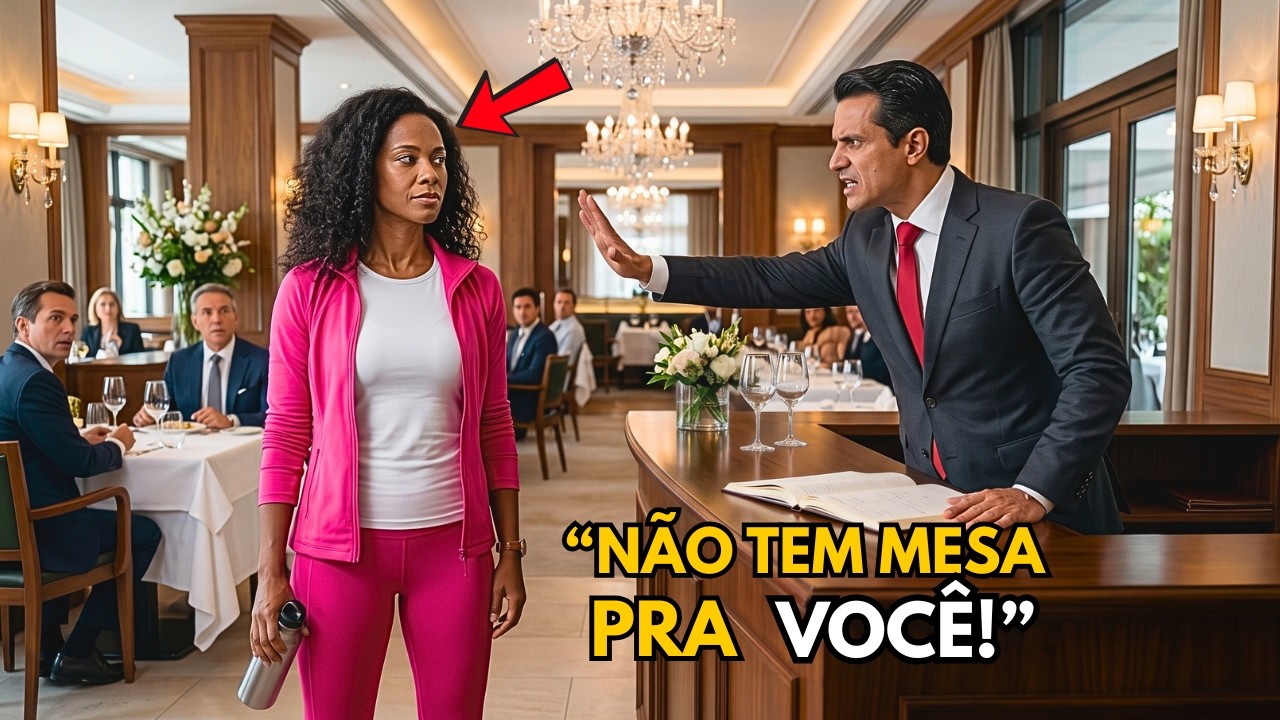
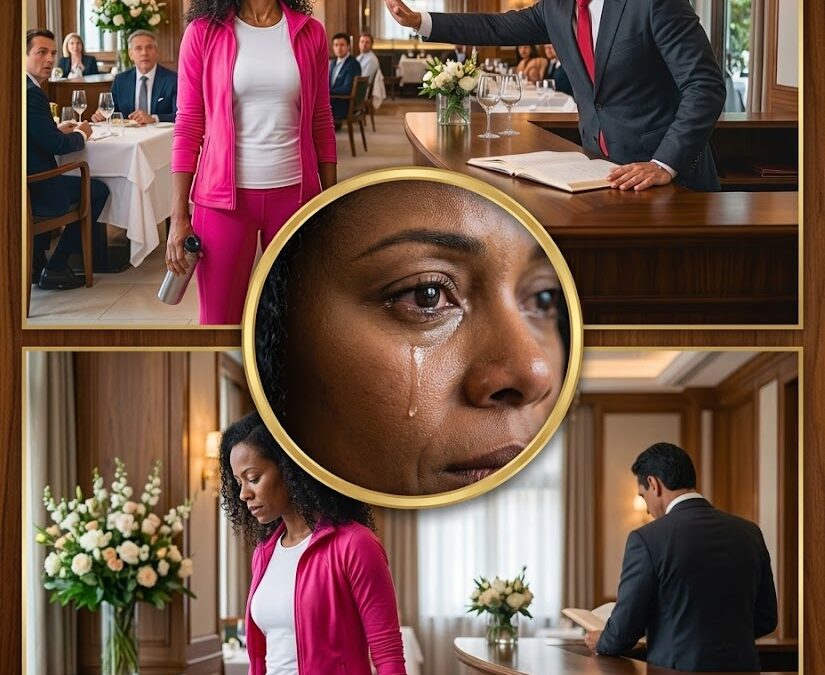
This restaurant is not for everyone. Look for another place. She arrived in gym clothes, her curly hair loose, without expensive shoes or a designer bag. She entered the most elegant restaurant in the city, as one might enter any other place, because for her, that’s exactly what it was.
The manager looked her up and down, said that restaurant wasn’t for just anyone, and told the two of them to look elsewhere. She left without screaming, without crying, without saying another word, but before leaving, she looked at him one last time. It wasn’t the look of someone who had been humiliated, it was the look of someone who already knew exactly what she would do when she returned.
If you enjoy stories where arrogance comes at a high price, leave a like, because what this manager did in the next few minutes changed his life forever. It was a typical Friday at Ferreira’s restaurant. All the tables were occupied, with crisp white tablecloths, crystal glasses, and that controlled murmur of people who had learned to speak softly in places like this.
The kind of environment where everything seems calculated, the lighting, the space between the tables, even the way the waiters step on the floor. Nothing there seemed accidental. Leonardo moved around the room with the ease of someone who knows every inch of the place. A suit without wrinkles, hair slicked back with gel, a tie knot always in the same spot.
He had a way of moving between the tables that he himself would call out when he was in a good mood, when he was present. The waiters called him something else amongst themselves, but never to his face. It was almost half past midnight when he saw the two women approaching along the sidewalk.
Alice and Priscila arrived like two friends who have just left the gym: excited, unhurried, and chatting at the same time. Dark leggings, running shoes, hair tied back. Priscila was still holding the water bottle. Alice was laughing at something Priscilla had just said. Neither of them paid any attention to the man standing near the entrance, watching.
Leonardo assessed the situation in silence. Her eyes slowly traveled down, from her head to her sneakers, and then back up, the answer already formed even before they reached the door. He adjusted his jacket with two fingers, a small, automatic gesture, and walked towards the two women with the posture of someone about to solve a problem.
Can I help? The voice came out refined, polite on the surface, but completely cold underneath. Alice smiled naturally. Yes, we wanted to have lunch. A table for two people. Leonardo did not respond immediately. He let the silence last a second longer than necessary. The kind of silence that isn’t forgetting, it’s a choice.
His eyes lingered on Priscila, on her skin, on her voluminous hair. Still feeling the effects of training. They stood there for a moment, which everyone nearby noticed. Then they returned to Alice with the expression of someone who had just confirmed something. This isn’t for everyone. Alice blinked. Sorry. He did not back down.
He leaned his torso forward slightly, as if preparing to explain something obvious to someone who still didn’t understand. We protect the privacy of our clients. He made a discreet gesture towards the hall. The tables were occupied, the glasses were clinking, the lighting was low. People here pay a lot of money for a specific experience.
I don’t want to create embarrassment for either party. A waitress passing by with a tray stopped in her tracks. At the table closest to the entrance, a couple stopped talking at the same time. The woman looked at her husband. He looked at the ground. “Please,” said Leonardo, in the voice of someone who thinks he’s being kind. Find another restaurant.
I’m sure they’ll find something more suitable. The room was silent. Not the elegant silence of before, that controlled murmur of someone who has learned to speak softly. It was a different kind of silence. The heavy silence of when everyone heard and no one knows what to do with what they heard. Priscilla opened her mouth.
Alice touched her arm lightly. Just that. Not angrily. With a calmness that was different from resignation. It was the kind of calm that comes after a decision, not before. Alice looked at Leonardo for a moment, a short, direct, unhurried moment, and simply said, “Okay.” He turned his back. Priscila went along.
The restaurant door slammed shut behind them with the perfectly normal sound of a door closing. Leonardo stood still for 2 seconds, straightened his jacket, and went back inside the hall, with the satisfied expression of someone who thinks he did exactly what needed to be done. No one on the team said a word.
Some looked at the ground, others pretended to be busy with something in their hands. The chef, who had seen everything through the crack in the kitchen door—the whole scene from the moment Leonardo assessed the two women on the sidewalk—stood still for a few seconds with the spatula in his hand. Then he turned and went back to the stove in silence.
I had seen similar scenes before. I had never said anything. The guilt of this also weighed on him somewhere he preferred not to name. Outside, Alice and Priscila walked slowly to the corner diner. They ordered two juices. They sat near the window that overlooked the street. Priscilla remained quiet.
I knew my friend well enough to tell the difference between when she was angry and when she was calculating. That was calculation. Alice drank the juice in silence. He looked at the sidewalk, at the cars stopped at the traffic light, at the usual activity of a Friday at noon. She took a deep breath once, not out of sadness, but the way one breathes when something falls into place.
Then he put the glass down on the table and looked at Priscila with the calm voice of someone who has already decided everything. “Can you help me with something?” Priscila replied that she could, and Alice began to tell her story, not about today’s humiliation, but about a restaurant, a father, and a name she had carried since birth.
What Priscilla didn’t yet know was that helping Alice with that would be the most important thing she would do that month. And Leonardo, at that very moment, continued walking between the tables, as if the floor were perfectly solid, unaware that he had just pulled the trigger on his own resignation. Seudário had arrived in São Paulo at the age of 18, with a worn-out backpack and a crumpled address in his pocket.
I had no relatives in the city, and I had no savings. He had the name of a distant cousin who worked at a restaurant in the south side of town and said he could find him a place to sleep for a few weeks. Some weeks turned into months, and then months turned into years. And Dário Ferreira, who started out washing dishes, learned every nook and cranny of that business with the patience of someone who knows there are no shortcuts.
He wasn’t the type of man who complained. He arrived early, left late, and learned everything he could by observing those in front of him. She learned how to receive suppliers, how to check invoices, and how to understand that good cooking isn’t just about recipes; it’s about management, rhythm, and knowing the name of every person who works alongside her. And Mr.
Dario knew everyone’s name , from the waiters to the cleaning staff. He called each one by name, every time, without exception. When the original owner wanted to retire, Dario didn’t have the money to buy the restaurant, but he had something that the owner recognized as more valuable than money. He knew how to make the place work.
They reached an agreement. Dario signed a loan that took 11 years to repay, and he paid every last cent, without delay, without complaint, and without asking for a discount at the end. Ferreira’s restaurant became a landmark in the southern zone, not because of advertising, not because of magazine awards, but because of its consistency, because of the way its owner, Dário, greeted customers in flip-flops with the same handshake he gave to those in suits.
He had a phrase he would repeat to any new employee who joined: “The taste of food doesn’t change depending on what clothes are on the person eating it.” It was a rule, it was a philosophy, it was who he was. Alice grew up in that restaurant, not in the dining room, but in the kitchen, sitting on a wooden crate near the service door, doing her homework to the sound of pots and pans in the background, while her father checked the receipt with his chewed pen and murmured the numbers in a low voice.
She learned to add before she learned it in school. He learned what profit margin is. Before learning what an equation was, he grew up understanding that money that isn’t earned disappears as easily as it came in. Because his father said that at least once a week. Seu Dário never wanted her to stay at the restaurant, not because he was ashamed of what he did—on the contrary, he was proud of every brick in that place—but because he wanted her to be able to choose freely, without feeling that she owed anything to the family business. He
paid for her college, encouraged her every step of the way, stayed up waiting for her to arrive when she had exams, even on days when he had to wake up at 5 a.m. to receive assignments. Alice chose administration, then specialized in business management, then opened her own consulting firm, then two more, building the life her father had dreamed for her.
And while he was doing that, the restaurant continued operating under his father’s management, just like always. When her father Dario died two years ago, Alice inherited everything. The name on the door, the contracts with suppliers, the remaining debts to the entire team. And she also inherited a silent guilt that she never named aloud.
The blame lies with whoever let their father manage things alone in recent years, who always promised to visit soon, but the ” soon” never arrived. Out of respect for her father’s choice, she never questioned Leonardo. Mr. Dario had hired the man and trusted him. And Alice didn’t want to undo her father’s decisions without a real reason.
So, I managed things remotely, received monthly reports, analyzed the numbers, and signed what needed to be signed. The results were reasonable, good enough that she never asked deeper questions. But in recent months, some signs have begun to appear. A long-time employee who suddenly resigned without giving a real explanation.
A supplier who changed his tone too quickly on the phone, as if he didn’t want to talk about Ferreira. A cousin, during a family dinner, mentioned hearing some things about the restaurant, and when Alice asked her to explain further, she changed the subject with an uncomfortable smile. Alice wrote everything down, observed, and waited.
That Friday, the idea of having lunch at Ferreira’s wasn’t random. She wanted to experience with her own eyes what an average customer felt when entering that place. She wanted to know if her father’s restaurant still carried the legacy he had built, or if it had become something else while she was looking the other way.
What Leonardo did in less than 2 minutes answered that question with a clarity she hadn’t expected. At the corner diner, with her half-empty juice in front of her, Alice told Priscila everything. The legacy, the signs of the last few months, and today’s scene . Not only Leonardo’s words, but the order of his gaze, what he assessed first, what it all meant.
Priscilla listened without interrupting. When Alice finished, she remained silent for a few seconds. Do you want to resolve this as an individual or as a property owner? Alice looked at the table, thought of her father, of her father’s hands, of the 11- year loan, of the crate in the kitchen, of everything that name on the door had cost, in time, in sweat, in choices that her father, Dário, had made and never complained about.
As the owner, she said, but with everything documented, I need to know the true extent of what’s going on in there. Priscila nodded and was already reaching for her cell phone. Alice picked up hers, and also looked for Paula’s name in the address book, the former employee who had resigned two months earlier to give an explanation.
The phone rang twice. Paula answered. When Alice identified herself, there was a pause on the other end. The silence of someone who has been carrying something for a long time and didn’t know if they were allowed to let it go. “You can speak,” said Alice. I need to know. Paula took a deep breath and began. What Alice heard in the following minutes was far more serious than a humiliation at the entrance of a restaurant.
It was a portrait of a place that had changed from the inside, slowly, silently, while no one with the power to act was watching. And each word Paula spoke answered a question Alice didn’t even have yet. formulated. Paula had left Ferreira two months ago after working there for 4 years.
I hadn’t given a real explanation to anyone. In his resignation letter, he wrote that he was seeking new opportunities, a generic phrase used by someone who does n’t want to say what really happened. Her colleagues found it strange because Paula wasn’t the type of person to quit a job without a reason. She was organized, committed, the type of employee who would cover other people’s shifts without complaining.
But she left and never came back. When Alice identified herself on the phone, Paula remained silent for several long seconds. Then she said in a low voice, as if choosing her words carefully. I knew someone would call someday. I just didn’t know if it was going to be the lady or the police. Alice asked her to tell her everything.
From the beginning, Paula explained. Leonardo had arrived at Ferreira as an assistant manager years ago and risen quickly, not because he was good with people, but because he was good with numbers and with the image he projected to those who were far away. With his father, Dário behaved in a certain way—polite, efficient, always with the right answer on the tip of his tongue.
With the team, when the owner wasn’t around, he was a completely different man. The comments about the type of client he wanted at the salon started slowly, an observation here, a vague instruction there. Over time, it became clearer. Leonardo had a very specific idea of what kind of person should walk through Ferreira’s door .
And this idea had absolutely nothing to do with Seudario’s philosophy. Employees who didn’t fit the company’s image began to be subtly pressured, without anything written down, without anything formal, just the accumulation of small situations, suddenly worsened schedules, humiliating tasks treated as routine, comments in a joking tone that were not jokes at all, until they resigned on their own and Leonardo recorded it as a voluntary departure, clean on paper.
Dirty in practice. Paula had seen three people leave like that before she herself began to feel the pressure. “There was a girl,” said Paula, who worked there for two years, “a great professional.” He started putting her on the worst shifts, weekends, holidays, and shift changes. When she complained, he said it was a technical scale.
She endured it for six months and then left. Everyone in the kitchen knew the real reason. Nobody signed anything. Alice listened without interrupting. There was more. The beverage supplier, whose contract was supposed to be renegotiated every year, had been renewed for three consecutive years without any bids from competitors.
The price was consistently above the market. Paula had noticed, because she was the one who checked the entry grades. When she asked Leonardo about the price difference, he said that the supplier had special payment terms and that she didn’t need to worry about it. Weeks later, Paula entered Leonardo’s office unannounced to pick up a document.
He was sitting at the table with an envelope in his hand. When he saw it, he put the envelope back in the drawer too quickly, too fast to be natural. I said nothing. She did n’t say it either, but she understood exactly what she had seen. “I should have spoken up sooner,” said Paula, her voice filled with guilt for a long time.
“But I needed the job. I have a child. I did n’t want any trouble. I kept putting it off until I couldn’t anymore.” Alice was silent for a moment. “Would you agree to sign a statement with everything you told me?” Paula did not respond immediately. Alice waited without pressing. ” If you can guarantee that this will actually be useful for something,” Paula said. Finally, I sign.
“That will do ,” said Alice. He hung up. He stared at the diner table for a few moments, the forgotten glass of juice beside him. Priscila waited silently on the other side of the table, pen in hand, looking at her friend. “How much of this can you put together in formal documentation?” Alice asked. “It depends on what else you have.
Her testimony is just the beginning. If you have more witnesses and the financial records, we can build a case without loopholes.” Alice opened the laptop that was in her bag. She accessed the management system she had been using remotely for years— reports, contracts, entries—and began to navigate through the files with the objectivity of someone who knows exactly what they are looking for.
That’s when the lawyer called. She had asked him to call back as soon as he could. He mentioned some details about Leonardo’s contract and, in a passing sentence, said: “As the owner, you have complete access to all entries, including those prior to the formal transfer.” Alice didn’t answer, she kept looking at the screen.
Priscila, who was standing nearby and had heard, paused her note-taking. He looked at Alice. Alice didn’t need to say anything. The way she slowly closed the laptop was enough for Priscila to understand. She understood the true magnitude of what was in their hands, and she also understood why Alice had left the restaurant without screaming, without crying, without saying another word.
She hadn’t left defeated; she had left to work. Meanwhile, on the other side of town, Leonardo finished his lunch service, satisfied. The salon had functioned as he expected, and the day was exactly as he liked it—under control. He didn’t know that that afternoon, in a corner diner, his name was being written down in notes, a name he should never have given a reason to exist.
The following Monday, Leonardo arrived at the blacksmith’s at 9 a.m., as usual. Dark suit jacket, hair styled in gel, the restaurant’s keychain twirling between his fingers as he climbed the entrance steps. He greeted the receptionist with a nod, without stopping, without looking her in the eye, and went straight to the office to check the day’s schedule.
It was a typical week for him, or so he thought: “The first incident happened even before lunch.” Marcos, one of the restaurant’s longest-serving waiters, dropped a glass while setting the tables. The cup didn’t break; it fell onto the carpet and rolled away without causing any damage. It just happens.
Any manager who has ever worked in a restaurant knows that this happens. Leonardo stopped in the middle of the hall. “This isn’t some corner bar,” he said, his voice loud enough for the other three people who were cleaning up the place to hear. If you can’t hold a glass, let me know and I’ll find someone who can. Marcos lowered his head, didn’t answer, picked up the glass from the floor, put it back in its place, and continued his work in silence.
Nobody said anything. Everyone continued setting the table as if nothing had happened. The kind of silence that isn’t tranquility, is exhaustion. On the other side of town, Alice was sitting at the living room table with her laptop open and three notebooks beside her. Priscila had arrived early with coffee and a list of questions to organize what Paula had told her.
The two worked for two hours straight, separating personal accounts from what could be documented, identifying where there was a record and where a witness would be needed . Alice called two more former employees that Paula had recommended. They both answered. The two had similar stories. One of them [clearing her throat] still had text messages that Leonardo had sent during the period when he was pressuring her to leave.
Messages that, on their own, proved nothing, but within a documented context, said it all. Do you want to gather all this information before speaking with a lawyer, or should you bring what you have now? Priscilla asked. “I want everything beforehand,” Alice said. “When I sit down with him, I want to sit down with the case closed.
” At Ferreira’s, lunch started busy. A couple arrived at 12:15, well-dressed, reservation confirmed, and were received attentively. 15 minutes later, another couple arrived without a reservation, but there were tables available. The receptionist went to ask Leonardo if he could accommodate them. He looked from afar, assessed the situation, and gave a short answer. He said it was full.
The receptionist returned to the appetizers with the discomfort of someone who knows she is lying to someone who doesn’t deserve to be lied to. The couple thanked her without complaining and left. She stood there for a second, watching the door close. Then she returned to her post without saying anything. In the kitchen, Chef Roberto, 18 years at the restaurant, had started alongside Seudário.
He saw the scene through the crack in the door and remained silent. It wasn’t the first time. He knew it wouldn’t be the last, at least while things continued as they were. In the afternoon, Alice received the documents she had requested from the system of… Management. She spent two hours analyzing the sales figures from the last three years, line by line.
The pattern Paula had described was there, clear in the numbers: the beverage supplier, consistently billing above market average, renewals without quotes, without a selection process record, without any kind of technical justification. Priscila organized the written testimonials while Alice worked with the numbers.
Every now and then one would say something to the other, and the other would write it down without looking up. It was the kind of silent, concentrated work that doesn’t need much commentary. Each piece that fell into place made the picture clearer, and the picture was becoming very clear. At the end of the day, Leonardo gathered the waiters in the dining room before closing.
There was a different tone to him that afternoon, more tense, sharper. Perhaps the week had started with something that bothered him. Perhaps it was just his way when there was no one above him to control the impression he made. ” This restaurant has a pattern,” he said, standing in the center of the room, while the employees stood on the sides.
” I’m not going to keep repeating this every week. Who can’t…” Working within this framework is the way to go. He paused, looking at each person slowly. ” This place will continue to be what I built, and it will remain that way.” Marcos, who was in the last row, looked at the floor.
Roberto, who had entered the room to listen to the meeting, stood with his arms crossed and a closed expression, as if he had been holding something in for too long. What did Leonardo say at that moment? “This place will continue to be what I built.” It hung in the air for a second. Neither of them corrected him, but they both thought the same thing at the same time.
That night, Alice closed her laptop, looked at the stack of documents organized on the table, and said to Priscila: “The lawyer just needs to review it, and then we have everything.” Priscila looked at the stack. ” How long do you give us to close this?” Alice picked up her cell phone, checked her calendar until Friday. It was only three days.
Priscila knew her friend well enough to know that it wasn’t optimism, it was planning. Leonardo slept peacefully that night, convinced that the restaurant was his. Alice slept with the case almost closed. Convinced that it wasn’t. And between the two of them was a folder that grew with each passing hour, silent, precise, inevitable.
On Thursday morning, Alice woke up early, drank the coffee her father drank every morning, black without sugar, in the glass she had kept after he died. She stood in the kitchen for a while, looking out the window without seeing anything specific. She thought of her father, of the way he had of appearing at the restaurant every day, as if it were the first time, with the same attention, the same care, the same handshake for everyone.
Then she went to her room, opened the wardrobe and chose the dark blazer, dress pants, the watch that her father, Dario, had given her when she entered college—a simple leather watch that was worth more for its history than its price. She slowly put it on her wrist , looked in the mirror for a second, and left. She took the folder.
The blacksmith’s opened at 11:30. Alice arrived at 11:20 before the rush, when the dining room was still being set up and the kitchen was beginning to… To warm up. She parked across the street, stayed in the car for a few minutes with her briefcase on her lap. She wasn’t nervous, she was focused, which is a completely different thing.
At 11:25 she got out of the car, crossed the street and pushed open the door of the Ferreira. The hall was almost ready. White tablecloths, glasses in place, the smell of cooking wafting down the hallway. One of the receptionists looked up when Alice entered. A young woman whom Alice knew by name.
Carla, even though Carla had never seen her face. ” Good morning!” Alice said naturally. ” Carla, how are you?” The young woman blinked slightly, surprised to be called by name. “Good morning.” Yes, everything’s fine. “Do you have a reservation?” “I don’t need a reservation,” Alice said. “But I’d like to speak to the manager, please.” Carla went to fetch Leonardo.
He came out of the office with the professional smile he reserved for unexpected visits before hours. That calibrated smile, neither too warm nor too cold. When he turned the corner and saw Alice standing in the entrance with her briefcase in hand, the smile lingered for two seconds while his brain tried to piece together her face. It didn’t.
He didn’t know her. ” Good morning. Can I help you?” Alice looked at him with the tranquility of someone who already knows the end of the story before even beginning to tell it. ” Good morning. I’d like to speak to the restaurant owner, please.” Leonardo blinked once. “The owner doesn’t usually come in person.
If you’d like to leave a message, I can. She just arrived,” Alice said. The silence that followed lasted less than four seconds, but it was the kind of silence that fills the entire space of a place, that stops the air, that stops the sound, that makes everyone inside realize at the same time that something has changed. Carla, At the reception, he slowly raised his head .
Marcos, who was tidying the last table in the back, stopped with his napkin in hand. Roberto slightly opened the kitchen door and stood in the crack, looking. Leonardo’s mouth remained slightly open. His eyes went to the folder, back to Alice’s face, then to the clock, back to her eyes. And there, at that moment, something began to stir within him, not all at once, but slowly, like cold water running down his feet.
“You are,” he began. “Alice Ferreira,” she said, “daughter of Dario Ferreira, owner of this restaurant for two years.” She paused briefly, without drama. ” Could you show me to the central table, please?” “Will that one over there do?” It wasn’t a question. The central table was her father’s table .
It was where Seu Dário closed deals with suppliers, face to face, because he said serious business wasn’t done from afar. It was the table where he sat when he needed to talk to an employee about something important. It was the table from which he saw the entire room, every detail, every person, every thing that needed attention. Alice pulled up a chair, sat down, and placed the folder on the white tablecloth.
Leonardo sat on the other side. The shoulders that had entered the room, erect and confident, now had a different tension, small, but visible to anyone paying attention. And Roberto, still in the crack of the kitchen, was paying close attention. Alice opened the folder calmly, without haste. She organized the documents on the table, as if she had done this many times before in her head . “You can read it calmly,” she said.
Leonardo began to read. On the first page was the tracking of the beverage supplier, 3 years of invoices, average market price next to it, accumulated difference highlighted. The second had the dismissal records of the last two years, with dates, names, and a The pattern became obvious when everything was on the same sheet.
The third sheet contained the testimonies, Paula’s and two other former employees’, all signed and dated. The fourth was the formal record that Priscila had filed the day before, precisely describing what had happened the previous Friday at the entrance of that same restaurant. Leonardo read page by page, without saying anything.
When he finished, he stared at the last sheet for a few seconds. Then he looked up at Alice. “Can I explain each of these points?” Alice replied without changing her tone, without hurrying her voice. “I know you can, but I didn’t come looking for an explanation.” She closed the folder with her hands on the table.
“I came to inform you of the termination of your employment contract for just cause. You have 15 minutes to remove your belongings from the office.” Leonardo didn’t answer. He buttoned his suit jacket with fingers that no longer obeyed well, pushed the chair slowly, stood up, and walked towards the office, under the absolute silence of a room he had believed for years was his.
Marcos was still holding the napkin in his hand. Carla watched. He stood at the central table without blinking. Roberto leaned his back against the kitchen wall and closed his eyes for a second. The second of someone who finally let go of something they had been holding onto for a long time. Inside, at her father’s desk, Alice sat silently, her closed briefcase in front of her, waiting.
Leonardo stayed in the office for 12 minutes. Nobody in the living room moved much during that time. Carla stayed at her post, tidying up papers that were already arranged. Marcos folded the same napkin three times. Roberto returned to the kitchen, but left the door ajar, just as he always did when he wanted to keep listening to what was happening in the living room without seeming to be listening.
Alice sat at the central table with her hands on her closed briefcase. She didn’t pick up her cell phone, didn’t look at the clock, she waited the way her father waited when he had something important to resolve, with the calm of someone who knows that time is on their side. In the 13th minute, Leonardo came out of the office.
He was carrying a small box, the things he had on his desk, some personal documents, a pen he kept in a pen holder. Dressed in leather, he crossed the hallway and entered the hall. The box in his arms altered something in the way he walked. His shoulders, which always entered the hall with that calculated posture, now had a different weight, small but real.
His eyes went straight ahead, directly to the door, without stopping at any of the tables, without stopping at anyone. Marcos looked away when Leonardo passed by. Carla stared at the computer screen with an attention that had nothing to do with what was on the screen. Leonardo reached the door, placed his hand on the doorknob and for a second, stopped.
He didn’t turn. He stood still for that second, as if to say something. Then he pushed the door and left. It closed with the completely ordinary sound of a door closing, without drama, without a scene, with the exact banality that the situation deserved. Roberto came out of the kitchen and stood in the middle of the hallway.
He looked at Alice at the central table. Alice looked at him. He nodded, a small, discreet nod, the kind that doesn’t need any words to say what it means. ” Saying,” Alice replied. She stayed at the table for a few more minutes before getting up. Not because she needed time, but because she wanted to feel the place for a moment, without anyone managing what she could feel in it.
The dining room was quiet, the white tablecloths, the glasses, the light coming through the front windows, the smell of cooking, the faint noise of someone tidying something up in the back. It was the same place she had known since childhood, seen from the sidewalk, seen from the car window when her father stopped to pick something up , glimpsed on afternoons she spent in the kitchen without paying much attention to the dining room.
It was her father’s restaurant and it smelled like her father’s restaurant, only in the wrong way, with an accumulated tension that shouldn’t be there, a weariness in the people that she could see, even in the small things, in the way Marcos folded the napkin without needing to fold it, in the way Carla looked at the screen without really looking.
Alice got up, picked up the briefcase, and called the whole team to the dining room. They came little by little. Waiters, receptionists, kitchen staff. Roberto was the last to arrive. She left, taking off her apron as she walked. They stood between the tables, unsure of what to expect. Alice stood in the center of the room.
She hadn’t prepared a speech , she didn’t have any notes. She talked about who she was, about her father, about the crate in the kitchen, about the 11-year loan, about the phrase her father, Dario, used to repeat to new employees: “The taste of food doesn’t change depending on who’s eating it.” She said she had managed the distance for too long and that it was her fault, not theirs.
She said the restaurant would return to what her father had built, a place where anyone, no matter what, would be received with respect. Then she said the hiring process for the new manager would be open, that the staff would have a voice, and that anyone who wanted to talk about their experiences there over the past few years could do so without fear. No one spoke for a moment.
Then Alice looked to the back of the room, where Paula was standing. Alice had given advance notice, and Paula had come. “Paula, are you willing to come back?” Paula was silent for a second. Then she said… Yes, with the firm voice of someone who had already made that decision before arriving there.
Roberto, who was beside her, said nothing, but the way his shoulders slumped, the tension slowly escaping, [clearing his throat] visibly, said more than any sentence. Marcos raised his hand carefully, as if unsure if he could speak. Dona Alice paused, then began again. Seu Dário, her father, was a very good man.
We missed the way the place was when he was here. Alice looked at him. I know, she said. I missed it too. That afternoon, after the team returned to their posts and the restaurant opened for dinner service, Alice sat in the office for a while. Not Leonardo’s office. She had asked them to leave it to reorganize later. She sat in a chair near the kitchen door, the same place her father sat when he wanted to observe the activity without disturbing anyone.
The service flowed smoothly, not perfectly. It had the weight of a heavy day, with many things happening at the same time, but there was something different in the air, a lightness that Roberto would describe to Paula. Later, she remembered how the place was when her father, Dario, was still around . Alice stayed until the end of her shift.
She greeted each employee by name as they left. She thanked each one. When the last waiter left and the dining room was empty, she turned off the lights, grabbed her briefcase, and left. She left her father’s watch on her wrist. That same night, Leonardo Mancini called two contacts in the industry, trying to get a new job before the story spread.
In cities where the food service market is smaller than it seems, history travels faster than a resume. He did n’t know that yet. He would soon learn. In the following weeks, Alice didn’t try to fix everything at once. Her father, Dario, always said that a restaurant that changes too quickly loses what was good along with what was bad.
So she went slowly, listened before deciding, asked before changing. She spent the first two weeks simply present, arriving early, staying until the end of her shift, sitting near the kitchen with a notebook, writing down what she saw. What she saw confirmed what she already knew. The team was good. They had people.
There, they had been carrying the restaurant on their backs for years, without recognition, without a voice, without anyone asking what they thought. The problem had never been the team; the problem had a name, and now that name was no longer on the payroll. The process to hire the new manager took a month.
Alice insisted on including Roberto and Paula in the interview rounds, not as observers, but as part of the decision. When the name was chosen, it was a choice that the entire team recognized as right. No explanation was needed . Paula returned in the first week and took over the supervision of customer service three months later.
It was a position that was created there because it was necessary, because Paula deserved it, and because her father, Dário, always said that a good employee without a position is wasted talent. The contract with the beverage supplier was terminated immediately. After obtaining quotes from three competitors, the new supplier came in with a price that freed up a margin that didn’t exist before.
Part of that margin was converted into a salary adjustment for the waiters, the first real adjustment the category had received in 4 years. When the announcement came out, Marcos stood still, Looking at the paper for a long moment before folding it and putting it in his pocket, Leonardo didn’t contest the dismissal.
He had a lawyer, he knew what the documents meant, and he had enough experience in the sector to understand that there was no favorable angle to exploit. The compensation negotiation was conducted by the lawyers in the following months and concluded without a lawsuit. He preferred to resolve it quietly rather than have his history exposed in a public record.
He tried to find work in other restaurants in the city, made some contacts in the sector, sent out some resumes, had some conversations that started well and cooled down too quickly. In cities where the gastronomy market is smaller than it seems to outsiders, the history of a departure like that arrives before the resume, not with a bang, it just arrives.
Five weeks after the afternoon of the dismissal, on a Friday, Alice called Priscila. “Are you free for lunch?” Priscila asked where. “Come from the gym,” said Alice. ” Just like last time.” They got out of the car together, at the same time, on the same sidewalk. Leggings, running shoes, hair tied back, water bottle, the same look, the same street, the same Friday at noon.
But this time, before they reached the door, it opened. The new manager was at the entrance. When he saw the two approaching, he opened his arm with the naturalness of someone who is in the right place doing the right thing. Mrs. Alice, Dr. Priscila, your table is ready. He led the two of them through the room with the ease of someone who never needed to calibrate how to receive someone, without evaluating, without calculating, just receiving.
The table was the center table, the father’s table. The hall was packed that Friday. White tablecloths, crystal glasses, the controlled murmur of people who have learned to speak softly in places like this. Everything is the same as five weeks ago. The light, the space between the tables, the smell of cooking wafting down the hallway.
But there was something different, something that didn’t have an easy name, but that any sensitive person could feel when it entered. A lightness, the kind of lightness that appears when a weight that has been there for a long time is gone without making a sound. Marcos walked past the table with a tray, and when he saw Alice, he stopped for a second. He smiled.
Not the smile of an employee to their boss, but the smile of someone who is truly relieved and can’t hide it. Alice responded. Paula left the kitchen for a moment, saw the two of them sitting down, and raised her hand in a quick, discreet gesture before returning. That was just her way, unceremonious, without exaggeration, exactly how her Dario liked things.
Roberto sent two dishes that no one had ordered, an appetizer from the small restaurant with a note underneath that simply said “welcome back.” Alice folded the note and put it in her bag. Priscila asked for oubuco. Alice asked for the same. They remained silent for a moment after the waiter left. The comfortable silence of two people who don’t need to fill the air with any words.
Priscila looked around the hall, at the full tables, at the movement of the staff, at the afternoon light coming in through the front windows. Then he looked at Alice. Your father would be proud. Alice did not answer immediately. She looked at the table, the white tablecloth, the glasses, the folded note inside her bag.
He thought of the wooden crate in the kitchen, the black coffee, the glass, the watch on his wrist. “He built a good place,” he said finally. “We only brought back what had always belonged to him.” Priscila raised her glass of water with the smile of someone who had won something that doesn’t have a proper name.
Alice raised hers. Outside, the city continued with its usual indifference. The traffic, the sidewalk, the usual bustle of a Friday at noon, but inside, at the center table, with the smell of his father’s kitchen and the family name on the door, meaning exactly what the man who put it there had planned it to mean.
Two women toasted in silence, without speeches, without an audience, just the simple and complete justice of something that had returned to the place where it should always have been . And the name Ferreira on the door would remain there, not as an inheritance, but as a promise.
The promise that Seu Dário had made to each person who entered through that door, whether in flip-flops or a suit, was now being renewed. Some people believe that a position gives one the right to decide who deserves respect, but true respect never depends on the clothes someone wears, the color of their skin, or their appearance when they walk through a door.
It stems from character, humility, and the way we treat those who cross our path. Seu Dário built a restaurant where everyone was welcome, and Alice simply restored that place to its original purpose . May this story remind us never to judge someone by first impressions, because often the person who seems powerless is precisely the one who can change everything.
If this message resonated with you, write in the comments what else stood out about this story. And if you enjoy exciting stories like this one, which show that justice always finds its way, subscribe to the channel and turn on notifications so you don’t miss the next videos. M.