O MILIONÁRIO chegou em casa de SURPRESA… e o que a EMPREGADA fazia com sua MÃE o deixou em CHOQUE

O MILIONÁRIO chegou em casa de SURPRESA… e o que a EMPREGADA fazia com sua MÃE o deixou em CHOQUE
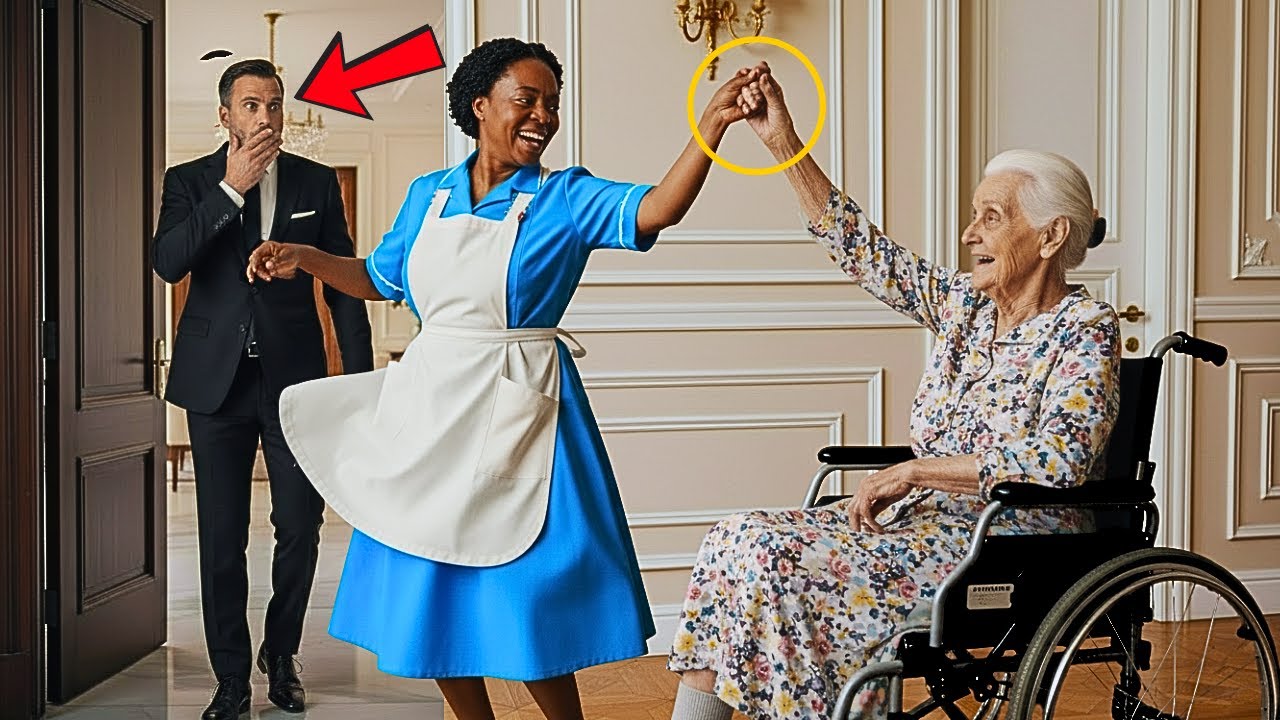
Murilo always paid the best professionals. Modern techniques, expensive equipment, experienced caregivers—nothing worked. Her mother, Odet, remained trapped in that wheelchair, growing more distant, stiffer, and more alone. until the day she came home early and saw what the maid was doing to her.
It wasn’t treatment, it wasn’t therapy, it was something that no amount of money he had been able to buy. Murilo left home as he always did, quickly, straight away, without looking to the sides. He picked up his leather briefcase, adjusted his watch on his wrist, and headed for the office. He didn’t even go through the room.
She knew her mother would be there in her wheelchair, looking out the window at the garden , always in the same spot, always silent. Odet was 72 years old, with white hair tied in a low bun, thin hands, and skin marked by time. Joint pain prevented her from walking. Each attempt was agonizing. Therefore, the chair became routine. And routine became a prison.
Murilo tried everything. He hired physiotherapists, private doctors, and nurses with impeccable resumes. He bought imported equipment, electric wheelchairs, and orthopedic mattresses. They paid well, very well. But no caregiver lasted more than three weeks. The last one left without warning. He left a short note on the kitchen table.
I can’t anymore. Murilo wasn’t even surprised. The mother was difficult, complained about everything, refused help, and brushed off any attempt at conversation with short answers and sharp looks. He knew this and, deep down, he understood. Odet has always been independent and strong. Seeing herself dependent on others infuriated her, but he didn’t have time to deal with it.
Meetings, trips, contracts, the company never stopped. And the mother, well, the mother had everything she needed: food on the table, medicine on time, a clean house. What she wanted most was when the employment agency called: “Mr. Murilo, we have a candidate, but she’s not a caregiver, she’s a housekeeper, cleaning, cooking, general organization.
” “I don’t need a caregiver,” he replied curtly. “I need someone to keep the house running.” “Send her over tomorrow.” The next day, Glória arrived early. She knocked on the door at 7 a.m., punctual. Murilo opened it, took a quick look—a woman in her fifties, short, serious face, calloused hands—and handed her the spare key.
“The kitchen is over there, the bedrooms are on the second floor. The lady who lives here stays in the living room during the day. You don’t need to worry about her. Just keep everything clean and tidy.” Glória sensed her presence, didn’t ask questions, took the key, put it in her bag, and went inside. The house was enormous: marble floors, crystal chandeliers, expensive furniture that seemed never to have been used.
Everything shone, everything was in its place, but there was no life there. It was beautiful, but empty, like a museum. Glória started in the kitchen, organizing cabinets, cleaning countertops, checking the pantry. Everything was impeccable, almost nothing out of place. She worked in silence, without haste, without noise.
It was only in the middle of the morning that she passed through the living room and saw Odet. Sitting in her wheelchair, with her back to the door, looking out the window, she didn’t… She moved, didn’t turn her head, just stood there motionless, as if the world outside didn’t exist. Glória stopped for a moment, observed, and realized something no one else had noticed.
That woman wasn’t just in pain, she was alone. She didn’t try to approach, didn’t say anything, just continued her work. But before leaving at the end of the day, she straightened the cushions of the armchair by the window. She adjusted the curtains so that the light would enter more softly. She left everything as it was, but a little less cold.
When Murilo returned that night, he found the house spotless. He dined alone, as always. He didn’t even ask about his mother. He assumed everything was fine. After all, Glória hadn’t complained, hadn’t asked for anything, hadn’t run away. That, for him, was already a good sign. But that night, as he went up to his room, he heard something coming from the living room, a low sigh, almost imperceptible.
He stopped in the hallway, looked towards the living room. The door was ajar, the light off. He thought about going in, asking if everything was alright, but no. She entered, went upstairs, and closed the bedroom door, as she always did. Glória returned the next day, and the next, and the next, always at the same time, always with the same discreet demeanor: she cleaned, organized, cooked, didn’t talk much, didn’t ask anything, just did the work.
But in the first few days, she began to notice details that no one else saw. The breakfast tray that Murilo left on the living room table for his mother would return almost hidden. The bread cut in half, cold, the juice half-empty, as if Odet ate only to fulfill a protocol. The wheelchair cushions were always in the same position.
No one adjusted them, no one checked if they were comfortable. And the living room was always silent, no sound, no television on, no radio, just emptiness. Glória, a therapist, wasn’t a nurse, but she had eyes and knew how to recognize abandonment when she saw it. On the third day, while wiping the bookshelf, she noticed that Odet was watching her, not directly, but sideways, out of the corner of her eye, as if she wanted to see without being seen. Glória pretended not to notice.
Noticing this, she continued working, but when she finished she stopped at the door of the room and said without looking: “Do you need anything else?” Silence. Odet didn’t answer, she just turned her face towards the window. Glória waited a few more seconds, then left. The next day she asked the same question, same answer, nothing. But on the fifth day something changed.
Glória was cleaning the coffee table when she heard Odet’s voice. Low, hoarse, as if it hadn’t been used in a long time . “Are n’t you going to ask me what’s wrong?” Glória stopped, looked at her. Odet still had her back to her, but the tone was different. It wasn’t aggressive, it was tired. ” No,” Glória answered calmly.
“You ‘ll tell me if you want to.” Odet remained silent, but this time she didn’t turn her face away. She stood still, processing the answer. Glória finished cleaning and left the room. But before leaving that day, she did something different. She went to the old stereo that was forgotten in the corner of the bookcase.
She dusted it off , checked if it worked, and the next day… She brought a USB drive from home. While tidying the living room, she put on some soft, quiet music, nothing flashy, just something to break the silence. She continued cleaning and organizing as if nothing had changed, but she noticed that Odet stopped looking out the window.
She turned her head just slightly toward the sound. She didn’t complain, didn’t ask her to turn it off, she just listened. Glória finished her work that day without saying anything, turned off the music before leaving, put away the USB drive, and went home. But the next day, when she returned, Odet was in the same posture, at the same window.
Only this time, when Glória entered the room, the woman spoke first: “Could you put that music on again?” Glória stopped, looked at her, and for the first time saw something different in Odet’s face. It wasn’t rudeness, it wasn’t coldness, it was hope. Glória felt it, went to the device, put on the music, and while cleaning, saw Odet close her eyes, take a deep breath, let the sound fill the empty space around her.
In that moment… One day, Glória realized something important. That woman didn’t need technique, she didn’t need better medicine, she didn’t need expensive equipment; she needed someone who saw her as a person. When Murilo arrived that night, the house was spotless, as always. He didn’t even notice the difference.
He had dinner, worked in the office, went up to his room, but before going to sleep he heard something coming from the living room, a low, almost imperceptible sound. Music. He frowned, went downstairs , and went to the living room door. Odet was sleeping in the chair. The music was still playing on the stereo.
Murilo turned it off, covered his mother with a shawl that was on the sofa, and went back upstairs. He didn’t ask questions. He didn’t want to know where it came from. He assumed it was the new maid’s doing and found it strange, but not bad. The music became routine. Every morning, when Glória arrived, she would put the music on, always low, always discreet.
And Odet waited for it. She didn’t ask, she didn’t thank him, but she felt different, less tense, less distant. Glória noticed and continued. She cleaned the In the house, with music playing in the background, she arranged the cushions, straightened the curtains, all to the rhythm of the songs.
And one day, without thinking, she began to dance. It wasn’t rehearsed, it wasn’t planned, just light movements while mopping the floor. One step to the left, another to the right, her arms following the rhythm of the melody. Simple, natural. Odet watched from her chair. She didn’t turn her face away. This time she looked, without blinking, without looking away, and then smiled.
It was a small smile, almost imperceptible, but it was there. Glória stopped cleaning, looked at her. “Do you like to dance?” Odet lowered her gaze. Her hands trembled slightly in her lap. “I used to.” Her voice came out low, almost embarrassed. Before all this, Glória put down the mop, approached slowly, knelt beside the chair.
“Then dance,” she said softly. Odet gave a short, bitter laugh. “I can’t anymore. Look at me.” Glória shook her head. “You don’t need to get up to dance.” Odet frowned. She didn’t understand. Gloria stood up, returned to the middle of the room, and began to dance again. Simple movements, nothing exaggerated, just her body following the music, and then she looked at Odet.
“Move your feet,” she asked with a gentle smile. Odet hesitated, looked at her own feet, still, stuck to the chair for so long, but something inside her stirred. Slowly, very slowly, she began to move her toes, then her right foot. Just a little, just enough to keep the rhythm. It hurt, of course it hurt, but it wasn’t unbearable pain, it was a living pain.
Gloria smiled, continued dancing, and Odet continued moving her feet. And then, without realizing it, her arms also moved. They rose slightly, following the melody, her whole body responding to the sound, even while seated. She didn’t try to get up, she couldn’t, but she moved. And, for the first time in years, she felt light.
When the music ended, Odet was breathless, but smiling, a A genuine, full smile. Gloria approached, placing her hand on her shoulder. “You dance very well, ma’am.” Odet laughed. This time it wasn’t bitter, it was happy. In the following days, it became a secret ritual. Always at the same time, always with the same music, always just the two of them. Gloria danced.
Odet moved in her chair. A few minutes, nothing excessive, but enough to bring something back, something that had been lost. But they were afraid. Afraid of being seen, afraid of being judged, afraid that Murilo would find out and end everything. That’s why they always checked the clock, always stopped before noon, always kept it a secret.
Until one day, Gloria forgot to look at the time. The music was louder than usual. Odet laughed while moving her arms. Gloria twirled in the middle of the room, light, free, and then they heard the sound of the front door opening. Gloria froze. Odet’s eyes widened. It was too early. Murilo never came back that early.
It was the right time, but the sound of footsteps in the hallway was unmistakable. Glória ran to the stereo, turned it off, and held her breath. Odet straightened her posture in the chair and took a deep breath. She tried to appear normal. Glória quickly grabbed the floor cloth and pretended to be cleaning. The footsteps approached and stopped right at the living room door.
Murilo was standing there, watching. Glória dared to look up. She knew it was over, she knew she would be fired. But Murilo said nothing, just stood there for long seconds, observing his sweaty mother, the tense maid, the still- warm stereo. He knew something had happened, but he didn’t know what, and that bothered him more than it should.
Murilo didn’t ask anything that day, he just looked at his mother, at Glória, and left the room without saying a word, but something changed. He began to notice things that had previously gone unnoticed. His mother was different, less harsh, less withdrawn. When he arrived home, s
ometimes he would hear… Low laughter came from the living room. Laughter. His mother laughing. It confused him. For years, Odet had lived in silence. She complained about everything, pushed everyone away. She lived locked in that world of pain and bitterness. And now, suddenly, she was laughing. He tried to ignore it. He returned to his routine, meetings, contracts, trips, but the strange feeling wouldn’t leave his head.
A week later, he noticed another detail. His mother was asking for less medication. Before, it was every day, painkillers in the morning, afternoon, and evening. She constantly complained of pain, but now almost nothing. And when Murilo asked if everything was alright, she would only say: “I’m better, better?” As? No doctor has ever been able to do that.
No treatment, no expensive therapy worked. But now, with a housekeeper who only cleaned the house, she was better off. It didn’t make sense. And the more he thought about it, the more his distrust grew. That’s when the comments started. First it was the neighbor, Mrs. Clara, a lady who lived three houses down and loved gossip disguised as concern.
She stopped Murilo on the sidewalk as he got into the car. Murilo, darling, can I ask you a question? He sighed. I knew it wasn’t a question, it was an insinuation. He can. Do you trust this new maid you hired ? Murilo frowned. ” Why?” Dona Clara lowered her voice as if she were sharing a dangerous secret.
The thing is, I’ve seen her coming and going every day, always alone with her mother. Well, you know how these things are, right? The elderly are vulnerable. We never know people’s intentions . Murilo felt his chest tighten. Not out of fear, not out of anger, but he disguised it. She’s just doing her job, that’s all . Dona Clara gave a fake smile.
Ah, sure, sure. I just wanted to warn you, dear. We can never be too careful, can we? Murilo got into the car without answering, but the seed of doubt had already been planted. In the following days, he began to notice other details, like the medicine bottle on the living room table.
It used to always be empty, now it’s almost full. The tone of his mother’s voice when he asked her how her day had been . It used to be short and sharp, now it’s smooth, sometimes even lively. And the house is always spotless, but with something different. Small details, cushions arranged in a new way, curtains more open, flowers in the vase by the entrance, things he had never asked for, things someone did of their own free will.
That night, Murilo arrived home earlier than usual. He didn’t warn us, he did n’t call, he just came in, left his briefcase on the sideboard and stood there in the hallway. Silence, he wondered. Normally, when Gloria was still there, he would hear some sound, running water, a cupboard door closing, something, but nothing. He walked slowly to the room.
The door was ajar. He peeked and saw. Gloria was there, but she wasn’t cleaning. She was standing in the middle of the room, smiling. And her mother had her arms raised, moving them as if she were dancing. There was no music, the sound was off, but they were moving. Murilo felt something strange in his chest.
It wasn’t anger, it wasn’t fear, it was confusion and perhaps a little guilt, because at that moment he realized something he should have realized a long time ago. Her mother wasn’t sick, she was abandoned. And that woman, whom he barely knew, was doing something he never knew how to do. I was paying attention.
He backed away before they noticed, went upstairs to his room, sat on the edge of the bed and, for the first time in years, asked himself: “When was the last time I really looked at my mother?” But the doubt remained: “What else was happening there? What if everyone was right? And he was being naive.
” The next day, he made a decision. He would go home early again , without warning, just to be sure. Murilo left the office at 3 pm, didn’t tell anyone, didn’t give any explanations, just grabbed his keys, got in the car and went straight home. His head was spinning, Dona Clara’s words , the details he had noticed, the scene he had seen the day before, all mixed up, all confused.
He needed to know what that woman was doing with his mother. He parked the car in the garage, turned off the engine, and stood there for a few seconds just breathing. Then he got out, closed the door slowly, and entered the side of the house without making a sound. The hallway was empty, silent, but then he heard low, soft music coming from the living room.
Murilo stopped, clenched his fists, and walked slowly to the door. He peeked through the crack and froze. Glória was in the middle of the living room dancing. It wasn’t anything exaggerated, it wasn’t anything… Rehearsed, just simple, light movements, following the melody playing on the stereo. But that wasn’t what stopped him; it was his mother.
Odet was in a wheelchair, but she didn’t seem like the same woman he knew. She smiled, a wide, genuine smile, full of life, and she moved. Her arms rose and fell to the rhythm of the music, her feet swayed, her whole body followed the melody, even sitting, even in pain. She didn’t try to get up, she couldn’t, but she danced and laughed. She laughed like Murilo hadn’t seen in years.
Glória turned slightly and took Odet’s hands . She carefully raised her arms , guiding the movement. And Odet followed without resisting, without complaining, just living. Murilo felt something strange tighten in his chest. It wasn’t anger, it wasn’t fear, it was something else, something he couldn’t name.
And then Glória saw him, stopped mid-movement, her smile vanished, her face turned pale. Odet noticed the change, turned his head, and saw his son standing in the doorway. Her smile also disappeared. Glória slowly lowered her arms, took a step back , and took a deep breath. “Mr. Murilo, I… I can explain.
” He didn’t answer, just stood there looking, processing. The music was still playing in the background, but now it seemed too loud, intrusive. Glória went to the device and turned it off. She pressed her hands behind her back. Odet lowered her gaze. Her hands trembled on her lap. Glória turned to Murilo.
Her voice was low, but firm. “I know I wasn’t supposed to do this. I know I was only hired to clean, but I… I just wanted to…” She stopped. She did n’t know how to finish the sentence. Murilo took a step into the room, then another. He stopped a few meters from the two women and finally spoke: “How long?” Glória blinked, confused.
“What?” “How long have you been doing this?” She hesitated. “A few weeks, sir.” Murilo looked at his mother. Odet kept her head down, ashamed, as if she had been caught doing something wrong. He took a deep breath and then something changed in his face. The tension in his shoulders lessened, his jaw relaxed, and he approached.
He pulled up a chair and sat down in front of his mother. Odet looked up in surprise. Murilo remained silent for a few seconds, just looking at her, really looking, and for the first time in years he saw her, not as a responsibility, not as a problem to be solved, but as his mother. “Why didn’t you ever tell me?” he asked, his voice softer than Glória expected.
Odet opened her mouth, closed it, tried again to tell what? That you needed this. She looked away. You were always busy, always away. Murilo felt the guilt tighten. “I know.” The silence returned, but this time it wasn’t uncomfortable, it was genuine. Glória remained standing in the corner of the room.
She didn’t know if she should leave, if she should speak, if she should do anything. ” Thing.” Murilo stood up, looked at her, and said something Glória never expected to hear. ” Thank you.” She blinked, confused. “Sir, thank you.” He repeated, “For doing something I should have done a long time ago.” Glória didn’t know what to say. Murilo took a deep breath and then asked the question that would change everything.
” Would you officially take care of my mother?” Glória’s eyes widened. “I… I’m not a professional caregiver, sir. I just… I know.” He interrupted. “But what you did for her, no professional could have done.” He paused. “I’ll double your salary, and you can organize the routine however you want.
Just keep doing it.” Glória to Odet. The lady’s eyes were watery, and then she nodded. ” I accept.” Murilo relaxed his shoulders. For the first time in a long time, he felt he had made the right choice. But there was still something he needed to understand. How had this happened, how had a domestic worker managed something that years of medicine hadn’t solved? The next day, Murilo woke up earlier, made coffee, sat at the kitchen table, and He waited for Gloria to arrive.
When she entered, at 7 o’clock sharp, he was there. Gloria stopped at the door, surprised. “Good morning, sir.” “Good morning,” he replied. ” Sit down. I need to talk to you.” She hesitated, but obeyed. Murilo pushed a cup of coffee toward her. Gloria accepted without understanding. He took a deep breath.
“About yesterday, I was serious, but I need you to understand one thing.” Gloria lowered her gaze. “Sir, I don’t want you to become a 24- hour employee,” he said firmly. “I don’t want you to sleep here. I don’t want to overburden you.” He paused. “I just want you to continue doing what you already do: the music, the company, the presence, and if you need help with other things— bathing, medicine, a doctor—we’ll hire someone for that.
You won’t do everything alone.” Gloria looked up . “Do you trust me, sir?” Murilo nodded. “I trust you because you saw my mother, and nobody else has done that.” Gloria felt a pang in her chest. “Then I accept,” she said firmly, “but “On one condition.” Murilo frowned. “Which one?” “If Mrs. Odet doesn’t want to dance anymore, we’ll stop, without forcing, without pressure.
” Murilo relaxed his shoulders and, for the first time, truly smiled. Agreed. They remained silent for a few seconds. Then Murilo took an envelope from his pocket and placed it on the table. “Your new salary starts today.” Glória looked at the envelope. She didn’t open it, just nodded. ” Thank you, sir.” “No,” he said. ” Thank you.
” Glória stood up, took the envelope, and went to the living room. Odet was already awake, sitting in her chair, looking out the window. When she saw Glória, she smiled. ” Good morning.” “Good morning, Mrs. Odet.” The elderly woman looked at her curiously. “What did my son want?” Glória smiled. “He just wanted to make sure I’m going to stay.
” Odet breathed a sigh of relief. “And you’re going?” “I am.” The lady extended her hand. Glória took it. “Then put on that song,” Odet asked with a sparkle in her eyes. ” The one you like?” Glória went to the radio, chose the song, and turned it on. Music filled the room and the two began to dance, as they always did, but now without fear, without hiding, because finally someone had seen.
Three months later, the house was different. There were no renovations, no physical changes, the same furniture, the same walls, the same garden seen from the window, but everything was different. Music was back in that routine. It was no longer hidden, no longer a secret. It played every day, low, soft, filling the empty spaces.
Glória no longer cleaned as before. Now she spent most of her time with Odet. They talked, laughed, and danced. They always danced. Odet remained in her wheelchair. The pain hadn’t gone away. Some days were worse than others, but now she moved. She moved her arms, her feet, her whole body, at the rhythm that the pain allowed. And on good days she even tried to get up for just a few seconds, supported by Glória, without forcing it, just trying, because now she had a reason.
Murilo started coming home earlier, not every day, but two or three times a week. At Sometimes he would arrive and find the two of them dancing in the living room, other times sitting on the sofa, conversing quietly. At first, he would just stand in the doorway, observing, afraid of breaking the moment. But one day Odet saw him standing there and called out: “Come, son, sit here.
” Murilo hesitated, but obeyed. He sat down beside her. Glória smiled and discreetly left, leaving the two alone. Odet took his hand and squeezed it gently. “Thank you,” she said, her voice soft. Murilo frowned. Why? For coming back. He felt his throat tighten. I should have come back sooner. Odet shook her head.
The important thing is that you’re here now. And for the first time in years, they truly talked , not about doctors, not about medicine, not about the house or the money. They talked about life, about memories, about small things that Murilo thought he had forgotten and realized he hadn’t, he had just stopped looking. The routine changed.
Glória took care of Odet during the day, and when Murilo arrived, he sat beside her. By his mother’s side, sometimes just to be there, sometimes to talk, sometimes to listen to the stories she told—stories from when he was a child, from when his father was still alive, from when the house was full of sound, of life, of people.
And Murilo understood now what had been lost. It wasn’t his mother’s health, it wasn’t her legs that stopped working properly, it was her presence, her connection, her life. And Glória had given that back, not with treatments, not with techniques, not with promises of cure, only with her presence.
One day, Murilo arrived home and found something different. Odet was standing, leaning on Glória, holding firmly onto her shoulders, her feet on the ground, her body trembling slightly, but standing. Murilo froze at the door. Glória saw him and smiled. She wanted to try, she said calmly. I told her she could wait. But she insisted.
Odet turned her face towards her son and smiled, a tired smile, but full of pride. “Look,” she said, her voice faltering. “I can still do it.” Murilo Her eyes burned, but she didn’t look away. You always managed, Mom. Odet took a step, a small, painful one, but a step nonetheless, then another. Glória held on tight, not letting her fall, but not carrying her either, just supporting her.
Odet took three more steps and stopped. She took a deep breath. It hurt, of course it hurt, but it hurt in a way. Alive. That’s enough for today, Glória said softly. Odet nodded and let herself be guided back to the chair. When she sat down, she was breathless and sweaty. But, smiling, Murilo approached, knelt beside her. “You look incredible.
” Odet laughed, weakly, but genuinely. “I’m alive,” she corrected. “It was true.” In the following months, the house ceased to be quiet. There was laughter, there was music, there was life. Odet never walked alone again. Perhaps he would never return. The pain had n’t gone away. She wasn’t cured, she was just relearning how to exist within the limits of what her body allowed.
But that no longer mattered, because the wheelchair had ceased to be a prison and had become simply a chair. Glória remained there, not as a maid, not as a caregiver, but as part of that household. And Murilo learned something that no amount of money could teach: that presence can’t be bought, that care is priceless, and that sometimes what we need most isn’t technique, but someone who sees us as people.
The maid didn’t cure the pain, she only restored something that no one had treated: the will to live. And that changed everything.