SOU VIGIA NOTURNO NO CEMITÉRIO HÁ VINTE ANOS… A TERRA DE LÁ OS REJEITOU
SOU VIGIA NOTURNO NO CEMITÉRIO HÁ VINTE ANOS… A TERRA DE LÁ OS REJEITOU 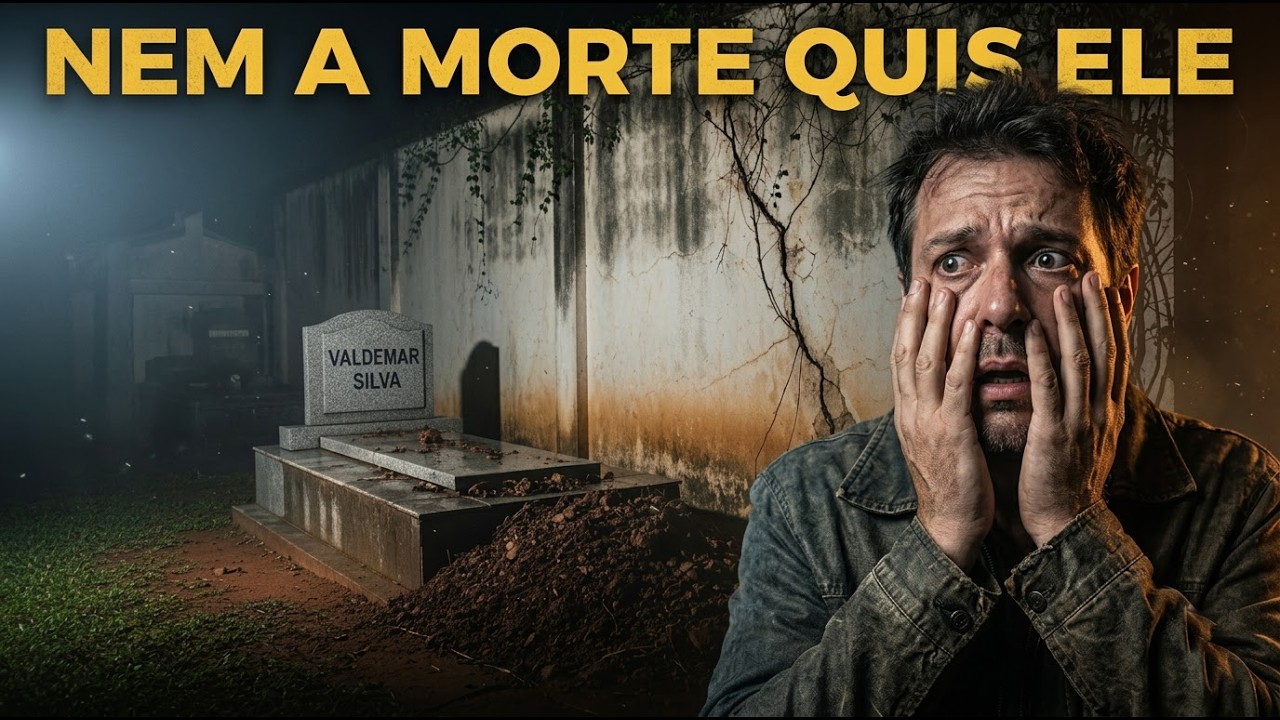
My name is Mateus Ferreira and for 6 months I was a night watchman at the cemetery in Córrego Danta, in the interior of Minas Gerais. I accepted the job because no one else would. It wasn’t about the salary, nor the hours. It was because of the place. In the city, everyone knew that that cemetery was avoided after midnight, and not out of respect for the dead.
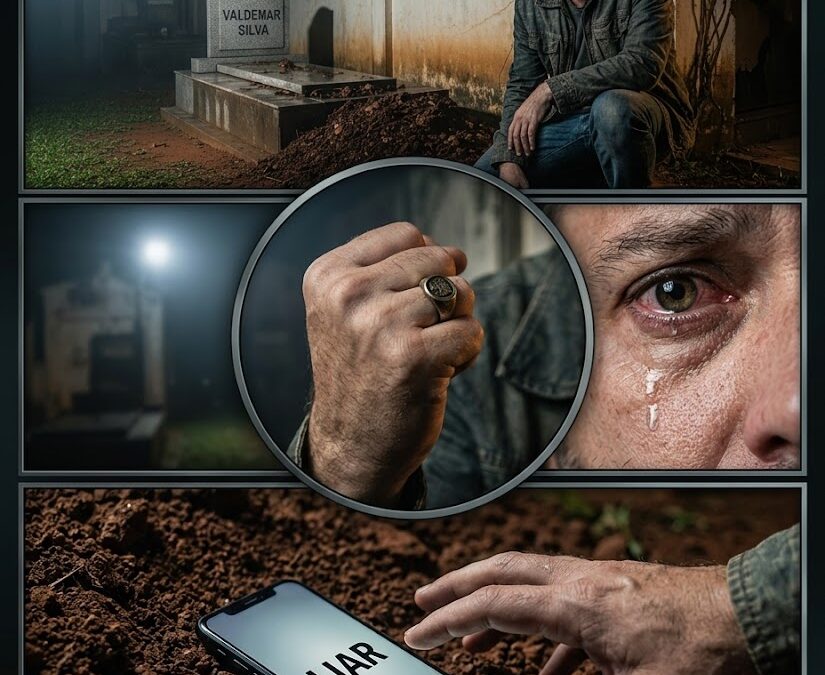
There was a name that nobody liked to say out loud when talking about that place. A man so cruel in life that not even death could silence him. They said that after he was buried there, the cemetery was never quiet again. His name was Valdemar Silva. In Córegudta, there isn’t a single family that doesn’t have a story involving this man.
Fights, assaults, disappearances, and deaths that were never fully explained. Valdemar lived spreading fear, and when he finally died, nobody celebrated, but nobody wanted his body either. No priest agreed to say mass, and no cemetery in the region agreed to bury him. The city government decided to resolve the problem by force, burying Valdemar right there in the city cemetery.
That same week, reports began to emerge of shadows walking among the graves, footsteps without origin, and crosses found out of place. When I was hired, the gravedigger, Geraldo, gave me only a flashlight, an old radio, and brief instructions. I shouldn’t be walking near Valdemar’s grave after midnight. He did not explain the reason.
I simply said that if I heard footsteps I shouldn’t answer, and if I heard someone calling me I shouldn’t look. I thought it was an exaggeration for a small town. In the first week everything seemed normal. On Monday, I started hearing things that I could n’t explain. Scratches emerging from the earth like fingernails digging from the inside out.
On some nights, I would see graves out of place, as if someone had pushed everything around in the dark. On the night I was trapped inside, the gate wouldn’t open, the radio stopped working, and the flashlight failed. That’s when I saw something emerge from the ground near Valdemar Silva’s grave. He was no ordinary corpse; he was twisted, heavy, and moved as if he were still filled with hatred.
He walked among the tombs, pushing gravestones, causing the entire cemetery to rearrange itself to flee from him. I spent the entire night locked inside the chapel, listening to that thing walking outside, waiting for dawn. And I understood that night why nobody in Córego Danta passes by the cemetery after midnight.
Working as a night watchman in Córegudta has never been an ordinary job. The town is small, everyone knows each other, and anything out of the ordinary quickly becomes news. The cemetery is located on the outskirts of the countryside, away from houses, surrounded by tall grass in silence. During the day, it just looks old. The night seems watchful.
Since I was a child, I had heard stories about that place, always told in a low voice, always interrupted before the end. When I accepted the job, I thought they were exaggerations from the countryside. Today I know they were warnings. After Valdemar Silva’s funeral, the city’s behavior changed.
People started avoiding the road that passes in front of the cemetery after midnight. Drivers would take detours for miles just to avoid crossing that stretch of road. The dogs were howling for no apparent reason, always at the same time. Some residents said they saw an unusually large shadow moving among the graves when the moon was high.
Others swore they heard someone walking behind them as they passed by the wall, even when the street was empty. No one challenged these stories; they simply accepted them. What I’m about to tell you is n’t a rumor or an urban legend; it’s an account of what I experienced while working there. I’m not trying to convince anyone, nor to prove anything.
I’m only documenting what happened because I understand that when nobody tells these stories, they continue to happen anyway. If you live in a small, rural town where certain rules exist without explanation, pay attention. Sometimes, these rules don’t serve to maintain order, they serve to maintain distance.
And after what I saw that night when I was trapped inside the cemetery, I learned that some things don’t want company. They just want everyone to know they’re still there. Before continuing, like this video and subscribe to the Obscure Tales channel so you don’t miss new stories like this one. Turn on notifications, because here you’ll always hear stories that aren’t told anywhere else [in music] .
And take the opportunity to comment on where you’re watching from now, because every city has a place that nobody likes to cross. After midnight, on the first night I was alone on shift, I arrived at the Córrego Danta cemetery at 10 o’clock sharp , as always, and found Mr. Geraldo closing the main gate with unusual haste.
He avoided conversation, only checking if the chapel was locked, handed me the spare key, and repeated the only instruction that seemed to truly matter. Under no circumstances should I have been near Valdemar Silva’s grave after midnight. He said this while looking directly into my eyes, as if he were making sure I understood.
As soon as he left, a heavy silence settled in, unlike the silence of the city. It wasn’t the absence of sound, it was as if everything was waiting. I made my first round early, walking through corridors of ancient tombs, noting everything in my notebook. No lights on, no movement, nothing out of place.
Until that moment, the cemetery seemed like just an old and forgotten place. Shortly before midnight, I felt the temperature drop sharply, as if the air had been drained. The radio crackled once and then went silent. When I looked at the clock, it was exactly 12 o’clock. It was at that moment that I heard the first sound coming from the isolated area at the back, where Valdemar’s tomb was located.
It wasn’t a human step; it was something dragging, heavy, and uneven, as if someone were being pulled by the earth. I stood there, trying to convince my body not to react. The sound stopped for a few seconds and then started again closer. The flashlight started malfunctioning, flashing too rapidly, until it stabilized with a dim light.
Even without meaning to, my eyes followed towards the back of the cemetery. I saw a shadow slowly rising behind a large tombstone, too tall to be just a projection. The shadow moved against the logic of the light, growing instead of diminishing. The ground began to tremble subtly, just enough to make small stones roll away.
Within a few minutes, I realized that some of the graves were no longer where they should be. Tombstones that used to be aligned were now crooked, displaced, as if something had pushed everything aside to make way. The smell came soon after, an odor of damp earth mixed with something old, trapped, that didn’t resemble ordinary decomposition.
My instinct told me to run, but there was nowhere to go. As I tried to move away, I heard a dry sound coming from the main gate, followed by a metallic crack. I ran there and confirmed what I feared most. The gate was closed, locked, and wouldn’t respond to the key. It was there, alone, with the cemetery shifting around me, that I understood that this wouldn’t just be another night of work and that Valdemar Silva wasn’t just buried there.
He was active, conscious, and the entire cemetery seemed to obey his presence. I stood for a few minutes in front of the closed gate, trying to force the lock with the spare key, but it turned freely, without any effect, as if the mechanism had been switched off from the inside. I stepped away, feeling my heart pounding too hard, and returned to the central area of the cemetery, trying to keep the flashlight pointed forward, even though the light was too weak to reach the back.
The silence had been broken by something worse, a rhythmic and irregular sound, like poorly distributed footsteps that seemed to come from different directions at the same time. At certain times, I had the impression that the noise was coming from behind. In others, it came from the opposite side, as if it were testing my attention.
I avoided looking directly at Valdemar Silva’s grave, remembering Geraldo’s words , but it was impossible to ignore the feeling that everything there was moving in relation to that specific spot. The tombstones continued to shift slowly, not abruptly, but as if they were being patiently pushed, opening up corridors that did not exist before.
At one point, I heard a dry crack coming from the ground, followed by a damp noise, similar to the sound of something being ripped from the ground. My throat tightened and the taste of rust filled my mouth. I tried using the radio, even though I knew it was muted, and pressed the button several times until I only heard static.
That’s when I heard heavy, irregular breathing, too close to ignore. It didn’t come from a fixed point. It seemed to circle among the tombs, passing behind the crosses, skirting the shadows. The flashlight blinked again and, for a moment too brief to deny, he saw a distorted silhouette looming over an ancient tombstone, with broad shoulders, crooked legs, and its head drooping to the side, as if its neck could no longer support its weight.
I took a few steps back and felt the ground give way slightly beneath me, as if the earth were softer than it should be. The smell got stronger. And along with it came a feeling of pressure in the chest, difficult to explain, as if the air were being pushed out of space. I heard something like a muffled, short laugh, interrupted [music], which ended with a sound of spit hitting the ground.
It was at that moment that I understood that it wasn’t just wandering around, it was surrounding me. The chapel appeared on my left as the only solid structure in that slow chaos, and I ran towards it without looking back. I locked the door from the inside and leaned against the wall, listening to heavy footsteps passing around, scratches on the wood, and dry knocks outside, as if something were testing the boundaries of the sacred space.
Outside, the cemetery continued to reorganize itself, obedient to a presence that would not allow it to rest. And I realized that the night was far from over. The night dragged on. While I remained locked inside the chapel, the noise didn’t stop. The cemetery seemed to have a life of its own, with the tombs being moved by invisible forces.
With each creaking sound in the background, the feeling of claustrophobia intensified. The flashlight, now almost out of battery, flickered once more, and for a brief moment I saw a darker shadow pass near the chapel door. I wasn’t able to see anything else, but the sound was unmistakable. Something was waiting outside.
I knew the gate wasn’t locked by accident. The ground I had stepped on felt lighter, softer, as if something was rising from beneath it, forcing the earth to open up. I tried to stay calm, but the idea that the entire cemetery was being reconfigured to imprison me drove me crazy. I remembered the words of Mr.
Geraldo, who had warned me that this cemetery was no ordinary one, but I thought it was just the exaggeration of a superstitious old man. Now I understood that he was serious. Valdemar Silva should never have been buried there. He was fulfilling his promise, making the cemetery his own, reshaping it to his liking.
The problem was that the more I tried to find a way out, the more it seemed like he was becoming part of the place itself. What was happening in the cemetery was not just a simple demonstration. Valdemar was living there, manipulating the earth and the shadows, and he was watching me. The muffled laughter I heard repeated itself, but this time it seemed closer.
I felt as if something was pressing on my chest, trying to make me succumb to fear. I stood still, breathing deeply, trying to stay calm and concentrate. Then, the chapel door began to creak and the sound of banging on the wood intensified, as if someone were trying to get in. With the radio still silent, there was no way to call for help.
I was completely alone, surrounded by a spirit so full of rage and vengeance that not even the cemetery could contain it. The feeling that he was inside me, controlling my mind, intensified with each passing second. I tried to get out the window, but it was locked. My footsteps echoed inside the chapel, and the flashlight flickered again, distorting the shadow even further.
Valdemar’s face appeared, reflected in the part of the chapel wall that I couldn’t see. He was smiling, there was no doubt about it. He was coming to pick me up. I did n’t know what to do. Fear was already taking over my body, and the only thing I could hear was the sound of my own heartbeat mixed with the noises outside.
Valdemar Silva’s shadow was becoming increasingly clear on the chapel wall, and the more I tried to move, the closer it got . [music] At one point, the flashlight went out completely, leaving me immersed in absolute darkness. I knew I didn’t have any more time. The air pressure became denser, and I felt as if I were being watched by thousands of invisible eyes.
The chapel door creaked open again, as if some supernatural force were trying to force it open. And at that moment, fear overwhelmed me . I no longer knew what was real and what was a hallucination. I looked around and saw the small altar of the chapel, the crucifix hanging on the wall, but nothing there seemed to have any power.
I remembered the words of Father Elias, the only man who still dared to enter the cemetery to try to expel Valdemar’s spirit. He always said that evil was not something that could be destroyed with prayers alone. It was something that fed on anger and hatred accumulated over time. Perhaps that was why the cemetery had become Valdemar Silva’s home . He had no rest.
He would never rest, and neither would I if I couldn’t get out of there. I heard a loud crack, as if something was breaking. And then, finally, the chapel door opened with a terrifying creak. I didn’t see anyone, I didn’t see anything but absolute darkness, but the feeling of being watched grew even stronger and I knew I wasn’t alone anymore.
I got up, trying to move quietly, but as I took a step, the sound of something being dragged began to echo through the cemetery. It was as if Valdemar was coming towards me, with the same hatred as always, with the same desire to destroy everything he touched. The cemetery was completely silent, but I knew he was there, hidden in the darkness.
The only thing left for me to do was run away, but I did n’t know where to go. The gate was locked, and I knew the only way out was to face him head-on. I tried to leave through the back of the chapel, but as soon as I opened the door, I felt an invisible force pushing me back inside. Valdemar was now closer than ever.
I had only one choice: face my worst nightmare or be consumed by it. When the chapel door slammed shut behind me with a sharp thud , I felt the space shrink, as if the walls were closer together than before. The air became too heavy to breathe deeply, and each breath seemed to require effort. Outside, the footsteps echoed again, now slower, more deliberate, as if Valdemar Silva was no longer in a hurry.
I could hear the regular dragging coming from the earth, followed by the cracking of stones and wood being moved, and I understood that the cemetery kept changing to serve it. His shadow passed in front of the chapel entrance, projected incorrectly, with limbs that were too long, as if his body no longer conformed to a human form.
I tried to pray, but the words wouldn’t come together in my head. All I could do was hold the crucifix from the altar, feeling the cold metal against the palm of my hand. It was at that moment that I heard something worse than footsteps. I heard his voice. It was neither a scream nor a whisper. It was a hoarse, broken sound, as if the throat were full of dirt.
He did n’t say my name. He said that place now belonged to him, that the land had learned to obey, and that no one could enter there without paying a price. Each word was accompanied by a movement outside, as if the cemetery were reacting to his speech. The tombstones banged against each other, crosses creaked, and it felt as if the entire ground was breathing.
The flashlight, left on the floor, blinked on its own, illuminating for a second the figure standing in front of the door. I only saw parts of it. A crooked shoulder, head tilted to the side, mouth wide open, as if still trapped in an ancient scream. I took a step back and bumped into the altar, knocking over candles that went out when they hit the floor.
At that moment, I heard something that wasn’t coming from the cemetery, but from the road—the distant sound of an engine. My body reacted before my mind, and I started banging on the chapel door, screaming for help. The response was immediate. Valdemar’s voice grew louder, more aggressive, and I felt something banging outside, hard enough to make the wood vibrate.
The engine was getting closer, but so were the footsteps. The cemetery seemed to be torn between keeping me there and preventing any interference. When the pressure became unbearable, I heard a familiar voice shout my name from outside. It was Geraldo. At that same instant, everything stopped. The footsteps ceased, the air cleared, and the shadow slowly receded.
I fell to my knees, trembling, realizing that the night hadn’t ended there only because someone had arrived before Valdemar decided to finish what he had started. Seu Geraldo carefully opened the chapel door , as if he knew exactly what he could and could not do at that moment, and pulled me outside without saying a word, keeping his gaze fixed on the back of the cemetery, where the darkness seemed thickest.
The engine I had heard was that of his pickup truck, parked with its headlights on, pointing toward the main avenue, creating a strip of light that cut through the uneven tombstones. Even though dawn was still far off, the atmosphere seemed to have receded, like an animal that hides when it senses a threat. We walked quickly to the guardhouse, and only when the door closed behind us was I able to breathe with less difficulty.
Seu Geraldo looked at me for a few seconds before speaking and said that it had been the worst night since Valdemar Silva’s funeral. He recounted that whenever the spirit became more active, the cemetery reacted, moving tombs, closing exits, and confusing anyone inside, as if the place itself were trying to protect them.
I asked him why he had never told me everything, and he replied that nobody accepted the job when they knew the whole truth. He also said that the demonstration had only been contained because the sun was about to rise. and that Valdemar never remained strong after the first light of dawn. Still trembling, he insisted on knowing why that man was cursing the cemetery in that way.
And finally, Geraldo mentioned a name that nobody liked to hear: Antônio Vidal. He said that Antônio was the oldest resident of Córegud, Valdemar’s direct rival in Vida, and the only one who knew all the details of what had happened before his death. According to Geraldo, Valdemar had killed Antônio’s father and other people over the years, always escaping justice, until Antônio decided to do what no one else had dared to do .
When Valdemar was forcibly buried in the cemetery, Antônio warned that this would have consequences, because the Earth would not accept someone so full of hatred. As dawn broke, Geraldo escorted me to the exit and told me I wouldn’t be returning for the night shift. But before leaving, he stated that it wasn’t over yet, because Valdemar had noticed my presence and now recognized me.
To put an end to this once and for all, we would need the help of Father Elias, the only man in town who still braved the cemetery after midnight. As I drove away down the road, glancing at the wall in my rearview mirror, I had a distinct feeling that something was watching me from inside, just waiting for the next night to try again.
I spent the next day unable to sleep properly, with the constant feeling that I still carried that place with me, as if the smell of the cemetery’s earth had clung to my clothes and skin. Late in the afternoon, Geraldo returned to my house, accompanied by Father Elias, a thin man with a low voice, whose eyes bore an old weariness, like someone who had seen too much already.
He didn’t ask what I had seen that night, he just confirmed it. He said that Valdemar Silva’s spirit did not manifest itself by chance and that when he chose someone, he did so because he saw a useful purpose in them. According to the priest, Valdemar did not accept his own tomb, nor the place where he had been buried, and, therefore, he forced the cemetery to move, trying to push away the presence of the other dead.
Father Elias explained that during his life Valdemar had committed cold-blooded murders, killing Antônio Vidal’s father and other residents, and died vowing that he would make them all pay, dead or alive. We decided to go to Antônio’s house that same night, before the sun had completely set.
The house was set back near the old road, and the man greeted us without any surprise, as if he had been expecting that visit for years. Antônio spoke without emotion, confirming everything the priest already knew. He said he killed Valdemar out of revenge, yes, but also to stop him from continuing to do evil. He recounted that when Valdemar was buried in the Córrego Danta cemetery, he informed the city hall and the priest at the time that it was a serious mistake.
According to Antônio, Valdemar had not been buried with the correct rites because no one wanted to touch him, and this left his spirit trapped in the hatred he carried in life. Antônio stated that since the burial, the cemetery has reacted like a wounded organism, trying to distance itself from his presence, rearranging graves and creating confusion to protect the other dead.
Father Elias listened to everything in silence and at the end said that there was only one way to contain Valdemar: a ritual performed inside the cemetery exactly at midnight, using the tomb itself as a point of imprisonment. The problem was that someone would have to remain inside throughout the entire ritual. When the priest looked at me, I understood that that choice had already been made the night I was trapped in the chapel.
We returned to the Córegud cemetery shortly before midnight, with the sky completely overcast and the air heavy, just like the night I was trapped there. Father Elias carried a leather bag containing antique objects, worn books, a bottle of holy water, and a dark stole, while Geraldo drove in silence, without turning on the radio.
As we walked through the gate, I immediately felt the change in the atmosphere, as if the place recognized my presence. The graves were no longer exactly where they should be, and some crosses appeared slightly tilted, even though there was no wind at all. The priest asked us to go straight to Valdemar Silva’s tomb, which was isolated, away from the others, as if not even the dead would accept being near it.
As we approached, [music] the ground began to react, becoming too soft under the shadow, similar to a restrained growl. When the clock struck midnight, Father Elias began the ritual, reciting ancient words that I didn’t recognize while drawing symbols around the grave with coarse salt. That’s when the cemetery reacted violently.
The tombs began to move slowly, opening up winding corridors, and he felt an enormous pressure in his chest, as if the air were being pulled towards the center of that point. The earth above Valdemar’s grave partially cracked open, and something began to emerge, not as a complete body, but as a distorted presence made of shadow, hatred, and remnants of human form.
I heard his voice again, louder, clearer, full of contempt, saying that this place was now his and that no one had the authority to arrest him. Father Elias kept his voice steady, even with the ground shaking, and ordered me not to leave the circle, explaining that my presence was necessary because Valdemar had already marked me.
In a moment of despair, I saw shadows advancing towards us and the nearest tombs moving away as if trying to flee. Seu Geraldo held the chapel gate shut, preventing it from closing, while the priest finished the ritual with a powerful prayer, repeated three times. When the last verse was recited, a deep scream echoed throughout the cemetery, coming from within the earth, followed by a dry thud, as if something had been forced back into place.
The pressure ceased abruptly, the ground firmed again, and the graves stopped moving. The silence that followed was not empty, it was heavy, definitive. I knew at that moment that Valdemar had been contained, not destroyed, and that the cemetery had finally stopped trying to escape him. When the ritual ended and silence filled the cemetery, I remained motionless for a few seconds , trying to understand if it was truly over or just a pause before something worse.
Father Elias was the first to break the silence, saying that we shouldn’t celebrate, because what had been done there wasn’t an expulsion, but a confinement. Valdemar Silva was trapped in his own tomb, bound to the earth, which never fully accepted him, and any future interference could break the newly established balance.
We walked slowly out of the cemetery, passing graves that now seemed motionless, lined up, as if they were finally in their proper places. Even so, I felt a heavy presence on my back, an unsettling certainty that something was watching my every move. When we arrived at the guard post, Father Elias explained that Valdemar’s spirit acted not only out of hatred, but also out of pride, and that the greatest punishment for someone like him was to be forgotten and contained, unable to touch the world of the living.
Before leaving, the priest warned me that I would carry the marks of that night for a long time, not visible on my body, but in the way the cemetery would react to my presence if I ever returned there after midnight. On my way back home, still in the early morning, I noticed that the road in front of the cemetery was different.
That feeling of being persecuted was gone, but the place was still avoided, as if the whole city knew that something had been [music] just controlled. In the days that followed, the strange reports ceased. No residents have heard footsteps at night since. No cars stopped in the middle of the road due to inexplicable breakdowns, and the dogs stopped howling for no reason.
Even so, no one went near the cemetery after dark. When I met Geraldo a few days later, he said that it had been the first week of peace since Valdemar’s burial, but he stressed that the peace would only last as long as no one disturbed the isolated grave. I also learned that Antônio Vidal had passed away that same week, in his sleep, as if he had only waited for the right moment to leave after seeing the evil he had created finally contained.
The city did not hold a large wake, nor did it offer lengthy pronouncements. In Córrego Danta, people prefer not to prolong stories involving that name. As for me, I resigned from my job as a security guard that same week, realizing I had already seen more than anyone should. Even so, to this day, when I pass by the cemetery during the day, I feel a slight tightness in my chest, like a silent warning that some presences don’t need to move to remain dangerous.
After I resigned from my job , I tried to resume a normal routine in Córegta, but I soon realized that the city would never be exactly the same again, at least not for me. During the day, everything seemed to be in order. People chatting in the square, shops operating, children playing in the street. At night, however, there was a new sense of caution in the air, a kind of silent agreement that no one verbalized.
The road in front of the cemetery remained empty after midnight, not out of immediate fear, but out of respect for the curfew that had been imposed. I met Father Elias one last time, weeks later, and he told me that the evil had not been destroyed, because certain things cannot be erased, only kept where they no longer cause harm.
He also said that the cemetery would never be an ordinary place, because it had absorbed the presence of Valdemar Silva, even in a restrained way, and that that land would always demand distance. Over time, I began to notice subtle changes in myself. I started waking up shortly before midnight every night, even for no apparent reason.
And on some nights I would hear, very far away, a sound like earth being pressed down. as if something were moving beneath the ground. I never heard my name, I never heard clear footsteps, but the feeling of being watched remained. Seu Geraldo retired shortly after, saying that he had already fulfilled his role and no one else wanted to take on the job of night watchman.
The cemetery began to be closed at dusk, without exception. The city accepted this without question. In hushed conversations, I heard people saying that Valdemar was still trying to move underground, not to get out, but out of habit, like someone who never accepts being still. These stories never became the main topic of conversation; they were always quickly interrupted.
Today, when someone from outside asks why no one passes in front of the cemetery after midnight, the residents simply say it’s dangerous, without explaining why. I understand the reason. Explaining too much is too much. And attention is all that certain presences need to strengthen themselves.
I learned that there are places where silence is not the absence of truth, but a way of keeping it under control. The cemetery in Córegud remains there, seemingly ordinary during the day, but carrying something that will never go away. Indeed, I move on with my life, but I will never forget the night I was trapped between tombs that moved on their own, nor the hatred that still seemed alive beneath the earth.
And I know that as long as the rules are respected, Valdemar will remain where he was condemned to stay. But I also know that all it takes is for someone to ignore the warnings, pass by after midnight, or disturb the wrong grave for the cemetery to remember everything it had to do to defend itself.
After everything I’ve been through, I understood that the true horror of that story wasn’t the spirit of Valdemar Silva, but the fact that the entire city had to learn to live with something that should never have existed there. The cemetery in Córegud was not cursed by chance. He was forced to accept a man who spread hatred in life and refused to leave in death.
What we did that night didn’t erase the evil, it only kept it contained, confined to the only place where it could still exist without destroying everything around it. Today, when I pass by that wall during the day, it looks like just an ordinary cemetery, but I know what lies beneath that earth, pressing down, waiting for any opening.
The townspeople go about their lives, avoid making comments, respect schedules, and never cross the road after midnight. It ‘s not superstition, it’s collective memory. I left my job as a security guard, but I didn’t leave behind what I learned there. Some presences don’t need to show themselves to remain dangerous, and some places require silence as a form of protection.
I tell this story because I know that at some point someone might think it was all an exaggeration, that fear is something only simple people from the countryside experience. [music] When that happens, I hope these words serve as a warning. Not all evil wants to be confronted, nor can all injustice be corrected after the Earth closes.
There are mistakes that leave a mark on a place forever, and the Córegud cemetery is one of them. As long as no one disturbs the isolated tomb, as long as no one challenges the prohibited hours, the balance is maintained. But I know, with the certainty of someone who saw it up close, that Valdemar is still down there, not sleeping, not resting, just restrained.
And that’s the most peace that city will ever know.